

Blog

How To
Get More Leads For My Business
Introduction Contents hide 1 Introduction 2 Establishing a Digital
Foundation for High-Intent Conversion 2.1 Optimizing User Interface
Introduction
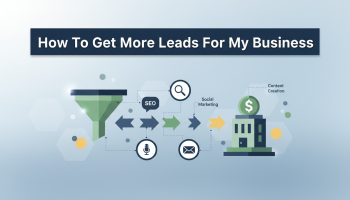
In the contemporary digital ecosystem, the query "how to get more leads for my business" is not merely about increasing traffic volumes; it is about engineering a sustainable ecosystem of intent, trust, and conversion. Lead generation has evolved from cold outreach and sporadic advertising into a sophisticated discipline requiring a granular understanding of semantic search, user experience (UX), and automated engagement technologies. For enterprises aiming to secure a dominant market position, treating lead generation as a linear process is insufficient. It must be viewed as a multi-dimensional strategy involving Topical Authority, Entity Optimization, and Technical Precision.
At XS One Consultants, we recognize that the disparity between a stagnant business and a market leader often lies in the quality of their lead acquisition framework. A lead is not just a data point; it represents a potential relationship quantified by intent. Whether operating in B2B sectors requiring long sales cycles or high-velocity B2C markets, the fundamental principles remain consistent: visibility, relevance, and friction-less conversion. This comprehensive guide dissects the mechanics of modern lead generation, moving beyond surface-level tactics to establish a robust, semantic SEO-driven approach that positions your brand as the definitive solution provider in your niche.
Establishing a Digital Foundation for High-Intent Conversion
Before deploying aggressive acquisition channels, the digital infrastructure—primarily the business website—must be optimized to receive, retain, and convert traffic. A website acts as the central node of your topical graph. If the structural integrity of this node is compromised by poor design or slow load times, upstream marketing efforts yield diminishing returns.
Optimizing User Interface (UI) and User Experience (UX)
The semantic distance between a visitor landing on a page and becoming a lead is bridged by User Experience. Search engines like Google utilize interaction metrics—such as dwell time and bounce rate—as proxies for content quality and relevance. A website that is aesthetically pleasing yet functionally obscure will fail to convert high-intent traffic. Professional UI/UX design services ensure that the navigational structure is intuitive, guiding users seamlessly toward conversion points (CTAs). This involves optimizing information architecture so that users can find answers to their pain points within seconds, reducing the cognitive load required to take action.
Mobile Responsiveness and Core Web Vitals
With the mobile-first indexing paradigm, a business cannot generate adequate leads if its digital assets are not fully responsive. Mobile users often exhibit higher local intent, searching for immediate solutions. Ensuring your platform adheres to Core Web Vitals—focusing on loading performance, interactivity, and visual stability—is a technical prerequisite for ranking in the SERPs (Search Engine Results Pages) where high-value leads originate.
Leveraging Semantic SEO for Organic Lead Generation
Organic search remains the most cost-effective channel for long-term lead generation. However, modern SEO is no longer about keyword stuffing; it is about covering entities and concepts comprehensively to build Topical Authority.
Building Topical Authority through Entity Coverage
To attract qualified leads, your content must demonstrate expertise across the entire spectrum of your industry’s topics. This involves creating a “Topical Map” that links core services to peripheral concepts. For instance, a digital agency shouldn’t just rank for “marketing”; it must cover sub-topics like “technical SEO,” “content strategy,” and “conversion optimization.” By utilizing comprehensive search engine optimization services, businesses can structure their content to signal to search algorithms that they are the authoritative source for the query. This authority translates directly into trust, a critical psychological trigger for lead submission.
Targeting High-Intent Keywords
Not all keywords generate leads. Informational queries (e.g., “what is SEO”) sit at the top of the funnel, while transactional queries (e.g., “best SEO agency for real estate”) signal readiness to buy. A strategic approach focuses on ranking for these bottom-of-funnel terms. For smaller enterprises, deploying specific SEO strategies tailored for small business growth allows them to compete effectively against larger incumbents by dominating niche, high-intent search terms that possess shorter semantic distances to conversion actions.
The Role of Content Clusters
Content clusters organize information so that a “Pillar Page” covers a broad topic, while “Cluster Pages” address specific sub-topics. This internal linking structure distributes page authority (PageRank) throughout the domain. By consistently publishing in-depth content that answers specific user queries, you maximize the entry points for potential leads. Strategies focused on boosting website traffic efficiently often rely on this cluster model to cast a wider net while maintaining high relevance for specific user intents.
Integrating Automation and Artificial Intelligence
In an era where consumer patience is minimal, speed is a competitive advantage. Manual lead qualification processes are often too slow to capture transient user interest. Automation and AI have become indispensable tools for scaling lead generation efforts without proportional increases in overhead.
AI Chatbots for 24/7 Lead Capture
Implementing intelligent conversational agents can transform a static website into a dynamic lead generation engine. Unlike traditional forms, which require passive user input, AI chatbots can proactively engage visitors based on their behavior. Expert AI chatbot development allows businesses to script complex dialogue flows that qualify leads in real-time—asking about budget, timeline, and specific needs—before routing the data to a CRM. This ensures that the sales team focuses only on Marketing Qualified Leads (MQLs) or Sales Qualified Leads (SQLs).
Automating Customer Interactions
Beyond initial capture, AI plays a pivotal role in nurturing relationships. Automated follow-up sequences and personalized content delivery keep the brand top-of-mind. Furthermore, automating customer interactions ensures that existing clients receive immediate support, fostering loyalty. In the context of lead generation, retention is the new acquisition; satisfied customers become brand advocates, generating referral leads which often boast the highest conversion rates.
Social Proof and Reputation Management
Semantic SEO also encompasses off-page signals, including brand sentiment and social proof. A business may have excellent visibility, but negative reviews or a lack of social presence can deter potential leads at the final decision stage.
Harnessing Social Listening
Active participation on social platforms helps businesses identify lead generation opportunities by monitoring conversations related to their industry’s pain points. However, it is equally important to manage how the brand is perceived. Understanding how businesses handle customer feedback and complaints on social media is crucial. Transparent, constructive responses to public feedback demonstrate reliability and customer-centricity, qualities that significantly influence a prospect’s decision to submit an inquiry.
Holistic Digital Marketing Integration
Lead generation is rarely the result of a single channel working in isolation. It requires a holistic Digital Marketing strategy where SEO, Paid Media (PPC), Content Marketing, and Social Media operate in synergy. For example, data from PPC campaigns can identify high-converting keywords that should be prioritized in organic SEO efforts. Conversely, high-performing organic content can be retargeted through paid social ads to re-engage visitors who did not convert on the first visit. This integrated approach, central to comprehensive digital marketing strategies, ensures that no potential lead leaks through the cracks of the sales funnel.
Industry-Specific Lead Generation Nuances
While the core principles of entity optimization and authority building are universal, the tactical execution varies across industries.
- B2B Service Providers: Focus on white papers, case studies, and LinkedIn authority building. The semantic focus here is on “ROI,” “Efficiency,” and “Scalability.”
- Local Service Businesses: Focus on Local SEO (Google Business Profile), localized keywords, and reputation management. The semantic focus is on “Near Me,” “Urgency,” and “Trustworthiness.”
- E-commerce: Focus on product schema markup, visual search optimization, and shopping ads. The focus is on “Price,” “Availability,” and “Specifications.”
By tailoring the strategy to the specific semantic field of the industry, businesses can align their value proposition perfectly with the expectations of their target demographic.
Frequently Asked Questions
1. How long does it take for SEO to generate consistent leads?
SEO is a long-term strategy. While technical fixes can show results in weeks, building substantial Topical Authority typically takes 3 to 6 months. However, leads generated through organic search tend to have higher close rates and lower costs per acquisition (CPA) over time compared to paid channels.
2. What is the difference between an MQL and an SQL?
A Marketing Qualified Lead (MQL) is a prospect who has indicated interest (e.g., downloaded an ebook) but may not be ready to buy. A Sales Qualified Lead (SQL) has demonstrated immediate intent (e.g., requested a demo) and meets the budget and authority criteria to purchase. Effective lead scoring helps distinguish between the two.
3. Can AI Chatbots replace human sales representatives?
AI chatbots are tools for augmentation, not total replacement. They excel at initial engagement, data collection, and answering FAQs instantly, 24/7. However, complex negotiations and high-ticket B2B sales often still require the empathy and strategic thinking of a human representative to close the deal.
4. Why is my website traffic high but my lead volume low?
This discrepancy usually indicates a misalignment between user intent and page content, or poor User Experience (UX). If you rank for broad, informational keywords but lack clear Calls to Action (CTAs) or have a confusing navigation structure, users will leave without converting. CRO (Conversion Rate Optimization) audits can identify these friction points.
5. Is paid advertising better than SEO for lead generation?
Paid advertising (PPC) offers immediacy and precise targeting, making it ideal for short-term campaigns or new product launches. SEO offers sustainability and compounding returns. The most effective lead generation strategies utilize both: PPC for immediate traffic and data gathering, and SEO for long-term authority and cost efficiency.
Conclusion
Mastering the art of “how to get more leads for my business” requires a shift from tactical maneuvers to strategic architecture. It demands the construction of a digital entity that is technically sound, semantically authoritative, and user-centric. By integrating advanced SEO services, leveraging the power of AI chatbot development, and refining the User Experience, businesses can create a self-sustaining engine of growth.
At XS One Consultants, we specialize in architecting these high-performance digital ecosystems. Whether through organic search dominance, automated customer interaction, or comprehensive digital marketing frameworks, our objective is to reduce the semantic distance between your brand and your future clients. The path to market leadership begins with the quality of your leads; ensure your strategy is robust enough to capture them.

Editor at XS One Consultants, sharing insights and strategies to help businesses grow and succeed.