

Blog

iPhone 17
vs. iPhone 16 Comparison: 120Hz ProMotion and Value Analysis
Introduction: The Upgrade Dilemma – Evolution vs. Revolution Contents
hide 1 Introduction: The Upgrade Dilemma – Evolution
Introduction: The Upgrade Dilemma – Evolution vs. Revolution
The smartphone industry operates on a relentless cycle of iteration, but occasionally, a generational leap redefines the baseline for what consumers expect from a "standard" flagship. As we analyze the trajectory from the iPhone 16 to the anticipated iPhone 17, we find ourselves at a critical juncture in Apple's roadmap.
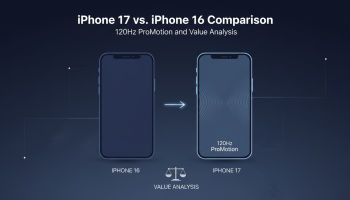
For years, the divide between the standard iPhone and the "Pro" models has been stark, primarily defined by camera capabilities and, more controversially, display technology. The iPhone 17 vs iPhone 16 comparison is shaping up to be one of the most significant debates for value-conscious buyers in a decade. While the iPhone 16 represents the refinement of Apple’s current philosophy, the iPhone 17 is rumored to be the device that finally democratizes 120Hz ProMotion technology, bringing high-refresh-rate fluidity to the masses.
In this comprehensive cornerstone analysis, we will dissect the technical specifications, the implications of supply chain rumors regarding LTPO displays, and the long-term value proposition of buying now versus waiting. If you are holding onto an older device and weighing your options, this guide provides the definitive answer on whether the iPhone 16 is a worthy upgrade or a stopgap before the main event.
The Display Revolution: 60Hz LTPS vs. 120Hz LTPO
The single most contentious specification in recent iPhone history is the refresh rate. Understanding the difference between the rumored display tech of the iPhone 17 and the reality of the iPhone 16 is crucial for this comparison.
The iPhone 16 Status Quo: Refined but Static
The base model iPhone 16 series is expected to continue utilizing LTPS (Low-Temperature Polysilicon) panels. While these OLED screens offer excellent color accuracy and contrast, they are historically locked at a 60Hz refresh rate. In 2024 and 2025, a 60Hz display on a premium flagship priced over $799 is considered by many tech enthusiasts to be obsolete.
- The Limitation: Scrolling text appears blurrier, animations are less fluid, and the device generally feels "slower" compared to Pro models, despite having a powerful processor.
- Battery Implications: Without variable refresh rates, the screen cannot drop down to 1Hz to save power when the image is static.
The iPhone 17 Leap: ProMotion for All
According to credible supply chain analysts (including reports regarding display panel shipments from BOE and LG), the iPhone 17 series is slated to be the first non-Pro lineup to feature LTPO (Low-Temperature Polycrystalline Oxide) technology. This is the hardware required to enable ProMotion.
This upgrade changes the iPhone 17 vs iPhone 16 calculation entirely:
- Fluidity: The screen can refresh 120 times per second, making UI navigation and gaming indistinguishable from the Pro models.
- Always-On Display (AOD): LTPO allows the refresh rate to drop to 1Hz. This suggests the base iPhone 17 will finally support the Always-On Display feature, currently exclusive to Pro users.
- Touch Response: Higher refresh rates correlate with lower input latency, providing a snappier feel.
Key Insight: If display quality is your priority, the iPhone 16 may feel dated the moment the iPhone 17 is announced. The jump from 60Hz to 120Hz is widely considered the most noticeable day-to-day upgrade a user can experience.
Processing Power: A18 vs. A19 Bionic
While the display steals the headlines, the silicon powering these devices determines their longevity, specifically regarding Apple Intelligence and future AI capabilities.
iPhone 16: The A18 Chip
The iPhone 16 is powered by the A18 chipset, built on TSMC’s second-generation 3nm process (N3E). This chip is designed to bring hardware-accelerated ray tracing and dedicated Neural Engine improvements to the standard lineup.
- Focus: Efficiency and enabling on-device generative AI features.
- RAM: Expected to standardize at 8GB to support local LLM (Large Language Model) processing.
iPhone 17: The A19 Evolution
The iPhone 17 will likely introduce the A19, potentially utilizing TSMC’s even more advanced N3P process or moving toward 2nm architecture rumors. The performance delta between the A18 and A19 might not be perceptible in daily tasks like emailing or social media, but it will be evident in:
- Thermal Management: Better efficiency leads to less throttling during intensive gaming.
- AI Headroom: As iOS updates become more AI-heavy, the A19 will have greater overhead to handle features released in 2026 and 2027.
Camera Systems: Hardware vs. Software
In the iPhone 17 vs iPhone 16 battle, the camera hardware sees specific targeted upgrades rather than a total overhaul.
iPhone 16 Refinements
The iPhone 16 continues to refine the 48MP Main camera and the Ultra Wide lens. A key addition is the vertical camera alignment to support Spatial Video capture for the Apple Vision Pro. However, it likely lacks the Tetraprism zoom lens found in the Pro Max models.
The iPhone 17 Front-Facing Revolution
One of the most concrete rumors regarding the iPhone 17 is a massive upgrade to the front-facing "selfie" camera. Analysts predict a jump from the current 12MP sensor to a 24MP sensor with a six-element lens system.
Why this matters:
In the age of TikTok, Zoom calls, and FaceTime, the front camera is the most used lens for many demographics. A 24MP sensor allows for significant cropping without detail loss and better performance in low-light conditions.
Form Factor and Design: Enter the "Slim"
While the iPhone 16 maintains the industrial design language of the iPhone 15 (with the addition of the Action Button and potentially a new Capture Button), the iPhone 17 lineup rumors suggest a radical shift in SKU strategy.
Reports indicate Apple may replace the "Plus" model with an iPhone 17 "Slim" or "Air". This device would focus on aesthetics over raw power, offering:
- A significantly thinner chassis.
- A slight redesign of the camera bump (possibly a single powerful lens or a horizontal arrangement).
- Premium pricing despite non-Pro specs, targeting design-conscious buyers.
If you prefer the "Plus" size battery life and screen real estate, the iPhone 16 Plus might be the last "traditional" large entry-level option before the lineup fragments into the new "Slim" concept.
Value Analysis: Resale and Longevity
When analyzing iPhone 17 vs iPhone 16, we must look at the financial "Total Cost of Ownership" (TCO).
The "60Hz Depreciation" Risk
Historically, features that become standard across the industry dictate resale value. Once Apple standardizes 120Hz across the entire iPhone 17 lineup, the iPhone 16 (and previous 60Hz models) may see a sharper depreciation curve.
In the secondary market of 2026:
- An iPhone 17 (120Hz) will be highly desirable.
- An iPhone 16 (60Hz) will feel distinctly "last-gen," potentially fetching 15-20% less in trade-in value compared to typical historical trends.
The Buy Recommendation
Buy the iPhone 16 if:
- Your current phone is broken or functionally unusable.
- You are upgrading from an iPhone 11 or older (the jump in speed and camera is massive regardless of refresh rate).
- You are sensitive to PWM (Pulse Width Modulation) and prefer the specific dimming implementation of current LTPS screens (though this is niche).
Wait for the iPhone 17 if:
- You currently use an iPhone 13, 14, or 15.
- You value high-refresh-rate displays (ProMotion).
- You want the best possible resale value in 3 years.
- Selfie quality is a priority for your content creation.
Frequently Asked Questions (FAQ)
1. Will the base model iPhone 17 definitely have 120Hz ProMotion?
While not officially confirmed until launch, supply chain reports regarding the shift to LTPO panels for all models are stronger than ever. It is highly probable that the base iPhone 17 will finally bridge the refresh rate gap.
2. Is the iPhone 16 worth buying if it only has a 60Hz screen?
For the average user, yes. The iPhone 16 offers excellent processing power, cameras, and iOS integration. However, for tech enthusiasts or gamers, the 60Hz screen is a significant drawback compared to Android competitors at similar price points.
3. Will the iPhone 17 be more expensive than the iPhone 16?
Pricing is expected to remain stable for the base model ($799), though the introduction of the new "Slim" model could introduce a new pricing tier above the standard model but below the Pro.
4. How much better will the battery life be on the iPhone 17?
The move to LTPO displays on the iPhone 17 should theoretically improve battery efficiency, as the screen can dial down its refresh rate. Combined with the A19 chip, we expect a 10-15% gain in real-world endurance over the 16.
5. Should I upgrade from an iPhone 14 to the iPhone 16?
Unless you need the USB-C port or specific AI features exclusive to the A18 chip, the jump from 14 to 16 is moderate. Waiting for the 17 offers a more transformative upgrade regarding display and front-camera tech.
6. What is the "iPhone 17 Slim"?
Rumors suggest the "Slim" will replace the "Plus" model. It focuses on a sleek, ultra-thin design rather than maximizing battery or camera specs, serving as a fashion-forward alternative in the lineup.
Conclusion: The Verdict on Value
The iPhone 17 vs iPhone 16 comparison highlights a classic tech dilemma: stability versus innovation. The iPhone 16 is projected to be a robust, reliable device that refines the existing formula. It is a safe purchase, but arguably an unexciting one.
However, the iPhone 17 looms as a cornerstone release. By finally bringing ProMotion 120Hz to the non-Pro entry, Apple will eliminate the biggest compromise of buying the standard model. If you can withstand the wait, the iPhone 17 promises to offer the highest value-for-money ratio we have seen in years, combining "Pro" screen technology with "Standard" pricing. For those seeking a device that feels premium for years to come, the patience to wait for 2025 will likely pay dividends.

Editor at XS One Consultants, sharing insights and strategies to help businesses grow and succeed.