

Blog

iPhone 17
vs Samsung Galaxy S25 Edge: The Definitive Flagship Comparison
Introduction: The Clash of the 2025 Titans Contents hide
1 Introduction: The Clash of the 2025 Titans
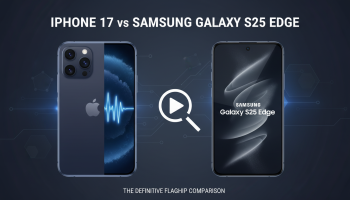
Introduction: The Clash of the 2025 Titans
In the relentless cycle of smartphone innovation, few rivalries shape the industry landscape quite like Apple versus Samsung. As we approach the next generation of mobile computing, the debate centers on two upcoming heavyweights: the iPhone 17 and the Samsung Galaxy S25 Edge. This isn’t just a comparison of specifications; it is a battle of philosophies, ecosystems, and the future of artificial intelligence in our pockets.
For tech enthusiasts and general consumers alike, the choice between these two flagships has never been more difficult—or more significant. With rumors pointing to the iPhone 17 introducing a radical "Slim" design language and Samsung potentially reviving the "Edge" moniker with groundbreaking curvature technology, the stakes are incredibly high. Whether you are deeply entrenched in the Apple ecosystem or a devotee of Android’s customization, understanding the nuances of these devices is crucial.
In this definitive comparison, we analyze the trajectory of these devices based on industry leaks, supply chain reports, and technological trends. We will dissect the display technology, camera capabilities, processing power, and AI integration to help you decide which flagship deserves your investment in 2025.
Design and Build: Evolution vs. Revolution
The aesthetic war between Apple and Samsung has historically been a game of inches. However, the iPhone 17 vs Samsung Galaxy S25 Edge battle promises to be a game of millimeters.
The iPhone 17: Pursuit of the Ultra-Thin
Industry insiders suggest that the iPhone 17 lineup may mark Apple’s most significant chassis redesign since the iPhone X. Reports indicate a shift toward an ultra-slim profile, potentially utilizing a new aluminum-titanium alloy composite that maintains structural integrity while shedding weight. The focus here is on ergonomics—creating a device that disappears in the hand.
- Key Design Shift: Potential introduction of the "Air" or "Slim" variant replacing the Plus model.
- Materials: Grade 5 Titanium frame with a ceramic shield back.
- Buttons: Full transition to capacitive solid-state buttons with haptic feedback, removing mechanical points of failure.
Samsung Galaxy S25 Edge: The Return of Curves
The "Edge" branding implies a strategic pivot for Samsung. After years of flattening their screens, the S25 Edge is rumored to reintroduce the curved display but with a quad-curved ergonomic design. Unlike the accidental-touch-prone edges of the past, this design aims for a "pebble-like" feel, blending the glass seamlessly into the metal frame for a bezel-less illusion.
- Key Design Shift: Symmetric quad-curve glass for immersive viewing.
- Materials: Armor Aluminum 3.0 and Gorilla Glass Victus 4.
- Aesthetic: A boxier footprint (reminiscent of the Ultra line) softened by the edge curvature.
Display Technology: The Visual Experience
The screen is the portal to your digital life. Both manufacturers manufacture world-class panels, but their calibration and technologies differ.
Apple’s ProMotion and Under-Display Tech
The iPhone 17 is expected to finally trickle down 120Hz ProMotion technology to the base models, a feature long overdue. For the Pro variants, the headline feature is likely the reduction of the Dynamic Island. Supply chain leaks point toward an under-display Face ID system, leaving only a circular cutout for the front camera, reclaiming valuable screen real estate.
- Peak Brightness: Targeted 3,000 nits for outdoor visibility.
- Refresh Rate: 1Hz-120Hz variable refresh rate across the board.
Samsung’s Dynamic AMOLED 2X Perfection
Samsung Display often supplies Apple, but they keep their best innovations for the Galaxy S series. The S25 Edge will likely feature the latest M15 organic material set, offering superior power efficiency and color accuracy. The "Edge" aspect enhances the infinity display effect, making media consumption incredibly immersive.
- Resolution: QHD+ default with advanced upscaling algorithms.
- Durability: Improved sub-pixel arrangement to prevent burn-in over long-term use.
Performance: A19 Bionic vs. Snapdragon 8 Gen 5
The engine room of these devices determines their longevity and capability to handle next-gen tasks, particularly generative AI.
The A19 Bionic: Apple’s Silicon Dominance
Apple’s A-series chips have historically led the pack in single-core performance. The A19 Bionic, built on TSMC’s enhanced 2nm process (N2), is expected to focus heavily on Neural Engine cores. This isn’t just about speed; it’s about enabling on-device Apple Intelligence features without draining the battery.
Projected Specs:
- Process: 2nm architecture.
- RAM: 12GB Unified Memory (standardized for AI).
- Focus: Machine learning and thermal efficiency.
Snapdragon 8 Gen 5 for Galaxy
Samsung’s partnership with Qualcomm continues with the "for Galaxy" overclocked variant of the Snapdragon 8 Gen 5. Early benchmarks suggest this chip might finally surpass Apple in multi-core performance thanks to its custom Oryon CPU cores. For gamers, the Adreno GPU in the S25 Edge is expected to support advanced ray tracing that rivals desktop consoles.
Projected Specs:
- Process: 3nm optimized node.
- RAM: Up to 16GB LPDDR6.
- Focus: Graphics performance and multitasking capabilities.
Camera Systems: Computational Photography Wars
In the era of social media, the camera is king. The iPhone 17 vs Samsung Galaxy S25 Edge comparison highlights two different approaches to imaging.
iPhone 17: Realism and Video Supremacy
Apple continues to prioritize color accuracy, shutter lag reduction, and video quality. The iPhone 17 is rumored to upgrade the front-facing camera to a 24MP sensor with autofocus, drastically improving selfies and FaceTime quality. On the rear, expect a larger 48MP main sensor across all models, with the Pro Max/Ultra featuring an upgraded tetraprism periscope lens offering 10x optical zoom capabilities.
- Standout Feature: Spatial Video capture for Vision Pro integration.
- Software: Photonic Engine 3.0 for superior low-light texture rendering.
Samsung Galaxy S25 Edge: The Zoom King
Samsung plays the numbers game but backs it up with incredible utility. The S25 Edge is expected to retain the 200MP main sensor but with a new image signal processor (ISP) that reduces shutter lag—a historical pain point. The zoom capabilities remain unmatched, with rumors of a variable optical zoom lens that moves physically between 3x and 10x, eliminating digital crop loss.
- Standout Feature: AI-driven "Zoom Anyplace" and Astrophotography modes.
- Software: Galaxy AI editing tools for object removal and generative fill.
Software and AI: iOS 19 vs. One UI 7
The battleground has shifted from hardware to software intelligence. This is where the user experience diverges most.
iOS 19: The Walled Garden Gets Smarter
With Apple Intelligence fully matured in iOS 19, the iPhone 17 will feature deep system-wide integration. Siri is expected to be a true agentic AI, capable of performing cross-app tasks (e.g., "Send the photos from last night to Mom and add the dinner reservation to my calendar"). Privacy remains the selling point, with most processing happening on the A19 chip via Private Cloud Compute.
One UI 7 (Android 15): Customization Meets Intelligence
Samsung’s One UI on the S25 Edge offers flexibility that iOS cannot match. The integration of Google Gemini Nano allows for incredible real-time translation, note summarization, and circle-to-search features. The "Edge" software features will likely return, offering quick-access sidebars and multitasking pairs that utilize the curved screen utility.
Battery Life and Charging
Power users demand all-day battery life, and both companies are utilizing new battery technologies to deliver.
iPhone 17
Apple is reportedly moving to stacked battery technology, allowing for higher density in the same footprint. While charging speeds may see a modest bump to 40W wired, the efficiency of the A19 chip ensures the device lasts longer per milliamp-hour.
- Charging: MagSafe enhanced, USB-C (Thunderbolt speeds on Pro).
- Endurance: Targeted 24-hour video playback.
Galaxy S25 Edge
Samsung typically pushes charging speeds faster than Apple. The S25 Edge is expected to support 65W wired charging, getting you from 0% to 100% in under 35 minutes. Reverse wireless charging remains a staple for Galaxy Watch and Buds users.
- Charging: 65W Wired, 15W Wireless.
- Endurance: 5,000mAh capacity standard.
Verdict: Which Flagship Reigns Supreme?
Choosing between the iPhone 17 and Samsung Galaxy S25 Edge comes down to what you value most in your digital life.
Choose the iPhone 17 if:
- You are deeply invested in the Apple Ecosystem (Mac, iPad, Watch).
- You prioritize video recording quality and resale value.
- You prefer a polished, privacy-focused AI experience over raw customization.
- You want the most powerful mobile processor for single-thread tasks.
Choose the Samsung Galaxy S25 Edge if:
- You consume a lot of media and want the most immersive, curved display.
- You need superior zoom capabilities and versatile camera modes.
- Multitasking and file management flexibility are essential to your workflow.
- You prefer faster charging speeds and Android’s open nature.
Frequently Asked Questions (FAQs)
1. When will the iPhone 17 and Samsung Galaxy S25 Edge be released?
Based on historical release cycles, the Samsung Galaxy S25 series is expected to launch in January or February 2025, while the iPhone 17 lineup will likely be announced in September 2025.
2. Will the iPhone 17 finally have a 120Hz display on the base model?
Yes, rumors strongly indicate that Apple will introduce LTPO displays across the entire iPhone 17 lineup, bringing 120Hz ProMotion technology to standard models for the first time.
3. Does the Samsung Galaxy S25 Edge have a better camera than the iPhone 17?
The Galaxy S25 Edge typically wins in zoom capabilities and versatility due to its periscope lens and high-megapixel sensor. However, the iPhone 17 generally excels in video quality, color consistency, and shutter speed.
4. Which phone has better battery life?
While the Samsung Galaxy S25 Edge usually has a larger battery capacity (mAh), the iPhone 17 often achieves comparable or better real-world usage time due to the extreme efficiency of the iOS operating system and the A-series chip.
5. Is the "Edge" screen on the S25 prone to accidental touches?
Samsung has refined its palm rejection software significantly over the years. The S25 Edge’s quad-curve design is expected to focus on ergonomics without compromising touch accuracy, minimizing accidental inputs compared to older models.
6. Will the iPhone 17 use USB-C?
Yes, following the transition that began with the iPhone 15, the iPhone 17 will utilize USB-C. The Pro models are expected to support higher data transfer speeds (Thunderbolt/USB 4) suitable for transferring large ProRes video files.
Conclusion
The battle between the iPhone 17 vs Samsung Galaxy S25 Edge represents the pinnacle of mobile technology. Whether you lean toward the seamless optimization of Apple or the hardware-pushing innovation of Samsung, 2025 is shaping up to be a golden year for smartphone consumers. Analyze your usage patterns, consider your existing ecosystem, and choose the device that not only fits your hand but fits your life.

Editor at XS One Consultants, sharing insights and strategies to help businesses grow and succeed.