

Blog

The $599
MacBook: Apple’s Strategy to Disrupt the Education Market and Rival Chromebooks
Introduction: The Impending Shift in Educational Technology Contents hide
1 Introduction: The Impending Shift in Educational Technology
Introduction: The Impending Shift in Educational Technology
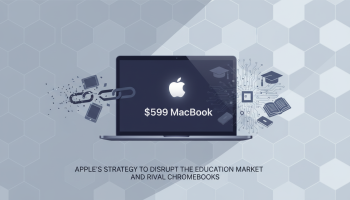
For over a decade, the K-12 education market has been dominated by a single, undeniable force: the Google Chromebook. Affordable, durable, and easy to manage, these devices have captured the classrooms of America, leaving competitors scrambling. However, industry reports and supply chain leaks suggest a seismic shift is on the horizon. Apple is reportedly developing a Low-Cost MacBook series, targeting a price point as low as $599, designed specifically to disrupt Google’s stronghold and reclaim the educational sector.
This is not merely a hardware release; it is a strategic pivot for the tech giant. While the iPad has been Apple’s primary vehicle for education, it lacks the clamshell utility required for older students. A dedicated, budget-friendly MacBook represents Apple’s acknowledgment that to secure the next generation of users, they must meet schools where they are: at the intersection of affordability and functionality.
In this comprehensive analysis, we explore the rumors, the strategy, and the potential impact of Apple’s entry into the budget laptop market. We will dissect how a Low-Cost MacBook could alter the EdTech landscape, the challenges Apple faces in maintaining its premium brand identity, and what this means for students, educators, and the broader consumer market.
The Current Landscape: Why Chromebooks Rule the Classroom
To understand the significance of a potential Low-Cost MacBook, one must first appreciate the formidable position of the Chromebook. Google did not win the classroom by offering the most powerful machine; they won by offering the most logical solution for school districts operating on tight budgets.
The Economics of Education
School districts are volume buyers. When purchasing thousands of units, a difference of $100 per device equates to hundreds of thousands of dollars. Currently, the math favors Google:
- Price Sensitivity: Chromebooks are available for under $300, sometimes closer to $150 for bulk institutional orders.
- Repair Costs: Plastic chassis and modular components make Chromebooks cheap to fix when students inevitably drop them.
- Lifecycle Management: The Chrome Education Upgrade license allows IT administrators to manage thousands of devices remotely with ease.
The Gap in Apple’s Armor
Until now, Apple’s answer to the Chromebook has been the iPad or the MacBook Air. Both present hurdles. The iPad, while excellent for creativity, requires expensive accessories (keyboards, cases) to function as a true laptop replacement, driving the total cost up. The MacBook Air, with an educational starting price usually around $899, remains cost-prohibitive for 1:1 deployment in public schools. This pricing vacuum has allowed Google to secure over 50% of the K-12 market in the United States.
Unpacking the "Low-Cost MacBook" Strategy
According to supply chain reports from outlets like DigiTimes, Apple is developing a new product line distinct from the MacBook Air and MacBook Pro. This new series targets the education market specifically, aiming to bridge the gap between the iPad and the premium Mac lineup.
What Would a $599 MacBook Look Like?
achieving a $599 price point requires strategic compromises. Apple is known for its "unibody aluminum" standard, but a Low-Cost MacBook would likely utilize different materials and manufacturing processes to protect margins while lowering costs.
- Material Changes: Analysts predict a shift to a metal chassis with different mechanical structures, or potentially a high-quality polycarbonate (plastic) similar to the beloved white MacBooks of the mid-2000s.
- Display Technology: To cut costs, Apple might forgo the "Liquid Retina" branding in favor of standard LCD panels with lower brightness or color accuracy standards, sufficient for text and research but less ideal for professional design work.
- Component Integration: Utilizing older generations of Apple Silicon (such as the M2 or a binned M3 chip) allows Apple to offer superior performance compared to Celeron-based Chromebooks without incurring the R&D costs of cutting-edge processors.
The "Chromebook Killer" Value Proposition
Even at $599, the device is more expensive than a $300 Chromebook. So, how does Apple compete? The answer lies in Total Cost of Ownership (TCO) and residual value.
Apple devices historically hold their value longer than any competitor. A Low-Cost MacBook that lasts 5-6 years provides better value than a cheap Chromebook that needs replacing every 3 years. Furthermore, the integration of macOS allows students to learn on industry-standard software (Final Cut, Logic, Xcode) rather than browser-based alternatives, justifying the premium.
Strategic Implications: The Ecosystem Pipeline
Apple’s motivation extends beyond selling hardware hardware sales; it is about the ecosystem pipeline. The "halo effect" is a real phenomenon. If a student uses a Chromebook from Kindergarten through 12th grade, they become deeply retrenched in the Google ecosystem (Docs, Drive, Gmail, Android). By the time they enter university or the workforce, switching to macOS feels like a burden.
Capturing the Next Generation
By introducing a Low-Cost MacBook into schools, Apple ensures that students grow up accustomed to macOS, iWork, and iCloud. This early exposure creates brand loyalty that pays dividends when those students eventually purchase their own premium iPhones and MacBook Pros as adults.
Services Revenue Expansion
Every active Apple device is a potential node for services revenue. Even institutional devices contribute to the install base for iCloud and Apple Arcade (for personal use). Expanding the user base in education feeds the services narrative that Wall Street currently favors.
Apple vs. Google: The Technical Showdown
When comparing a hypothetical budget MacBook against top-tier Chromebooks, several distinct battlegrounds emerge.
1. Performance and Efficiency
Chromebooks generally run on low-power Intel Celeron or MediaTek processors. While ChromeOS is lightweight, these chips struggle with heavy multitasking. An Apple Silicon-based Low-Cost MacBook would theoretically blow these competitors out of the water in terms of raw performance and battery life, offering 15+ hours of usage on a single charge—a critical feature for students who forget their chargers.
2. Offline Capability
ChromeOS has improved its offline capabilities, but it is still fundamentally a cloud-first operating system. macOS offers robust local storage and full application support without an internet connection, which is vital for students in rural areas or households with unstable internet access.
3. Privacy and Security
Apple has made privacy a core pillar of its brand. In an educational environment where student data privacy is paramount, Apple’s on-device processing and strict data policies offer a compelling alternative to Google’s ad-revenue-adjacent business model. Schools concerned with data mining may view the premium for Apple hardware as an investment in student privacy.
Challenges Apple Must Overcome
Despite the potential, launching a cheap laptop is fraught with risks for a luxury brand like Apple.
Brand Dilution
Apple protects its premium image fiercely. Releasing a "cheap" product carries the risk of diluting the brand. If the Low-Cost MacBook feels flimsy or performs poorly, it could tarnish the reputation of the MacBook Air and Pro. Apple must balance cost-cutting with the "Apple quality" consumers expect.
The Margin Trap
Apple typically enjoys hardware margins of 30% or higher. Competing in the education sector often means accepting razor-thin margins. Apple will need to rely on volume sales and manufacturing efficiencies to make the economics work without angering shareholders.
Repairability and Durability
Classrooms are hostile environments for electronics. Devices get dropped, stepped on, and spilled on. To compete with Lenovo and Dell Chromebooks, a budget MacBook must be rugged. Apple’s current unibody designs are durable but difficult and expensive to repair. A redesign focusing on modularity and user-serviceability might be necessary for institutional success.
Conclusion: A Disruption in the Making
The introduction of a Low-Cost MacBook priced around $599 would be the most significant shake-up in the laptop market since the introduction of the MacBook Air. It signals Apple’s refusal to cede the future generation of users to Google. For educators, it promises a return to powerful, local computing. For parents and students, it offers an entry point into the Apple ecosystem that has previously been out of reach.
While rumors remain rumors until a Keynote announcement, the strategic logic is undeniable. As the lines between tablet and laptop blur, and as the fight for the classroom intensifies, a budget-friendly macOS device is the weapon Apple needs to win the war for the classroom.
Frequently Asked Questions (FAQ)
1. When is the new Low-Cost MacBook expected to be released?
While Apple has not officially confirmed a release date, industry analysts and supply chain leaks suggest a potential launch in late 2024 or early 2025, likely timed to coincide with the academic buying season.
2. How much will the Low-Cost MacBook cost?
Current reports indicate Apple is targeting a price point significantly lower than the MacBook Air, potentially starting at $599 for education customers, though consumer pricing may differ slightly.
3. Will the budget MacBook use Apple Silicon chips?
Yes. It is highly probable that the device will utilize Apple Silicon, likely an older generation chip (like the M2) or a specifically designed efficiency chip to maintain high performance while keeping costs down.
4. How does the Low-Cost MacBook differ from the MacBook Air?
To reduce costs, the budget model may feature less expensive casing materials (possibly plastic or different metal alloys), a non-Retina or lower-spec display, fewer ports, and slightly heavier dimensions compared to the ultra-thin MacBook Air.
5. Is this MacBook intended for the general public or just schools?
While the primary target is the K-12 education market to rival Chromebooks, Apple rarely restricts hardware solely to institutions. It is expected to be available to general consumers looking for an entry-level Mac.
6. Can the Low-Cost MacBook run professional software?
Unlike Chromebooks, which rely on web apps, a budget MacBook running macOS would theoretically support full desktop applications like Microsoft Office, Adobe Creative Cloud, and Zoom, provided the hardware specs meet the minimum requirements.
Strategic Conclusion
The rumor of a Low-Cost MacBook is more than just tech gossip; it represents a strategic correction in the tech market. Apple is poised to challenge the notion that "education tech" must be synonymous with "cheap and underpowered." By offering a device that balances price with the power of the Apple ecosystem, Cupertino isn’t just selling laptops—they are investing in their future user base. If executed correctly, the $599 MacBook could effectively end the era of Chromebook dominance in higher-level education.

Editor at XS One Consultants, sharing insights and strategies to help businesses grow and succeed.