

Blog

Next.js 16:
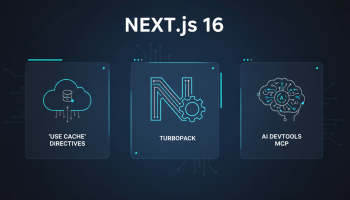
Mastering Stable Turbopack, ‘use cache’ Directives, and AI DevTools MCP
Introduction: The Dawn of Next.js 16 and the Future
of React Architecture Contents hide 1 Introduction: The
Introduction: The Dawn of Next.js 16 and the Future of React Architecture
The frontend ecosystem never stands still, and the arrival of Next.js 16 marks a pivotal moment in the evolution of React frameworks. While previous versions focused on transitioning the community toward Server Components, Next.js 16 is about stabilization, refinement, and developer velocity. This release addresses the ecosystem’s most critical demands: a stable, lightning-fast bundler, a simplified caching mental model, and the integration of next-generation AI workflows via the Model Context Protocol (MCP).
For enterprise teams and solo developers alike, upgrading to Next.js 16 is not merely a version bump—it is a strategic adoption of a more mature infrastructure. The friction of the past (slow HMR, confusing caching configurations) is being replaced by intelligent defaults and Rust-based tooling.
In this comprehensive guide, we will dismantle the architecture of Next.js 16. We will explore how Turbopack has finally reached production stability, how the 'use cache' directive fundamentally alters data fetching strategies, and how AI DevTools are transforming the debugging loop.
What You Will Learn in This Guide:
- Production-Ready Turbopack: Moving beyond beta to reliable, instant feedback loops.
- The
'use cache'Directive: Mastering granular caching without the boilerplate. - AI & MCP Integration: How Next.js 16 exposes context to LLMs for smarter coding assistance.
- Migration Strategies: Practical steps to upgrade your codebase safely.
Stable Turbopack: The Rust-Based Engine of Speed
Since its announcement, Turbopack has promised to be the successor to Webpack—built in Rust to be incrementally correct and incredibly fast. In Next.js 16, Vercel delivers on that promise. Turbopack is no longer an experimental toggle; it is the stable default development server.
Why Stability Matters Now
For years, developers tolerated the sluggish startup times of Webpack in large repositories because the alternative (Turbopack) lacked full compatibility with the vast plugin ecosystem. With Next.js 16, the module graph resolution has hit a critical maturity point. The build engine now supports virtually all loaders and edge cases that previously forced teams back to Webpack.
- Instant HMR (Hot Module Replacement): Regardless of whether your application has 10 routes or 10,000, updates appear instantly.
- Memory Efficiency: Rust’s memory management prevents the notorious memory leaks often seen in large Node.js-based build processes.
- CI/CD Acceleration: Turbopack isn’t just for
next dev. Next.js 16 begins the transition of using Turbo for production builds (next build), significantly cutting deployment times on platforms like Vercel and AWS.
Benchmarking the Gains
Internal benchmarks for Next.js 16 show a drastic reduction in compile times. For a cold start on a typical e-commerce application, Turbopack in v16 is approximately 700x faster than the original Webpack configuration found in Next.js 12. This isn’t just a quality-of-life improvement; it translates directly to engineering hours saved per week.
Mastering the 'use cache' Directive
One of the most debated aspects of the App Router has been caching. Between fetch caching, revalidatePath, revalidateTag, and the differences between static and dynamic rendering, developers often found themselves fighting the framework. Next.js 16 introduces the 'use cache' directive, a game-changer that aligns caching with the component model.
The Shift from Request Caching to Function Caching
Previously, caching was heavily tied to the fetch API or route segments. The 'use cache' directive allows you to mark specific functions—or entire files—as cacheable entities with specific lifetimes (TTL) and tags, independent of the network layer. This brings memoization to the server infrastructure level.
Key Advantages:
- Granularity: You can cache an expensive database query, a specific component render, or a computation helper without caching the entire route.
- Declarative Syntax: It follows the pattern of
'use server'and'use client', making it intuitive for React developers. - Automatic Cache Key Generation: Next.js 16 handles the serialization of arguments to create cache keys automatically, reducing the risk of collisions.
Implementation Example
Imagine a dashboard that aggregates high-latency data. In Next.js 15, you might have wrestled with unstable_cache. In Next.js 16, the syntax becomes declarative:
// utilities/analytics.ts
'use cache'

export async function getUserAnalytics(userId: string) {
  // This expensive operation is now automatically cached
  // based on the userId argument.
  const data = await db.query('SELECT * FROM heavy_table WHERE user_id = ?', [userId]);
  return processData(data);
}
This directive works seamlessly with Partial Prerendering (PPR), allowing static shells to load instantly while cached dynamic parts stream in efficiently.
AI DevTools and the Model Context Protocol (MCP)
Next.js 16 is the first major framework to deeply integrate with the Model Context Protocol (MCP). As AI coding assistants (like Cursor, GitHub Copilot, and Windsurf) become standard, the bottleneck has been

Editor at XS One Consultants, sharing insights and strategies to help businesses grow and succeed.