

Blog

What is
Headless Architecture? A Comprehensive Guide to Modern Decoupled CMS
Introduction: The Shift to API-First Digital Experiences Contents hide
1 Introduction: The Shift to API-First Digital Experiences
Introduction: The Shift to API-First Digital Experiences
In the rapidly evolving landscape of digital development, the traditional monolithic CMS (Content Management System) is struggling to keep pace. As businesses strive to deliver content not just to websites, but to mobile apps, smartwatches, IoT devices, and digital signage, the limitations of coupling the backend content repository with the frontend presentation layer have become glaringly obvious.
Enter headless architecture. This paradigm shift represents a fundamental decoupling of the content management capabilities from the visual interface. It is no longer a buzzword reserved for tech giants; it is becoming the standard for enterprises seeking agility, scalability, and true omnichannel delivery.
In this comprehensive guide, we will dismantle the complexities of headless architecture. We will explore how an API-first approach transforms content strategy, compare it against traditional coupled systems, and examine why forward-thinking CTOs and marketers are migrating to decoupled CMS solutions to future-proof their digital ecosystems.
What is Headless Architecture?
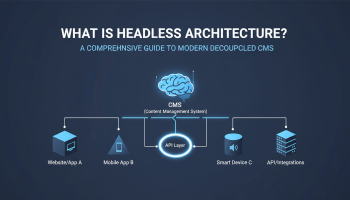
At its core, headless architecture refers to a system where the frontend presentation layer (the "head") is completely separated from the backend logic and database (the "body"). In a headless setup, the backend has a single focus: storing and managing data.
Unlike a traditional CMS like WordPress or Drupal—which dictates how content is displayed using predefined themes and HTML templates—a headless CMS is strictly content-first. It creates content once and serves it anywhere via APIs (Application Programming Interfaces), usually in a raw data format like JSON or XML.
The "Headless" Analogy
Think of a traditional monolithic CMS as a unified restaurant where the kitchen (backend) and the dining area (frontend) are in the same building. If you want to eat, you must go to that specific location.
Headless architecture is like a massive central kitchen (backend) that focuses solely on cooking high-quality food (content). It doesn’t care where the food is eaten. It uses delivery drivers (APIs) to send that food to a fine dining restaurant, a food truck, a home delivery service, or a corporate event (various frontends). The content remains consistent, but the presentation changes depending on the context.
Monolithic vs. Headless CMS: A Strategic Comparison
To fully appreciate the value of an API-first strategy, one must understand the limitations of the legacy systems that preceded it. Below is a detailed breakdown of how monolithic and headless architectures differ.
1. The Monolithic (Coupled) Approach
In a traditional coupled CMS, the backend and frontend are inextricably linked. The system manages the database, the content editing interface, and the HTML rendering of the website.
- Pros: Easier to set up for simple websites; lower initial technical barrier; WYSIWYG editors are standard.
- Cons: Content is trapped in a specific display format; redesigns require rebuilding the backend; scaling is difficult; highly vulnerable to security breaches due to exposed backend code.
2. The Headless (Decoupled) Approach
A headless system removes the "head" (the website) entirely from the equation.
- Pros: Frontend agnostic (use React, Vue, Angular, etc.); content can be pushed to any device; enhanced security (the backend is hidden); infinite scalability; developer freedom.
- Cons: Requires frontend developers to build the visual layer; initial setup is more complex; requires a different approach to SEO and previewing content.
Key Components of a Modern Headless Stack
Transitioning to a headless environment often involves adopting the JAMstack (JavaScript, APIs, and Markup) philosophy. Here are the critical components that make this architecture function.
The Content Repository (Backend)
This is where your content creators live. It acts as a database for text, images, and assets. Unlike a traditional dashboard, this interface focuses purely on data structure and hierarchy, independent of how it looks on a screen.
The API Layer (The Bridge)
The API is the engine of headless architecture. It connects the repository to the user. Most modern systems utilize RESTful APIs or GraphQL to query data. This allows developers to request exactly the data they need—nothing more, nothing less—improving load times and performance.
The Presentation Layer (Frontend)
This is where the creativity happens. Because the backend doesn’t dictate the code, developers can use modern frameworks like Next.js, Gatsby, or Nuxt.js to build lightning-fast, interactive user interfaces. This separation allows for rapid iteration on the design without risking the integrity of the database.
Why Enterprises Are Adopting Headless Architecture
The move toward decoupled systems is driven by tangible business benefits. Here is why organizations are investing in this infrastructure.
1. True Omnichannel Capability
Modern customer journeys are non-linear. A user might start on a mobile app, check a smartwatch notification, and finish a purchase on a desktop. Headless architecture allows you to manage content in a single hub and deploy it synchronously across all these touchpoints.
2. Enhanced Security
In a traditional CMS, the database is often connected directly to the public-facing site. If the site is hacked, the database is vulnerable. In a headless setup, the frontend is just static files or compiled code communicating via API. The database is obscured and often sits behind multiple layers of security, significantly reducing the attack surface.
3. Future-Proof Scalability
Technology changes fast. A framework popular today might be obsolete in five years. With a headless backend, you can swap out the frontend technology (e.g., moving from React to a future framework) without having to migrate your content or rebuild your database. Your data remains pristine and accessible.
4. Superior Performance (Core Web Vitals)
Headless sites often utilize static site generators (SSG) or server-side rendering (SSR). This results in pre-rendered HTML that loads almost instantly. This speed is a critical factor for Google’s Core Web Vitals, directly influencing SEO rankings and user retention.
Challenges and Considerations
While the benefits are substantial, headless architecture is not a silver bullet for every project. It introduces a level of complexity that requires a mature development team.
- Dependency on Developers: Marketers cannot simply hit "publish" and see a page appear exactly as intended without a preview environment configured by developers.
- Fragmented Tech Stack: You are moving from an all-in-one suite to a stack of specialized microservices. Managing multiple subscriptions and integrations requires strong governance.
- Cost Implications: While running costs can be lower due to static hosting, the initial build cost for a custom frontend is typically higher than installing a generic theme.
Implementing Headless: A Strategic Roadmap
Adopting this architecture requires a shift in organizational mindset as much as technology.
Step 1: Audit Your Content Velocity
Determine if you actually need headless. If you are a small local business with a static brochure site, a monolithic CMS is likely sufficient. If you are a growing enterprise with multiple digital properties, headless is the logical next step.
Step 2: Choose Your API Standard
Decide between REST and GraphQL. REST is standard and widely supported, but GraphQL allows for more efficient data fetching, reducing the number of API calls required to render a page.
Step 3: Select a Frontend Framework
Choose a framework that aligns with your team’s expertise. React and Vue.js are currently dominant, offering vast libraries and community support for building dynamic interfaces.
Frequently Asked Questions (FAQ)
1. What is the difference between a Headless CMS and a Decoupled CMS?
While often used interchangeably, there is a nuance. A Headless CMS is strictly API-only and has no frontend tools. A Decoupled CMS is a hybrid; it offers an API for headless delivery but also includes a proactive templating system for standard website delivery if needed. Headless is reactive; Decoupled is proactive.
2. Is Headless Architecture better for SEO?
Yes, but it requires effort. While monolithic systems handle SEO plugins out of the box, headless allows for cleaner code, faster load times, and better mobile optimization—all huge ranking factors. However, developers must manually configure metadata handling, canonical tags, and structured data.
3. Is Headless Architecture expensive?
The initial investment is often higher because you are building a custom frontend rather than using a template. However, the long-term ROI is typically better due to lower maintenance costs, easier scaling, and the elimination of "replatforming" costs every few years.
4. Can non-technical users manage content in a headless system?
Absolutely. Modern headless CMS platforms provide user-friendly interfaces (similar to WordPress) for content entry. The main difference is the lack of a "visual editor" unless the development team integrates a preview feature.
5. What industries benefit most from headless architecture?
E-commerce, financial services, and media companies benefit most. These industries require high security, rapid content updates, and delivery across multiple platforms (apps, kiosks, web), which headless handles perfectly.
6. Does headless affect website security?
It significantly improves it. Because the content database is separated from the user-facing website, Distributed Denial of Service (DDoS) attacks on the frontend do not compromise the backend data. The attack surface is drastically reduced.
Conclusion: Embracing the Decoupled Future
Headless architecture is not merely a trend; it is the natural evolution of the web. As the line between "websites" and "applications" blurs, the need for a content infrastructure that is agile, secure, and platform-agnostic becomes paramount.
For modern businesses, the question is no longer if they should decouple their content, but when. By adopting an API-first strategy, organizations unlock the freedom to innovate on the frontend without being shackled by backend limitations. Whether you are scaling an e-commerce giant or building a multi-channel media empire, headless architecture provides the robust foundation necessary to withstand the demands of the future digital ecosystem.

Editor at XS One Consultants, sharing insights and strategies to help businesses grow and succeed.