

Blog

TikTok EU
Regulation: Assessing the Impact of Addictive Design Allegations on Child Safety
Introduction: The Pivot Point in Digital Governance Contents hide
1 Introduction: The Pivot Point in Digital Governance
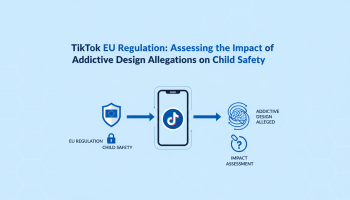
Introduction: The Pivot Point in Digital Governance
The digital landscape represents a frontier where innovation frequently outpaces regulation. However, the European Union has taken a decisive stand to realign this balance, specifically targeting the mechanisms that drive user engagement on massive social platforms. At the center of this regulatory storm is the ongoing investigation into TikTok EU Regulation compliance, a case that serves as a bellwether for the future of digital product design and child safety standards globally.
In February 2024, the European Commission formally opened proceedings against TikTok under the Digital Services Act (DSA). This was not merely a procedural check; it was a targeted inquiry into alleged breaches of transparency, the protection of minors, and, most notably, the deployment of "addictive design" features. The scrutiny intensified with the launch of "TikTok Lite" in France and Spain, which introduced a reward-based system that regulators feared would exacerbate addictive behaviors among young users.
For tech consultants, developers, and digital strategists, this is more than a legal headline. It signifies a paradigm shift where User Experience (UX) is no longer judged solely by retention metrics but by its psychological impact on vulnerable demographics. As we assess the implications of these allegations, we must understand how the DSA is reshaping the architecture of social media and what it means for the future of development of platforms like TikTok.
The Digital Services Act (DSA): A New Framework for VLOPs
To understand the gravity of the TikTok EU Regulation probe, one must first grasp the framework of the Digital Services Act. The DSA imposes a tiered system of obligations, placing the heaviest burden on Very Large Online Platforms (VLOPs)—those with more than 45 million monthly active users in the EU. TikTok falls squarely into this category.
Under the DSA, VLOPs are legally mandated to assess and mitigate "systemic risks" stemming from their services. These risks are not limited to illegal content but extend to:
- Negative effects on civic discourse and electoral processes.
- The dissemination of disinformation.
- Actual or foreseeable negative effects on the protection of minors and public health, including mental well-being.
It is this third pillar—mental well-being and minor protection—that is the crux of the European Commission's investigation. The Commission is assessing whether TikTok’s algorithms and design choices stimulate behavioral addiction, creating a "rabbit hole" effect that traps users, particularly children, in cycles of harmful content consumption.
Deconstructing "Addictive Design" Allegations
The term "addictive design" refers to UI/UX patterns specifically engineered to maximize time-on-device and user retention, often exploiting cognitive biases. In the context of the TikTok EU Regulation inquiry, regulators are scrutinizing several key mechanisms.
The "Rabbit Hole" Effect and Algorithmic Amplification
The core of TikTok's success—and its regulatory peril—is its highly sophisticated recommendation engine. Unlike social graphs based on friend connections, TikTok's "For You" feed relies on AI-driven algorithmic recommendations that predict user interest with uncanny accuracy. While this represents a technological marvel, the EU alleges that it creates rabbit holes where minors are rapidly funneled toward increasingly extreme or depressive content.
The Commission is investigating whether TikTok has taken sufficient measures to mitigate these algorithmic risks. The concern is that the system prioritizes engagement over safety, effectively rewarding content that keeps eyes on the screen regardless of its psychological toll.
Infinite Scroll and Variable Rewards
The interface of modern social apps is often compared to a slot machine. The "pull-to-refresh" mechanic and the infinite scroll feature utilize intermittent variable rewards—a psychological concept where the unpredictability of the next video creates a dopamine loop. The EU's inquiry questions whether these user interface and experience design choices constitute a failure to protect minors from behavioral addiction.
The Case of TikTok Lite: Task and Reward
The regulatory tension reached a fever pitch with the rollout of "TikTok Lite" in select EU markets. This version included a "Task and Reward" program, allowing users to earn points for performing tasks like watching videos, liking content, or inviting friends. The European Commission viewed this gamification of engagement as a direct threat to the mental health of minors, leading to a threat of interim measures to suspend the feature. TikTok subsequently voluntarily suspended the reward program in the EU, a move that highlights the immense power the DSA now wields over product features.
Child Safety Protocols: Age Verification and Default Privacy
Beyond the philosophical debate on addiction, the TikTok EU Regulation investigation focuses on tangible technical compliance regarding age assurance.
The Age Verification Challenge
The DSA requires platforms to ensure a high level of privacy, safety, and security for minors. A critical component of this is preventing underage users (typically under 13) from accessing the platform and ensuring that users under 18 receive appropriate protections. The Commission is investigating whether TikTok’s age verification tools are effective or easily circumvented. In an era where compliance and security standards are tightening, reliance on self-declared age is no longer viewed as sufficient by European regulators.
Privacy by Default
Under Article 28 of the DSA, platforms must ensure that the interface does not deceive or manipulate users—a concept often referred to as "Dark Patterns." For minors, this means privacy settings should be set to the highest level by default. The investigation assesses whether TikTok’s default settings for minors effectively shield them from unwanted contact, targeted advertising, and public exposure.
Business Implications: The Shift from Engagement to Safety
The ripple effects of the TikTok EU Regulation probe extend far beyond the legal department of ByteDance. It signals a broader shift in the digital economy that impacts marketers, app developers, and business leaders.
Redefining KPI Hierarchies
For a decade, the “North Star” metric for social platforms has been Daily Active Users (DAU) and time spent per user. The DSA challenges this model. Businesses utilizing digital marketing strategies must now anticipate a landscape where platforms may be forced to deprecate features that aggressively drive retention if those features are deemed harmful to minors. This could lead to a fluctuation in ad inventory and a change in how organic reach is calculated.
Compliance as a Design Constraint
For software development agencies and startups, the "move fast and break things" era is evolving into "move thoughtfully and document everything." Developers must now integrate "Safety by Design" principles from the prototyping phase. This includes robust age assurance APIs, clear data usage transparency, and algorithms that can be audited for bias and harm. Expert technology consultancy regarding regulatory compliance is becoming a prerequisite for launching any social or community-driven app in the European market.
Algorithm Transparency and Data Access
A unique aspect of the DSA is the requirement for transparency. VLOPs must provide vetted researchers and regulators access to their data to monitor systemic risks. This "black box" opening is unprecedented.
For TikTok, this means the proprietary nature of its recommendation algorithm is no longer absolute. Regulators want to see the code or the logic that determines why a 15-year-old is shown a specific sequence of videos. This level of scrutiny ensures that platforms can be held accountable not just for the content they host, but for the amplification decisions their machines make.
Global Context: EU vs. US Regulatory Approaches
While the US Congress has focused largely on data security and national security concerns regarding TikTok (leading to divest-or-ban legislation), the EU approach is fundamentally different. The TikTok EU Regulation strategy is not about banning the app but civilizing it. It focuses on consumer protection and fundamental rights rather than geopolitical ownership.
This divergence creates a complex environment for global businesses. A feature compliant in New York might be illegal in Paris. Companies must navigate these fragmented regulatory waters, often leading to the "Brussels Effect," where EU standards become the de facto global baseline because it is easier to build one compliant product than distinct versions for every jurisdiction.
Future Outlook: Will TikTok Change?
The stakes are incredibly high. Non-compliance with the DSA can result in fines of up to 6% of a company's global annual turnover. For a giant like ByteDance, this amounts to billions of dollars. Furthermore, the Commission has the power to impose interim measures—forcing immediate changes before the investigation concludes—as seen with the suspension of TikTok Lite rewards.
We are likely to see TikTok implement more rigorous "break" reminders, stricter default screen time limits for minors, and perhaps a version of the feed that is less personalized or strictly chronological for younger users. Additionally, user feedback mechanisms on social platforms will likely become more prominent, giving users more control over what they see and why they see it.
Comprehensive FAQ
1. What triggered the specific TikTok EU Regulation investigation?
The investigation was triggered by the European Commission’s concerns regarding TikTok’s compliance with the Digital Services Act (DSA). Specifically, the Commission cited systemic risks related to the protection of minors, the addictive nature of the platform’s design (such as the "rabbit hole" effect), lack of transparency in advertising, and issues surrounding data access for researchers. The launch of "TikTok Lite" with its reward program further accelerated regulatory action.
2. How does the Digital Services Act define "addictive design"?
While the DSA does not provide a rigid technical definition, it addresses addictive design under the umbrella of "negative effects on mental well-being." It targets interface designs and algorithmic choices that exploit cognitive biases to keep users engaged involuntarily or compulsively. This includes features like infinite scrolling, autoplay, and variable reward systems that can stimulate behavioral addiction, especially in minors.
3. What are the potential penalties for TikTok if found non-compliant?
If the European Commission finds TikTok in violation of the DSA, the platform faces fines of up to 6% of its total global annual turnover. In extreme cases of repeated serious non-compliance involving harm to people’s life or safety, the Commission could theoretically take steps to temporarily suspend the service in the EU, though financial penalties and mandatory corrective measures are the primary enforcement tools.
4. How does this regulation impact content creators and marketers on TikTok?
If TikTok alters its algorithm to prioritize safety over raw engagement to comply with the DSA, organic reach could change. Creators might see a shift in how content goes viral, with a potential suppression of controversial or extreme content that previously garnered high engagement. Marketers may face stricter age-gating for ads and new transparency requirements regarding why specific users are targeted.
5. What is the difference between the "TikTok Lite" case and the main investigation?
The main investigation covers broad systemic issues like age verification, general algorithmic addiction, and privacy settings. The "TikTok Lite" case was a specific, urgent proceeding focused on a new feature: the "Task and Reward" program launched in France and Spain. The EU feared this specific feature posed an immediate risk of addiction to children and threatened interim measures, leading TikTok to voluntarily suspend the feature in the EU.
6. Does the DSA require TikTok to verify the age of all users?
The DSA requires platforms to put in place appropriate and proportionate measures to ensure a high level of privacy and safety for minors. This implies effective age assurance technologies. While it doesn’t explicitly mandate a specific ID upload for every user, the investigation is scrutinizing whether TikTok’s current methods are robust enough to prevent minors from accessing age-inappropriate content or bypassing age restrictions.
Conclusion: The Era of Responsible Design
The TikTok EU Regulation investigation serves as a watershed moment for the digital industry. It establishes that in the European market, the mental safety of the user base is a legal liability as significant as data theft or copyright infringement. The allegations regarding addictive design challenge the very foundation of the attention economy, forcing a re-evaluation of how digital products are built and monetized.
For parents and child safety advocates, the DSA offers a powerful tool to demand accountability. For the tech industry, it offers a clear warning: innovation cannot come at the cost of user well-being. As TikTok navigates these proceedings, the outcome will likely standardize "Safety by Design" across the globe, influencing not just social media giants, but every developer aiming to build the next big platform.

Editor at XS One Consultants, sharing insights and strategies to help businesses grow and succeed.