

Blog

How Much
Does a Retail POS App Development Cost?
In the fast-evolving retail landscape, Retail POS apps have
become indispensable tools for streamlining transactions, managing inventory,
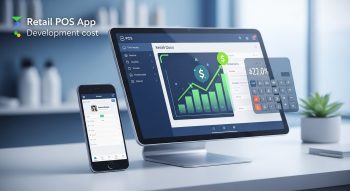
In the fast-evolving retail landscape, Retail POS apps have become indispensable tools for streamlining transactions, managing inventory, and enhancing customer experiences. The surge in demand for efficient point of sale systems, seamless payment processing, and integrated retail management solutions has driven businesses to invest heavily in POS app development. Understanding the cost of retail POS app development is crucial for retailers, startups, and enterprises aiming to deploy a robust, user-friendly mobile app. Factors such as app features, technology stack, design complexity, development team, integrations, security, and maintenance significantly influence the overall retail POS app development cost. This comprehensive guide explores the intricacies of building a retail POS app, dissecting the cost to develop a retail POS app, key considerations, and strategies to optimize your budget for a successful retail mobile app launch in 2025.
Understanding the Retail POS App Market
The retail technology sector is experiencing rapid growth, fueled by digital transformation and the need for efficient operations in brick-and-mortar and e-commerce settings. Apps like Square, Shopify POS, and Vend have set industry standards by offering intuitive interfaces, real-time analytics, and seamless payment integrations. According to 2025 market research, the global POS software market is projected to surpass $20 billion by 2028, growing at a CAGR of 10%. This growth underscores the importance of a tailored retail POS app to enhance operational efficiency and customer satisfaction.
However, the cost of developing a retail POS app varies widely based on the app’s scope, target users, and integration requirements. Whether you’re building a basic POS for a small business or a comprehensive system for a retail chain, understanding cost components is essential for effective budgeting and planning.
Key Factors Influencing Retail POS App Development Cost
Several variables shape the retail POS app development cost in 2025. Below, we outline the primary factors to provide clarity on budgeting.
1. App Type and Business Model
The type of retail POS app significantly impacts costs. Common models include:
- Basic POS Apps: Designed for small businesses with simple transaction and inventory features, costing $15,000–$40,000.
- Multi-Store POS Apps: Support multiple locations with centralized management, ranging from $30,000–$80,000.
- E-commerce Integrated POS Apps: Combine online and offline sales channels, costing $40,000–$120,000.
- Custom Enterprise POS Apps: Tailored for large retailers with advanced analytics and integrations, ranging from $50,000–$200,000.
The complexity of the business model directly correlates with the cost to develop a retail POS app, as multi-store and enterprise apps require robust backend systems and integrations.
2. App Features and Functionality
Features are a major cost driver. A minimum viable product (MVP) with core functionalities is cost-effective, while advanced features increase expenses. Here’s a breakdown:
Essential Features
- User Authentication: Secure login for staff and admins with role-based access ($1,500–$4,000).
- Transaction Processing: Real-time payment handling via cards or digital wallets ($2,500–$6,000).
- Inventory Management: Stock tracking and low-stock alerts ($2,000–$5,000).
- Sales Reporting: Basic analytics for daily transactions ($2,000–$5,000).
- Customer Management: Basic CRM for loyalty tracking ($1,500–$4,000).
- Receipt Generation: Digital or printed receipts ($1,000–$3,000).
Advanced Features
- Payment Gateway Integrations: Support for Stripe, PayPal, or Square ($3,000–$7,000).
- Loyalty Programs: Points-based rewards and discounts ($3,000–$8,000).
- Multi-Location Sync: Real-time data across stores ($5,000–$12,000).
- Offline Mode: Functionality without internet ($4,000–$10,000).
- AI Analytics: Predictive sales and inventory insights ($8,000–$15,000).
- Barcode/QR Code Scanning: Integration with scanners ($2,500–$6,000).
An MVP retail POS app with basic features costs $20,000–$50,000, while a feature-rich app ranges from $60,000–$180,000.
3. Design Complexity
User interface (UI) and user experience (UX) are critical for staff efficiency and customer interaction. Simple designs are budget-friendly, while custom, intuitive interfaces raise costs. Design expenses include:
- Basic UI/UX: Standard templates with minimal customization ($2,000–$6,000).
- Custom UI/UX: Branded, user-friendly designs with animations ($8,000–$20,000).
- Cross-Device Compatibility: Support for tablets, mobiles, and desktops ($3,000–$8,000 extra).
High-quality design adds 10–20% to the retail POS app development cost but improves usability and adoption.
4. Technology Stack
The technology stack impacts cost and performance. Common choices include:
- Frontend: React Native or Flutter for cross-platform; Swift/Kotlin for native.
- Backend: Node.js, Django, or Laravel for server logic.
- Database: MongoDB, PostgreSQL, or MySQL for transaction data.
- APIs: Payment gateways (Stripe), inventory (Shopify), or analytics (Google Analytics).
Cross-platform frameworks reduce costs by 20–30% compared to native development. Cloud solutions like AWS or Azure add $1,500–$8,000 for secure hosting.
5. Development Team
The development team’s expertise and location significantly affect costs. Options include:
- In-House Team: High costs due to salaries ($70–$140/hour in the US).
- Freelancers: Affordable but less reliable ($15–$45/hour).
- Outsourcing Agencies: Balanced cost and quality:
- North America: $45–$90/hour
- Europe: $35–$70/hour
- Asia (e.g., India): $15–$35/hour
A mid-sized retail POS app requires 400–1,200 hours, costing $20,000–$120,000 based on team rates.
6. Regulatory Compliance and Security
Retail POS apps must comply with PCI-DSS for payment security and data protection laws like GDPR or CCPA, adding $3,000–$10,000 for encryption and audits.
7. Platform Choice
Single-platform apps are cheaper than multi-platform. Costs approximate:
- Single Platform: $15,000–$45,000
- Dual Platforms (Native): $30,000–$90,000
- Cross-Platform: $25,000–$60,000
8. Third-Party Integrations
Integrations like payment gateways (Square), e-commerce platforms (Shopify), or accounting software (QuickBooks) cost $1,000–$5,000 each.
9. Maintenance and Updates
Post-launch app maintenance ensures reliability, costing 15–25% of initial development annually ($4,000–$25,000). This includes updates, security patches, and server costs.
Cost Breakdown by Development Stage
A phased cost overview:
- Discovery Phase: Research and planning ($1,500–$4,000).
- UI/UX Design: Prototypes and final design ($4,000–$18,000).
- Frontend Development: User interface ($8,000–$25,000).
- Backend Development: Server and database ($10,000–$30,000).
- Testing/QA: Ensuring reliability ($4,000–$12,000).
- Deployment: Launch and marketing ($1,500–$4,000).
An MVP retail POS app costs $20,000–$50,000; a comprehensive app ranges from $60,000–$180,000.
Strategies to Optimize Retail POS App Development Cost
Cost-saving approaches:
- Start with an MVP: Launch core features to test viability.
- Use Cross-Platform Frameworks: Save time with Flutter or React Native.
- Outsource Development: Leverage cost-effective regions like India.
- Leverage Pre-Built APIs: For payments or inventory.
- Prioritize Security Early: Avoid costly compliance fixes.
Hidden Costs to Consider
Additional expenses:
- App Store Fees: $99/year (Apple), $25 one-time (Google).
- Server Hosting: $80–$800/month for secure servers.
- Marketing: $3,000–$15,000 for user adoption.
- Compliance Audits: $3,000–$10,000 for PCI-DSS/GDPR.
Case Studies: Real-World Examples
- Small Business POS MVP: A boutique builds a basic POS with transactions and inventory. Outsourced to India ($25/hour), costs $28,000, completed in 2–3 months.
- Multi-Store POS App: A chain develops a system with loyalty and analytics. US team ($75/hour), totals $110,000, takes 5–7 months.
Future Trends Impacting Development Costs
In 2025, trends include:
- AI for Insights: Predictive analytics add $6,000–$15,000.
- Blockchain Payments: Secure transactions cost $4,000–$12,000.
- AR for In-Store: Interactive displays add $7,000–$18,000.
Frequently Asked Questions (FAQs)
1. What is the average cost to develop a retail POS app in 2025?
The cost to develop a retail POS app ranges from $20,000 to $180,000, with MVPs at $20,000–$50,000.
2. How long does it take to build a retail POS app?
An MVP takes 2–4 months; full apps require 4–8 months.
3. How can I reduce retail POS app development costs?
Use an MVP, cross-platform tools, outsource, and leverage APIs.
4. What are essential features for a retail POS app?
Authentication, transactions, inventory, reporting, customer management, receipts.
5. How much does retail POS app maintenance cost?
15–25% annually, or $4,000–$25,000.
6. Native vs. cross-platform for POS apps?
Cross-platform ($25,000–$60,000) is cheaper; native ($30,000–$90,000) offers better performance.
Fees, hosting, marketing, compliance.
8. How to choose a development team?
Assess expertise, portfolio, and rates; outsourcing balances cost and quality.
Conclusion
The cost of retail POS app development hinges on type, features, design, compliance, and team. With MVPs starting at $20,000 and advanced apps up to $180,000, strategic planning ensures efficiency. In 2025, a robust POS app can drive retail success.

He is a SaaS-focused writer and the author of Xsone Consultants, sharing insights on digital transformation, cloud solutions, and the evolving SaaS landscape.