

Blog

How to
Develop an App Like TrackEase
Contents hide 1 1. What Is TrackEase and
Why Is It Popular? 2 2. Key Features
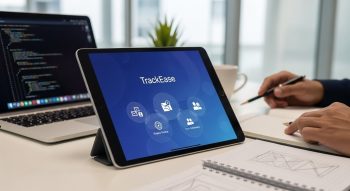
In today’s digital world, real-time tracking apps have become indispensable for individuals and businesses alike. Applications like TrackEase have redefined how we monitor vehicles, assets, and people with the help of GPS technology, IoT integration, cloud computing, and mobile app development. If you’re planning to build a similar app, understanding how to develop an app like TrackEase involves blending geolocation services, map APIs, real-time analytics, user experience design, and data security to create a seamless and scalable tracking platform.
This comprehensive guide covers everything you need to know — from the essential features and tech stack to cost estimates, monetization strategies, and best practices — to help you develop a high-performing GPS tracking app that can compete in the fast-growing tracking software market.
1. What Is TrackEase and Why Is It Popular?
TrackEase is an intelligent GPS tracking application that allows users to track vehicles, shipments, and even people in real time. With accurate geolocation data, customizable alerts, and performance reports, it simplifies operations for businesses and individuals. Whether it’s a logistics company monitoring deliveries or a parent tracking a school bus, TrackEase delivers convenience and control.
Its popularity stems from:
-
Real-time monitoring: Instant access to live locations
-
Smart alerts: Notifications for speed, boundary crossing, or inactivity
-
Cloud-based analytics: Historical tracking and trip summaries
-
User-friendly interface: Easy navigation and intuitive design
-
Cross-platform compatibility: Works across Android, iOS, and web
The growing demand for asset and vehicle tracking solutions highlights the potential of this industry, expected to reach billions of dollars globally. Hence, developing an app like TrackEase offers both business growth and technological innovation opportunities.
2. Key Features of an App Like TrackEase
To make your app competitive, focus on integrating user-centric features that enhance accuracy, usability, and scalability.
A. Core User Features
-
Live GPS Tracking
Real-time tracking is the foundation of such apps. Using GPS and IoT sensors, you can display accurate locations on an interactive map powered by Google Maps API, Mapbox, or OpenStreetMap. -
Route Optimization
Enable users to choose the most efficient routes based on traffic and distance. This helps save time, fuel, and resources. -
Geofencing
Allow users to set geographic boundaries and receive alerts when tracked objects or vehicles enter or exit these zones. -
Instant Notifications
Offer push notifications for route deviations, engine issues, maintenance reminders, or unusual activities. -
Trip History & Reports
Provide access to historical data and visual reports, such as total distance covered, fuel consumption, and driving behavior. -
Offline Mode
Store data locally when the internet is unavailable and sync it automatically when connectivity resumes. -
Multi-Language Support
Make the app accessible to global users by offering multiple languages and regional map settings.
B. Admin Features
-
User Management Dashboard
Manage users, assign roles, and control permissions through an intuitive admin panel. -
Device Management
Admins can register, monitor, and deactivate tracking devices remotely. -
Analytics Dashboard
Display visual insights on performance, fleet usage, and operational efficiency. -
Reports and Logs
Generate automated reports and track historical performance for auditing and optimization. -
Data Security Controls
Implement encryption, backup systems, and restricted data access to ensure privacy.
3. Technology Stack for Developing an App Like TrackEase
Developing an app like TrackEase requires a strong technical foundation. Below is the recommended tech stack for performance, scalability, and security.
Front-End (User Interface)
-
Mobile Apps: Flutter, React Native, Kotlin, or Swift
-
Web App: React.js, Angular, or Vue.js
Back-End (Server-Side)
-
Frameworks: Node.js (Express), Django, or Laravel
-
Database: MongoDB, PostgreSQL, or Firebase
-
Real-Time Communication: WebSockets, MQTT, or Socket.IO
-
Cloud Platforms: AWS, Google Cloud, or Microsoft Azure
APIs and Integrations
-
Maps & Location: Google Maps API, Mapbox, HERE Maps
-
Payment Gateways: Stripe, PayPal, Razorpay
-
Push Notifications: Firebase Cloud Messaging (FCM), Twilio
Security
-
Authentication: OAuth 2.0, JWT Tokens
-
Encryption: SSL/TLS protocols, AES Encryption
-
Compliance: GDPR-ready data protection and user consent management
4. Step-by-Step Process to Develop a GPS Tracking App Like TrackEase
Developing a tracking app involves multiple stages — from conceptualization to deployment and maintenance. Here’s how you can approach the project efficiently.
Step 1: Market Research and Audience Analysis
Start by analyzing competitors like TrackEase, Fleet Complete, and GPSWOX. Identify:
-
User pain points
-
Unique features missing in existing apps
-
Target audience (individuals, logistics companies, schools, etc.)
This will help you design a product that fills market gaps and stands out.
Step 2: Define Your App Goals and USP
What will make your app unique? Consider offering:
-
AI-based predictive tracking
-
Integration with IoT wearables or sensors
-
Advanced analytics dashboards
-
Eco-friendly route planning
Step 3: Design the User Experience (UI/UX)
A clean, intuitive interface ensures better user engagement. Use tools like Figma, Adobe XD, or Sketch to design:
-
Interactive dashboards
-
Map-based navigation
-
Profile and device management pages
Step 4: Choose the Right Tech Stack
Your technology choice determines scalability and performance. For cross-platform apps, Flutter or React Native offers cost efficiency. Use Node.js or Django for handling real-time data on the backend.
Step 5: Backend Development
Develop APIs for:
-
Real-time data handling
-
User authentication
-
Alerts and notifications
-
Trip logging and reporting
Make sure to use microservices architecture for better scalability.
Step 6: API Integration
Integrate third-party APIs for maps, payment processing, and messaging. Focus on:
-
Google Maps API for location accuracy
-
Firebase for cloud messaging
-
Twilio or OneSignal for notifications
Step 7: App Development
Create both Android and iOS versions of your app, ensuring they share core logic but maintain native-level performance.
Step 8: Testing and Quality Assurance
Perform:
-
Unit Testing: For each function
-
Integration Testing: For APIs and data flow
-
Performance Testing: To handle real-time loads
-
Security Testing: To ensure data privacy
Step 9: Deployment
Host the app backend on AWS EC2, Azure, or Firebase and publish the mobile app on Google Play Store and Apple App Store.
Step 10: Maintenance and Updates
Keep the app updated with:
-
Regular bug fixes
-
New features
-
API updates
-
Security patches
5. Cost of Developing an App Like TrackEase
The cost of developing a GPS tracking app varies based on features, platform, and complexity. Here’s a breakdown:
| Feature Level | Estimated Cost (USD) | Timeline |
|---|---|---|
| Basic Version | $15,000 – $25,000 | 3–4 months |
| Mid-Level | $30,000 – $50,000 | 5–6 months |
| Enterprise-Level | $60,000 – $100,000+ | 8–12 months |
Factors affecting cost include:
-
Number of integrated APIs
-
Real-time tracking complexity
-
Backend architecture and scalability
-
UI/UX design quality
-
Development team’s location
Outsourcing to regions like South Asia can reduce costs without compromising quality.
6. Monetization Strategies for a Tracking App
Here are some proven monetization models for tracking apps:
-
Subscription Model
Offer monthly or annual plans with advanced features like detailed reports and multi-device tracking. -
Freemium Model
Provide basic functionality for free and charge for premium features. -
White-Label Licensing
License your software to other businesses or logistics companies. -
In-App Purchases
Allow users to buy add-ons such as extra storage, custom reports, or geofencing zones. -
Ad-Based Revenue
Integrate non-intrusive advertisements relevant to navigation, fuel, or insurance.
7. Challenges in Developing a Tracking App (and Solutions)
| Challenge | Solution |
|---|---|
| GPS Accuracy Issues | Use hybrid location tracking (GPS + Wi-Fi + Cell tower) for better precision. |
| Battery Drain | Optimize background processes and update frequency. |
| Data Privacy | Implement end-to-end encryption and secure cloud storage. |
| Scalability | Use load balancing and cloud auto-scaling features. |
| Connectivity Issues | Introduce offline caching and background data sync. |
By planning ahead for these challenges, you ensure the app performs seamlessly in real-world conditions.
8. Future Trends in GPS Tracking App Development
The future of tracking technology is evolving rapidly with advancements in AI, IoT, and 5G. Here’s what’s next:
-
Artificial Intelligence (AI)
Predictive analytics can help forecast routes, maintenance schedules, and performance trends. -
IoT Integration
Smart sensors can transmit real-time data on vehicle speed, fuel consumption, and engine status. -
Blockchain Technology
Offers transparency and security in logistics operations through immutable data records. -
Augmented Reality (AR) Navigation
Visual route guidance for drivers and operators using AR overlays. -
5G Connectivity
Enhances real-time data transmission and reduces latency for smoother tracking experiences.
9. Best Practices for Developing a TrackEase-Like App
-
Optimize for speed and performance: Real-time updates should load instantly.
-
Prioritize security: Protect user data with strong encryption.
-
Design mobile-first UI: Make it simple, visual, and intuitive.
-
Offer cloud integration: For scalable data management.
-
Ensure compliance: Follow data privacy laws like GDPR.
-
Test continuously: Regular updates and feedback loops maintain app reliability.
Conclusion
Building an app like TrackEase is an exciting opportunity to enter the world of smart GPS tracking and real-time analytics. With the right combination of technology, innovation, and user experience, you can create a platform that caters to individuals, delivery companies, schools, and logistics businesses alike.
To succeed, focus on accuracy, security, scalability, and user trust. Whether it’s tracking vehicles, assets, or people, your app should deliver real-time insights, ease of use, and actionable intelligence.
In short, to develop a tracking app like TrackEase, you need more than just coding skills — you need a strategic vision, a robust tech stack, and a commitment to excellence. With proper execution, your tracking solution can become the next big name in GPS-based innovation.

He is a SaaS-focused writer and the author of Xsone Consultants, sharing insights on digital transformation, cloud solutions, and the evolving SaaS landscape.