
Blog

How to
Develop an App Like DroidCast: A Complete Step-by-Step Guide
In the era of mobile connectivity and digital interaction,
screen mirroring and remote control applications have become
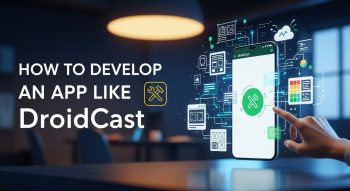
In the era of mobile connectivity and digital interaction, screen mirroring and remote control applications have become indispensable. Tools like DroidCast make it easier to share, display, and control Android screens from other devices—bridging the gap between mobile and desktop environments. If you’re interested in learning how to develop an app like DroidCast, this detailed guide will walk you through every step: from concept and features to technology stack, development, and monetization.
1. Understanding DroidCast: The Foundation
What is DroidCast?
DroidCast is a popular Android application that allows users to mirror their phone screens onto a PC or other devices using a USB cable or Wi-Fi connection. It helps users:
-
Share presentations or tutorials
-
Record mobile gameplay
-
Demonstrate mobile apps
-
Control smartphones remotely via a computer
In short, it combines real-time screen streaming, wireless connectivity, and remote control capabilities.
Why Build an App Like DroidCast?
The demand for screen mirroring apps is rapidly increasing due to:
-
Growth in remote work and education
-
Rising mobile-first applications
-
Need for multi-device collaboration
-
Popularity of gaming and content creation
Developing your own DroidCast alternative can open opportunities in entertainment, enterprise, and educational sectors.
2. Market Research and Industry Trends
Before diving into development, perform thorough market research to understand user expectations and industry potential.
Market Overview
The global screen mirroring software market is projected to reach $6 billion by 2030, growing at a CAGR of around 10–12%. The trend is driven by hybrid workplaces, BYOD (Bring Your Own Device) culture, and the expansion of mobile gaming.
Target Audience
-
Educators & Trainers: To conduct remote classes or demos.
-
Gamers & Streamers: For gameplay broadcasting.
-
IT Professionals: For device testing and debugging.
-
Corporate Teams: For presentations and collaboration.
-
Everyday Users: For sharing content across devices.
Competitors to Analyze
Study existing platforms like:
-
ApowerMirror
-
AirDroid
-
Vysor
-
Scrcpy
-
LetsView
Evaluate their features, UX, performance bottlenecks, and pricing models to design a superior product.
3. Defining Core Features of a DroidCast-Like App
To build a competitive and scalable screen mirroring solution, focus on feature-rich design and low-latency performance.
Basic Features
-
Screen Mirroring: Display Android screens on PC or smart TV.
-
Real-Time Casting: Ultra-low latency transmission for smooth visuals.
-
USB and Wi-Fi Support: Allow both wired and wireless connections.
-
Remote Control: Control mobile devices using keyboard and mouse.
-
Screen Recording: Capture mirrored content for tutorials or streams.
-
Audio Streaming: Transmit both video and sound.
-
Multi-Device Support: Mirror multiple devices simultaneously.
-
Cross-Platform Compatibility: Support Windows, macOS, Linux, and Android.
Advanced Features
-
Touch Control: Interact directly with mirrored screens.
-
App Window Mode: Run apps in separate floating windows.
-
Resolution Adjustment: Choose video quality (720p, 1080p, 4K).
-
Security Features: Password-protected connections.
-
Smart Notifications: Display and control mobile notifications.
-
File Transfer: Drag-and-drop files between devices.
-
Cloud Integration: Sync recordings with Google Drive or Dropbox.
These features make your app stand out among competitors while improving user experience.
4. Selecting the Right Technology Stack
A powerful tech stack ensures efficient performance, scalability, and stability for your app.
Frontend Development
-
Web/Desktop: React.js, Electron.js, or Qt
-
Mobile (Android): Kotlin or Java
-
Mobile (iOS – optional): Swift or Flutter
Backend Development
-
Languages: Node.js, Python (FastAPI), or Go
-
Frameworks: Express.js, Django, or Gin
-
Database: PostgreSQL, Firebase, or MongoDB
-
Media Streaming Protocols: WebRTC, RTSP, or H.264 encoding
Networking and Communication
-
WebSockets – for real-time streaming
-
TCP/UDP protocols – for smooth video transfer
-
RTMP/RTSP – for live streaming
Security Tools
-
SSL/TLS Encryption
-
OAuth 2.0 Authentication
-
Token-based Authorization (JWT)
Cloud Infrastructure
-
AWS EC2 / Google Cloud / Azure for hosting
-
Amazon S3 for file storage
-
Firebase for real-time updates
5. App Architecture and Working Model
A DroidCast-like architecture must handle screen data capture, compression, transmission, and display in real time.
Working Steps
-
Screen Capture: The Android app captures frame data using the MediaProjection API.
-
Encoding: Frames are compressed using H.264 or VP8 codecs.
-
Transmission: Encoded data is sent via TCP or WebRTC.
-
Decoding: The receiving client decodes the data stream.
-
Display: Frames are rendered on the target device’s screen.
-
User Control Input: Remote keyboard/mouse input is captured and sent back to the phone.
Architecture Layers
-
Capture Layer: Screen and audio capture.
-
Processing Layer: Encoding, compression, buffering.
-
Transmission Layer: Handles data transfer over network protocols.
-
Interface Layer: Displays mirrored content to users.
For seamless mirroring, maintain low-latency (under 100ms) and optimized compression.
6. Designing UI/UX for Better User Experience
Your app’s interface must balance simplicity, performance, and clarity.
UI Design Tips
-
Create a minimalist dashboard with key functions (connect, record, stream).
-
Include connection indicators and real-time status feedback.
-
Enable quick setup wizards for first-time users.
-
Support dark/light themes for accessibility.
-
Provide device discovery and auto-connect features.
UX Best Practices
-
Prioritize responsive design for multiple resolutions.
-
Minimize manual configuration by using smart auto-detection.
-
Ensure fluid navigation for tech and non-tech users alike.
Use tools like Figma, Adobe XD, or Sketch for prototyping.
7. App Development Process: Step-by-Step
Developing an app like DroidCast involves multiple stages—from planning to release.
Step 1: Planning & Requirements
Define your goals:
-
Will your app be for personal or enterprise use?
-
Will it focus on Wi-Fi casting, USB connection, or both?
-
Which platforms (Windows, Android, macOS) will you target?
Step 2: Backend Development
-
Build authentication and user session management.
-
Develop APIs for streaming and file transfer.
-
Integrate device discovery protocols (UPnP, mDNS).
Step 3: Android App Development
-
Implement MediaProjection API for screen capturing.
-
Add MediaCodec for video encoding.
-
Use WebRTC for real-time communication.
-
Enable remote control service for input feedback.
Step 4: Desktop/Web Client Development
-
Build a desktop interface with Electron or React.
-
Integrate decoding and playback functionality.
-
Add controls for recording, screenshots, and full-screen mode.
Step 5: Integration & Testing
-
Test both wired (ADB/USB) and wireless (Wi-Fi) connections.
-
Ensure synchronization between video and audio.
-
Conduct latency and bandwidth optimization.
8. Testing and Quality Assurance
A stable app requires thorough testing under various conditions.
Testing Types
-
Functional Testing: Ensure all features work properly.
-
Performance Testing: Check frame rate, delay, and bandwidth usage.
-
Compatibility Testing: Test across multiple Android versions.
-
Security Testing: Validate encryption and data safety.
-
User Acceptance Testing (UAT): Collect feedback from beta users.
Optimization Metrics
-
Latency < 100ms
-
Frame rate ≥ 30fps
-
Bandwidth efficiency
-
Smooth device pairing
Testing tools: JMeter, Appium, Firebase Test Lab.
9. Deployment and Cloud Hosting
Deployment Steps
-
Host backend services on AWS EC2 or Firebase Cloud Functions.
-
Store user data and recordings securely.
-
Use CDN services for fast delivery.
-
Release Android APKs via Google Play Store or GitHub.
-
Provide installers for Windows and macOS users.
CI/CD Pipeline
Automate updates using GitHub Actions or Jenkins for:
-
Code integration
-
Testing and validation
-
Continuous deployment
This ensures faster iterations and stability.
10. Monetization Strategies
A screen mirroring app can be monetized through various methods:
1. Freemium Model
Offer basic mirroring for free and charge for premium features like:
-
Remote control
-
HD recording
-
Multi-device support
-
Cloud storage integration
2. Subscription Model
Monthly or yearly plans with tiered access (Basic, Pro, Enterprise).
3. One-Time Purchase
Sell the desktop client with a lifetime license.
4. Ads and Partnerships
Display non-intrusive ads or partner with gaming/streaming platforms.
5. Custom Enterprise Licensing
Offer white-labeled versions to corporations or schools.
11. Security and Privacy Considerations
Screen mirroring involves transmitting sensitive visuals, so data protection is paramount.
Security Best Practices
-
Encrypt all data with AES-256.
-
Use SSL/TLS for connections.
-
Implement token-based authentication.
-
Ask user consent before screen sharing.
-
Avoid storing user content unless necessary.
Adhering to GDPR and privacy laws will strengthen user trust.
12. Estimated Cost and Development Timeline
| App Type | Estimated Cost | Timeline |
|---|---|---|
| Basic (Local Casting) | $20,000 – $35,000 | 3–4 months |
| Mid-Level (Wi-Fi + USB + Recording) | $40,000 – $70,000 | 6–8 months |
| Advanced (Remote Control + Cloud + Multi-Platform) | $80,000+ | 8–12 months |
Cost Influencers
-
Number of supported devices
-
Network optimization level
-
Integration of real-time communication protocols
-
UI/UX complexity
13. Challenges in Building a Screen Mirroring App
| Challenge | Solution |
|---|---|
| High latency | Optimize video encoding and buffering. |
| Audio desync | Use synchronized timestamps for media packets. |
| Device compatibility | Test across multiple OS versions and devices. |
| Security risks | Implement strong encryption and permissions. |
| Network instability | Enable adaptive bitrate streaming (ABR). |
14. Marketing and Launch Strategy
Once developed, you need a strong marketing plan.
Pre-Launch
-
Build a landing page with demo videos.
-
Offer early access or beta testing invites.
-
Publish tutorials and use-case blogs.
Post-Launch
-
Run Google Ads for “screen mirroring app” keywords.
-
Promote on YouTube, Reddit, and tech forums.
-
Partner with influencers or educators.
-
Collect feedback for continuous improvement.
Strong App Store Optimization (ASO) improves ranking and installs.
15. Future Upgrades and Innovations
To keep your app competitive, plan future updates:
-
AI-based auto-quality optimization
-
Gesture control support
-
Cross-device clipboard sync
-
Integration with smart TVs or IoT devices
-
Voice control and AR mirroring features
Continual innovation will ensure your app stays ahead in the market.
Conclusion
Developing an app like DroidCast involves blending real-time video streaming, robust connectivity, and intuitive user experience. By focusing on low latency, multi-device support, and strong security, you can build a top-tier Android screen mirroring solution that rivals market leaders.
Key Takeaways
-
Start with research and define your audience.
-
Choose a high-performance tech stack (WebRTC, Kotlin, Node.js).
-
Implement strong security and privacy measures.
-
Prioritize UI simplicity and performance.
-
Monetize via freemium or subscription models.
-
Continuously update for better compatibility and UX.
By following this roadmap, you can successfully develop a feature-rich, scalable, and secure app like DroidCast, unlocking new opportunities in the growing screen mirroring and remote access market.

He is a SaaS-focused writer and the author of Xsone Consultants, sharing insights on digital transformation, cloud solutions, and the evolving SaaS landscape.