

Blog

Scaling Enterprise
Efficiency with Professional API Integration Services for Websites
Introduction: The Connectivity Imperative in the Digital Enterprise Contents
hide 1 Introduction: The Connectivity Imperative in the
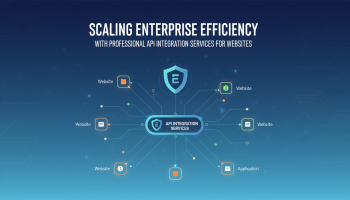
Introduction: The Connectivity Imperative in the Digital Enterprise
In the contemporary digital landscape, data silos are the silent killers of enterprise efficiency. As businesses scale, they inevitably accumulate a diverse stack of software solutions—ranging from Customer Relationship Management (CRM) systems and Enterprise Resource Planning (ERP) platforms to marketing automation tools and payment gateways. While each of these tools serves a distinct purpose, their value is severely diminished if they operate in isolation. The bridge that connects these disparate islands of data is found in professional api integration services for websites.
Application Programming Interfaces (APIs) act as the universal translators of the web, allowing different software applications to communicate, exchange data, and trigger actions without human intervention. For modern enterprises, the question is no longer whether to integrate, but how to integrate effectively to maximize operational agility. Implementing robust API strategies transforms a static website into a dynamic business hub, capable of real-time inventory management, seamless customer support ticketing, and automated marketing workflows.
However, true enterprise-grade integration goes beyond simple plug-and-play plugins. It requires a strategic approach to architecture, security, and scalability. This comprehensive guide explores how leveraging expert API integration services for websites can dismantle operational bottlenecks, enhance user experience (UX), and future-proof your digital infrastructure against the rapidly evolving demands of the market.
The Strategic Role of APIs in Modern Web Architecture
To understand the gravity of professional integration, one must first recognize the shift in web architecture. We have moved from monolithic structures—where the frontend and backend were inextricably linked in a single codebase—to headless and microservices architectures. In this new paradigm, APIs are the glue holding the digital ecosystem together.
Moving Beyond Monoliths to Microservices
In a microservices architecture, an application is built as a collection of loosely coupled services. This allows businesses to update specific components of their website without risking downtime for the entire system. API integration services for websites are the critical enablers of this flexibility. By utilizing RESTful APIs or GraphQL, developers can pull content from a headless CMS, fetch product data from a separate PIM (Product Information Management) system, and process transactions through a distinct banking API, all rendering seamlessly to the end-user in milliseconds.
The Economy of Connectivity
The API economy is driving digital transformation. By exposing distinct assets via APIs, companies can not only optimize internal workflows but also open new revenue streams through partnerships and third-party developers. A professional integration strategy ensures that these connections are built on standardized protocols (like HTTP/HTTPS and JSON/XML), ensuring reliability and maintainability.
Core Benefits of Professional API Integration Services for Websites
While off-the-shelf connectors exist, they often lack the depth required for complex enterprise logic. Custom, professional integration services offer tailored solutions that align strictly with business goals.
1. Enhanced Automation and Operational Efficiency
Manual data entry is prone to human error and is inherently unscalable. Through API integration, data flows automatically between systems. For instance, when a customer purchases a subscription on your website, an API can instantly trigger an invoice in your accounting software (e.g., QuickBooks or Xero), update the user’s status in your CRM (e.g., Salesforce or HubSpot), and provision access in your membership platform. This automation liberates human resources to focus on high-value strategic tasks rather than administrative drudgery.
2. Real-Time Data Synchronization
In industries like e-commerce, logistics, and finance, data latency can result in lost revenue. If your website displays an item as "in stock" when the warehouse is empty, you risk customer dissatisfaction and chargebacks. Professional api integration services for websites ensure real-time synchronization. Webhooks and polling mechanisms act immediately upon data changes, ensuring that the information displayed to the user is always accurate to the second.
3. Superior User Experience (UX) and Personalization
Modern consumers expect hyper-personalized experiences. APIs allow websites to aggregate data from various touchpoints to create a 360-degree view of the customer. By integrating analytics tools, purchase history, and behavioral data, you can dynamically serve personalized content, product recommendations, and pricing. A seamless Single Sign-On (SSO) integration (using OAuth2 or OpenID Connect) further reduces friction, allowing users to log in with existing credentials from platforms like Google or LinkedIn.
4. Scalability and Future-Proofing
As your business grows, your tech stack will evolve. You may switch email marketing providers or upgrade your ERP. If your integrations are hard-coded or rely on brittle, amateur scripts, replacing a component can cause catastrophic system failures. Professional developers build modular API layers that abstract the underlying logic. This means you can swap out backend vendors with minimal impact on the frontend experience, ensuring your website remains scalable and adaptable.
Key Types of API Integrations for Enterprise Websites
A holistic digital strategy often requires multiple distinct types of integrations. Expert agencies specialize in orchestrating these diverse connections.
Payment Gateway Integration
Secure, seamless transactions are the lifeblood of e-commerce. Integrating gateways like Stripe, PayPal, or Braintree requires strict adherence to security protocols. Professional services ensure that these APIs handle tokenization correctly, keeping sensitive credit card data off your servers to maintain PCI-DSS compliance while offering a smooth checkout experience.
CRM and ERP Connectivity
Connecting your website to powerhouses like Microsoft Dynamics, SAP, or Zoho CRM allows for the automatic capture of leads. Sophisticated integrations can map complex custom fields, ensuring that every nuance of a prospect’s inquiry is preserved and routed to the correct sales representative instantly.
Third-Party Shipping and Logistics
For retail enterprises, integrating with shipping carriers (FedEx, UPS, DHL) allows for automated shipping label generation and real-time tracking updates directly within the user’s account dashboard. This level of transparency significantly reduces customer support inquiries regarding order status.
Social Media and Marketing Automation
APIs from platforms like Meta (Facebook), LinkedIn, and Twitter enable not just social sharing, but deep pixel integration for conversion tracking. Furthermore, connecting marketing automation tools like Marketo or Mailchimp ensures that website behavior triggers appropriate nurturing email sequences immediately.
The Professional Integration Lifecycle
Engaging a professional agency for api integration services for websites typically follows a rigorous software development lifecycle (SDLC) to ensure quality and security.
Phase 1: Discovery and Architecture Planning
Before a single line of code is written, architects analyze the endpoints of the systems to be connected. They evaluate rate limits, data formats (JSON vs. XML), and authentication methods. A comprehensive data mapping document is created to define exactly which fields correspond between systems.
Phase 2: Security Implementation
Security is paramount. Professional developers implement robust authentication standards, typically OAuth 2.0, ensuring that access tokens are managed securely. They also establish SSL/TLS encryption for data in transit and implement throttling mechanisms to prevent API abuse or Denial of Service (DoS) attacks.
Phase 3: Development and Sandbox Testing
Integrations are built in a staging (sandbox) environment. This allows developers to simulate transactions and data transfers without affecting live business data. Rigorous unit testing and integration testing are conducted to handle edge cases, such as server timeouts or malformed data responses.
Phase 4: Deployment and Monitoring
Once validated, the integration is deployed to production. However, the work does not end there. Continuous monitoring tools are implemented to track API uptime, response times, and error rates. Automated alerts notify the technical team immediately if an endpoint fails, allowing for rapid remediation.
Risks of DIY vs. Professional API Services
While tools like Zapier or generic plugins offer "no-code" integration solutions, they are often insufficient for enterprise needs. They can introduce latency, lack customizable logic, and create "shadow IT" vulnerabilities where data flows are unmonitored.
Furthermore, APIs change. Vendors frequently update their API versions, deprecating old endpoints. A DIY solution often breaks silently when these updates occur. Professional services include maintenance agreements that anticipate these changes, migrating to new API versions proactively to prevent service disruptions.
Conclusion: Choosing the Right Partner for Growth
In an era where digital agility dictates market leadership, the ability to connect systems seamlessly is a competitive advantage. API integration services for websites are not merely a technical necessity; they are a strategic asset that unlocks automation, enhances customer satisfaction, and provides the data visibility required for intelligent decision-making.
By partnering with seasoned experts who understand the nuances of REST, SOAP, GraphQL, and enterprise security, organizations can transform their websites from simple brochures into powerful, integrated business platforms. Do not let data silos stifle your growth—invest in professional integration to scale your enterprise efficiency to new heights.
Frequently Asked Questions (FAQ)
1. What are API integration services for websites?
API integration services for websites involve connecting your website with third-party applications (like CRMs, payment gateways, or shipping providers) using Application Programming Interfaces. This allows for automated data exchange and functionality sharing between systems without manual intervention.
2. How does API integration improve website security?
Professional API integrations utilize standard authentication protocols like OAuth 2.0 and API keys, ensuring that only authorized requests are processed. Furthermore, they allow you to process sensitive data (like payments) via third-party secure servers (tokenization) rather than storing it on your own database, reducing compliance risks.
3. What is the difference between REST and SOAP APIs?
REST (Representational State Transfer) is the modern standard for web APIs, known for being lightweight, flexible, and using JSON for data formatting. SOAP (Simple Object Access Protocol) is an older, more rigid protocol that uses XML and is often found in legacy enterprise systems requiring strict security and transactional compliance.
4. Can custom APIs connect my legacy software to a modern website?
Yes. One of the primary functions of professional API integration services is to build "middleware" that bridges the gap between modern web technologies and legacy on-premise systems, extending the life and utility of your existing infrastructure.
5. How long does a custom API integration project take?
The timeline varies significantly based on complexity. A simple connector might take a few days, while a complex enterprise integration involving bidirectional data sync, custom logic, and high-security protocols can take several weeks to months. A professional agency will provide a timeline during the discovery phase.
6. What happens if a third-party API changes or updates?
APIs frequently undergo version updates. If you use professional services, the code is typically written to be modular, making updates easier. Most agencies offer maintenance packages to monitor for "breaking changes" and update the integration proactively to ensure uninterrupted service.

Editor at XS One Consultants, sharing insights and strategies to help businesses grow and succeed.