
Blog

Apple Siri
Gemini Integration: The Next Evolution of AI in iOS 26.4
Contents hide 1 Introduction 2 The Genesis of the
Apple Siri Gemini Integration 3 Key Features and

Introduction
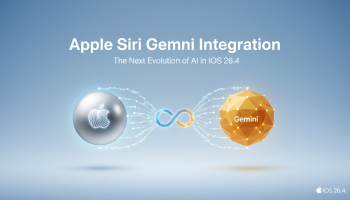
The landscape of artificial intelligence in consumer electronics has undergone a seismic shift, and at the epicenter of this transformation is the highly anticipated Apple Siri Gemini Integration in iOS 26.4. For years, digital assistants were confined to rigid, rule-based frameworks, capable of executing only basic commands. However, the paradigm has completely changed. By merging Apple’s unparalleled hardware optimization and privacy standards with Google’s formidable Gemini Large Language Model (LLM), iOS 26.4 delivers an unprecedented leap in computational intelligence. This definitive guide will dissect every nuance of the Apple Siri Gemini Integration, exploring how it revolutionizes the user experience, redefines smartphone capabilities, and establishes a new benchmark for on-device generative AI.
As we transition into an era where smartphones act as proactive cognitive partners rather than mere communication tools, understanding the mechanics of this integration becomes essential. Apple has historically prioritized seamless ecosystem functionality, while Google has dominated the fields of natural language processing and complex machine learning architectures. The Apple Siri Gemini Integration represents the perfect synthesis of these two technological titans. Throughout this comprehensive article, we will examine the technical architecture powering this alliance, the profound implications for the iOS developer community, user privacy safeguards, and how it completely transforms everyday interactions with Apple devices.
The Genesis of the Apple Siri Gemini Integration
To truly appreciate the magnitude of the Apple Siri Gemini Integration, one must first look back at the evolutionary trajectory of digital assistants. Siri, introduced over a decade ago, was a pioneer. Yet, as the AI industry accelerated, traditional voice assistants struggled with contextual continuity, semantic understanding, and generative tasks. Enter the era of Large Language Models. Recognizing the need to drastically overhaul Siri’s underlying architecture, Apple explored strategic partnerships that could provide world-class generative AI capabilities without compromising its stringent user privacy policies. The solution was the Gemini ecosystem, modified and rigorously optimized for Apple’s Apple Silicon and Neural Engine.
The integration in iOS 26.4 is not a mere application layer; it is an OS-level integration. This means Gemini’s intelligence is woven into the very fabric of iOS, iPadOS, and macOS, interacting directly with core system frameworks. Instead of routing all requests to external servers, Apple has engineered a hybrid processing model. Lightweight, highly optimized versions of Gemini (akin to Gemini Nano) run entirely on-device for instantaneous, secure responses. For computationally intensive tasks, queries are handled via a proprietary Secure Cloud Compute infrastructure, ensuring that user data is never retained, utilized for external training, or exposed to third parties. This meticulous balance is what makes the Apple Siri Gemini Integration the most sophisticated AI implementation in modern mobile computing.
Key Features and Capabilities in iOS 26.4
Advanced Natural Language Understanding and Generation
At the heart of the Apple Siri Gemini Integration is a profound upgrade to natural language processing (NLP). Users are no longer required to memorize specific syntactical commands to elicit a response. Siri can now comprehend nuance, idioms, colloquialisms, and complex multi-part requests. If a user stumbles over their words or changes their mind mid-sentence, Siri dynamically adjusts its understanding based on the revised context. Furthermore, Siri can now generate high-quality text across the ecosystem. Whether you need to draft a professional email in the native Mail app, summarize a lengthy PDF document in Safari, or brainstorm creative ideas in Apple Notes, the Gemini-powered Siri acts as an omnipresent generative assistant capable of producing articulate, contextually appropriate content on demand.
Cross-App Contextual Awareness
Historically, mobile operating systems operated in silos, meaning data in one app was generally inaccessible to an assistant operating in another. The Apple Siri Gemini Integration shatters these boundaries through semantic indexing and advanced on-device orchestration. Siri now possesses persistent contextual awareness across your entire device. For instance, a user can say, ‘Add the location from the email John sent me yesterday to my itinerary in Notes.’ Siri utilizes Gemini’s inferential capabilities to scan recent emails, identify the specific message from John, extract the geographical data, and seamlessly insert it into the correct Apple Note. This fluid interoperability transforms the iPhone from a collection of isolated applications into a cohesive, intelligent entity that understands the user’s digital life.
Proactive Intelligence and Predictive Actions
Moving beyond reactive commands, the integration introduces proactive intelligence. Utilizing local machine learning models driven by Gemini’s predictive algorithms, iOS 26.4 can anticipate user needs with startling accuracy. By analyzing behavioral patterns, daily routines, and real-time sensor data, Siri might proactively suggest drafting a message to a colleague if you are running late for a calendar appointment, or automatically summarize unread notifications when you wake up. These predictive actions are entirely processed on the device’s Neural Engine, ensuring zero latency and absolute privacy. The Apple Siri Gemini Integration shifts the user experience from manual execution to effortless supervision.
Technical Architecture: How Apple and Google Bridged the Gap
On-Device Processing via the Apple Neural Engine
The sheer computational weight of modern LLMs typically requires massive server farms. To execute the Apple Siri Gemini Integration natively on iPhones and iPads, Apple heavily leaned on the power of its custom silicon, specifically the A-series and M-series chips equipped with advanced Neural Engines. By utilizing sophisticated quantization and model pruning techniques, a localized version of the Gemini model is compressed to fit within the device’s unified memory architecture. This allows the device to execute billions of parameters locally, resulting in instantaneous text generation, language translation, and visual comprehension without requiring an active internet connection. This milestone effectively democratizes AI by removing the dependency on cloud infrastructure for fundamental cognitive tasks.
Private Cloud Compute and Cryptographic Verification
For requests that exceed the processing limitations of the local hardware—such as complex coding queries, high-resolution image generation, or traversing massive external datasets—the Apple Siri Gemini Integration seamlessly routes the task to Apple’s Private Cloud Compute. This architecture is revolutionary. It utilizes custom Apple Silicon servers designed with identical security models to the iPhone’s Secure Enclave. When Gemini processes a request in this cloud environment, the user’s data is cryptographically sealed, entirely ephemeral, and verifiable by independent security researchers. Apple has ensured that neither they nor Google can access the raw data utilized during these off-device computational sprints, maintaining a zero-trust architecture that satisfies even the strictest enterprise security requirements.
The Impact on iOS Developers and the App Economy
The Next Generation of SiriKit and App Intents API
The Apple Siri Gemini Integration is not restricted to first-party Apple applications; it has monumental implications for the global iOS developer community. With the rollout of iOS 26.4, Apple has significantly expanded the App Intents API and introduced entirely new SiriKit domains. Developers can now expose the granular functionalities of their applications to Siri’s new LLM brain. Because Gemini excels at understanding vague or complex instructions, third-party apps no longer need to build their own natural language processing pipelines. By simply defining what their app can do, developers allow Siri to string together complex actions. A user could say, ‘Order my usual groceries from the local market app and split the bill with Sarah using Apple Pay.’ Siri will coordinate between multiple third-party and native services to execute the macro command flawlessly.
Enhancing App Accessibility and Voice Interfaces
Voice-first interfaces have long been a goal for accessibility advocates, but previous iterations often lacked the reliability required for robust daily use. The Apple Siri Gemini Integration completely revitalizes voice control on iOS. For users with visual impairments or motor disabilities, the ability to converse naturally with their device and have it execute complex tasks across multiple apps is life-changing. Developers can leverage these new AI capabilities to ensure their applications are fully navigable via conversational voice commands. This not only broadens the user base for developers but also aligns with Apple’s core philosophy that technology should be accessible to everyone.
Apple Siri Gemini Integration vs. Market Competitors
Comparing to OpenAI’s ChatGPT and Microsoft Copilot
The AI landscape is fiercely competitive, with dominant players like OpenAI’s ChatGPT and Microsoft’s Copilot leading the charge. However, the Apple Siri Gemini Integration holds a distinct advantage: deep systemic access. While users can download a ChatGPT or Copilot application from the App Store, these apps remain sandboxed. They cannot natively interact with your system settings, read the contents of your screen dynamically, or seamlessly trigger localized hardware functions without explicit permission and friction. Apple’s integration operates at the root level of the operating system. It possesses personal context—your messages, photos, calendar, and contacts—which it securely references on-device to deliver hyper-personalized assistance that standalone applications simply cannot match.
The Advantage of Ecosystem Synergy
Another major differentiator is ecosystem synergy. The Apple Siri Gemini Integration doesn’t just live on the iPhone; it is deeply embedded into the iPad, Mac, Apple Watch, and even the Vision Pro. This continuity means an AI task initiated on your iPhone can be seamlessly handed off to your Mac. If you ask Siri on your Apple Watch to summarize an article you are reading on your iPad, the contextual awareness traverses the iCloud ecosystem instantaneously. This level of interwoven intelligence creates a cohesive digital environment that significantly outpaces fragmented Android or Windows implementations, solidifying Apple’s hardware and software moat in the age of generative AI.
Hardware Requirements and Device Compatibility
Given the immense processing requirements of running state-of-the-art machine learning models natively, the Apple Siri Gemini Integration is not backward compatible with all legacy devices. Advanced on-device AI features heavily rely on the bandwidth and tensor cores available in Apple’s latest silicon. At minimum, the full suite of localized Gemini features requires devices equipped with the A17 Pro chip or newer for iPhones, and M1 chips or newer for iPads and Macs. Devices with older processors will still benefit from the integration, but a larger proportion of their requests may be routed through the Private Cloud Compute infrastructure, introducing slight latency and requiring an active internet connection. Apple’s transparent tiered approach ensures that while power users get a localized powerhouse, older device users are not entirely left out of the AI revolution.
Frequently Asked Questions
What exactly is the Apple Siri Gemini Integration?
It is a massive operating system update in iOS 26.4 that completely replaces Siri’s old rule-based backend with a highly customized version of Google’s Gemini Large Language Model (LLM). This integration gives Siri advanced capabilities in text generation, deep natural language comprehension, cross-app contextual awareness, and sophisticated problem-solving.
Will Google have access to my private iPhone data?
Absolutely not. Apple has designed a proprietary security framework for this integration. The vast majority of tasks run locally on your device’s Neural Engine. When complex queries require cloud processing, they are sent to Apple’s Private Cloud Compute, not Google’s commercial servers. User data is strictly anonymized, never stored, and fundamentally shielded from third-party advertising algorithms.
Do I need to pay an extra subscription for these new Siri features?
The core functionalities of the Apple Siri Gemini Integration are completely free and baked into the iOS 26.4 update. However, rumors suggest that advanced generative capabilities for enterprise workflows or extremely heavy computations might eventually be tied to an ‘Apple Intelligence+’ premium tier, though basic and intermediate usage remains free of charge.
Can I use the new AI features without an internet connection?
Yes. A highly optimized, compact version of the Gemini model is downloaded directly onto your device’s unified memory. This allows Siri to handle hundreds of routine tasks—such as setting complex alarms, drafting localized text, summarizing notes, and controlling smart home devices—completely offline, ensuring unparalleled speed and privacy.
How does this impact my iPhone’s battery life?
Apple and Google spent immense resources optimizing the Gemini model for mobile architecture. By leveraging the specific hardware accelerators within the Neural Engine rather than relying solely on the CPU or GPU, the integration performs heavy AI inferences efficiently. While intense generative tasks will consume power, daily AI usage is highly optimized to prevent severe battery drain.
Is the integration available worldwide at launch?
The Apple Siri Gemini Integration will initially launch in US English, with aggressive rollouts for localized languages and dialects scheduled over the subsequent months. Certain regions may experience delayed rollouts due to strict local AI regulations (such as the EU’s AI Act), but Apple is actively working to ensure global compliance and availability.
Conclusion
The Apple Siri Gemini Integration in iOS 26.4 is more than just a software update; it is a fundamental redefinition of what a smartphone can achieve. By successfully marrying Google’s cutting-edge generative AI capabilities with Apple’s legendary commitment to privacy, hardware optimization, and seamless user experience, the industry has a new gold standard. Siri has evolved from a basic voice assistant into an indispensable, intelligent companion capable of understanding the deeply personal context of your digital life.
As developers begin to fully utilize the updated App Intents API and consumers acclimatize to frictionless, cross-app workflows, the ripple effects of this integration will be felt across the entire technology sector. Whether you are automating tedious administrative tasks, seeking creative inspiration, or simply trying to navigate your daily schedule with greater efficiency, the integration provides the tools necessary to elevate your productivity. Ultimately, the Apple Siri Gemini Integration marks the moment when artificial intelligence officially shifted from a novel curiosity into a ubiquitous, secure, and incredibly powerful utility right in our pockets.

Editor at XS One Consultants, sharing insights and strategies to help businesses grow and succeed.