

Blog

How Much
Does It Cost to Make a Website for an Event Photographer?
As an event photographer—covering weddings, corporate events, conferences, or
live performances—your website is a crucial part of
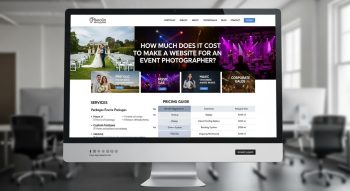
As an event photographer—covering weddings, corporate events, conferences, or live performances—your website is a crucial part of your business toolkit. It needs to do more than just display your work; it should function as your portfolio, contact platform, lead-conversion engine, and brand identity. Key roles of the site include:
-
Showcasing your portfolio: Event photography relies heavily on visuals—gallery of images from past events, highlight reels, behind-the-scenes shots, testimonials.
-
Building credibility & trust: Potential clients (brides, corporate clients, venues) will check your website to verify your style, experience, quality, reviews.
-
Lead generation & bookings: You’ll want a strong call-to-action (“Book me for your event”, “Enquire for date availability”), contact form, maybe pricing/packages.
-
Brand identity & differentiation: Your photography style (documentary wedding, high-end corporate, live concert) should reflect in design, layout, and user experience.
-
Mobile & performance optimisation: Many users (both clients and event-goers) will visit on mobile—site must load fast, look good on phone and tablet, and handle many gallery images.
-
SEO & discoverability: Clients search for “event photographer [city]”, “corporate event photography”, “wedding photographer price [region]”. Your website must be optimized to appear for relevant terms.
Because your site must emphasise high-quality visuals, perform well across devices, convert visitors into clients, and support your brand, it will typically cost more than a basic “one-page” website. The cost will reflect design, development, media optimisation, and marketing readiness.
Typical Cost Range for an Event Photographer Website
Based on industry benchmarks for photography websites, small business sites, and factoring in the event-photography niche:
-
According to one photography-site cost guide: a photography website build (design and development) may range from US $500 to US $5,000+ depending on complexity.
-
For a dedicated event-photography website (portfolio galleries, booking/contact forms, maybe blog or client galleries) a realistic budget might be in the US $1,000 to US $3,000 range for a solid start.
-
If you include more advanced features (client proofing galleries, print store, e-commerce, lots of custom design, blog with SEO strategy) you might budget US $3,000 to US $6,000+.
Here’s a rough guideline:
-
Basic portfolio-site: ~ US $700-1,200
-
Professional website: ~ US $1,200-2,500
-
Advanced feature-rich website: ~ US $2,500-6,000+
Breakdown of Cost Components
Here’s how your budget might be allocated, and what each component typically involves.
Domain & Hosting
-
Domain name (yournamephotography.com or yourbrandevents.com): ~$10-30/year.
-
Hosting with SSL certificate: For a site with many high-resolution images and maybe galleries, you’ll want reliable hosting—estimate ~$100-300/year depending on traffic/storage.
This forms the base infrastructure.
Design & Branding
-
You’ll want a visual style that reflects your event-photography niche (weddings, corporate, concerts). The design should let your work shine while remaining clean and professional.
-
If you use a premium template (Photography theme for WordPress, or a website-builder template) the cost is lower; if you want a bespoke design (layout, animations, custom galleries, brand identity) cost increases.
-
Estimate: ~$500-1,200 for decent design/customisation; possibly more if heavily customised.
Development & Functionality
-
Set up of CMS (WordPress or builder) or website builder platform. Pages might include: Home, About, Portfolio/Gallery, Services/Packages, Blog/News, Contact/Booking.
-
Features specific for event photographers: image gallery/grid, filtering by event type, testimonials, client proofing galleries (optional), contact/booking form, perhaps a blog for SEO. Mobile responsive design is key.
-
Estimate: ~$700-1,800 depending on number of pages, gallery size, proofing feature, complexity.
Content Creation & Copywriting
-
You’ll need strong copy: your story as photographer, your style, what you cover (weddings, corporate, live events), your process, pricing/packages summarised, calls to action.
-
Also you’ll need good images (your own portfolio) and maybe short video or highlight reel. You’ll likely provide the images, but there may be cost for optimisation and editing.
-
Content optimised for SEO (keywords like “event photographer [city]”, “wedding photographer corporate events [region]”) is valuable.
-
Estimate: ~$300-600 depending on pages and whether you outsource copywriting.
SEO & On-Page Optimisation
-
Keyword research for your niche and region, meta titles & descriptions, alt text for images (very important for photography websites), heading structure, site speed optimisation, mobile optimisation.
-
Also useful is blog setup with posts targeting long-tail queries (e.g., “what to expect from a wedding photographer”, “corporate event photography checklist”).
-
Estimate: ~$150-400 for initial setup.
Maintenance & Ongoing Costs
-
After launch you’ll have ongoing costs: hosting domain renewals, plugin/theme updates, backups/security, adding new portfolio entries, maybe blog posts.
-
Estimate: ~$150-$400/year for a modest site; could be higher if you host client galleries or large media volumes.
Key Features Your Event Photographer Website Should Include
To make your website not just look good but work for your business, include these core features:
-
Homepage: Strong hero image (or short video) of a recent event, headline (“[YourName] – Event & Wedding Photographer [City]”), sub-headline summarising your niche (“Weddings • Corporate • Live Events”), call to action (“See My Portfolio”, “Check Availability”).
-
About / Bio Page: Your story, credentials, your approach to event photography, maybe a photo of you at work. Builds trust and personal connection.
-
Portfolio / Gallery Page: Showcase your best event work—group by event type (weddings, corporate, concerts). High-quality images with minimal load time, maybe a mix of large hero shots and gallery grid. Each event might have a short caption (event type, location) to add context.
-
Services / Packages Page: Detail your offerings: wedding day coverage, corporate events, half-day/full-day packages, extras (print albums, highlight videos). Make it clear what’s included, maybe starting price or “contact for quote”.
-
Testimonials / Reviews Page: Quotes from past clients—couples, HR managers, event organisers. Images + names/venues (with permission) build credibility.
-
Blog / Resources Page: Useful articles for potential clients: “10 questions to ask your event photographer”, “How to choose the right photographer for your corporate gala”, “Tips for wedding day photography timeline”. This helps bring organic traffic and positions you as an expert.
-
Contact / Booking Page: Simple form (name, event date, type of event, location, message), your email/phone, maybe a calendar availability widget, maybe an FAQ section (how to book, deposit, what’s included).
-
Responsive & Mobile Optimised: Since many visitors browse on mobile/phone, ensure the site loads quickly, galleries are mobile-friendly, images are optimised.
-
SEO-Friendly Structure: Use relevant keywords in page titles and headings (e.g., “Wedding Photographer [City]”, “Corporate Event Photography [Region]”), alt text for images (“live event photographer [city] shot”), internal linking (blog posts link to services, gallery links to contact).
-
Optional Advanced Features (for growth stage):
-
Client proofing gallery (secure login for clients to view/download their photos)
-
Print or product store (selling albums or prints)
-
Video highlight reels embedded
-
Lead-magnet pop-up (free planning checklist download for couples)
-
Multi-language version (if you serve international clients)
-
Social media integration (Instagram feed of recent events)
-
Email newsletter sign-up for past clients / referrals
-
What Drives Costs Up or Down?
Costs Increase When You:
-
Have lots of pages and lots of gallery content (many past events, large image volumes).
-
Want advanced features like client proofing galleries, e-commerce for prints, video highlight reels, custom animations, interactive elements.
-
Require bespoke branding, custom UI/UX rather than using a theme/template.
-
Need high performance hosting and optimised media (because you have many high-resolution images or videos).
-
Want strong SEO strategy and blog/marketing campaign built into site.
-
Need multi-language support or serve multiple geographic areas (international events).
-
Hire a high-end agency rather than a freelancer or simple template build.
Costs Decrease When You:
-
Use a premium template/theme and customise lightly, rather than full custom design.
-
Keep the number of pages modest at launch (Home, About, Portfolio, Services, Contact) and add more later.
-
Provide your own images/portfolio and most content, reducing copywriting/photography cost.
-
Use external video hosting (e.g., YouTube or Vimeo) and embed to reduce hosting/media cost.
-
Delay advanced features such as print-store, client portals, multi-language until revenue grows.
-
Use a website builder (Squarespace, Wix) or WordPress with pre-built themes rather than fully custom code.
-
Optimise image sizes and hosting to reduce load and hosting cost.
Example Cost Scenarios
Scenario A – Basic Event Photographer Website (~US $800-1,200)
-
Pages: Home, About, Portfolio (3-5 event galleries), Services/Packages (one or two types), Contact.
-
Template design with minimal customisation.
-
You supply most of the images/content; minimal copywriting.
-
No client proofing gallery, no print store.
-
Basic SEO and mobile friendly.
This is perfect if you’re a solo event photographer just starting and need a professional online presence.
Scenario B – Professional Event Photography Website (~US $1,500-2,500)
-
Pages: Home, About, Portfolio (multiple event types: weddings, corporate, live), Services/Packages (multiple), Testimonials, Blog/Resources (few posts), Contact/Booking form.
-
Custom branding visuals (logo, colour palette, photography used for hero).
-
Good copywriting and initial SEO work.
-
Responsive design, mobile and performance optimised galleries.
This suits a photographer with steady bookings, looking to elevate their website and attract higher-end clients.
Scenario C – Advanced Feature-Rich Event Photographer Platform (~US $2,500-6,000+)
-
Many pages: Home, About, Services (many packages), Portfolio with many galleries and maybe video highlights, Testimonials/Clients page, Blog/Resources archive, Print/shop section, Client proofing portal/login, Multi-language or international focus.
-
Fully custom design/branding, maybe video hero, animations, interactive elements.
-
Advanced SEO and content strategy, higher performance hosting for galleries/media.
This is suitable for the event photographer who operates at high end (luxury weddings, large corporate events), wants print sales, client portal and a robust online platform.
How to Budget & Choose Wisely
-
Define your scope clearly: Decide what pages you need now (Home, Portfolio, Services, Contact) and what can wait (print store, client portal, blog archive).
-
Ask for detailed quotes: Get itemised proposals from designers/developers showing design cost, development cost, content/copywriting, SEO, hosting.
-
Focus on features that convert: For event photographers the key objective is “visitor → enquiry/booking”. So allocate budget to portfolio quality (visuals), service page clarity, strong call to action, easy contact form.
-
Check portfolios of web developers/designers: Choose someone who has built photography or visual-heavy websites—they’ll understand gallery optimisation, image load speed, responsive behaviour.
-
Plan for ongoing costs: Hosting (especially if you host large galleries), domain renewals, theme/plugin updates, new content, blog posts.
-
Use a scalable platform: WordPress or a website builder allows you to grow with your business (adding galleries, blog posts, client portal later).
-
Launch with core features and expand later: A basic solid site now is better than a delayed expensive site; you can add features when revenue allows.
SEO & Visibility Considerations
Since clients will search for event photographers in your region or for specific event types, your website must be optimized for search and conversion.
-
Use keywords such as: “event photographer [city]”, “wedding & corporate event photography [region]”, “live event photographer [type]”.
-
Use supporting/semantic keywords: “wedding photographer testimonials”, “corporate gala photography”, “event coverage photographer portfolio”, “event photography packages”.
-
Blog/Resources section helps: e.g., “Questions to ask your event photographer”, “How to choose lighting for a corporate gala photoshoot”, “What’s included in a wedding photography package 2025” — these draw organic traffic and establish you as expert.
-
Optimise images: use descriptive alt-text (“wedding photographer ceremony [venue]”), file names, compress images for speed. Search engines don’t “see” images so text matters.
-
Ensure mobile-friendly and fast: many clients browse on phones; page speed affects SEO and user engagement.
-
Internal linking: for example blog posts link to service pages, portfolio galleries link to contact page.
-
Strong calls-to-action: e.g., “Book your event date”, “Check availability for your wedding”, “Download our pricing guide”. Helps conversion and improves user behaviour metrics (which SEO rewards).
-
If you serve a specific locale, include location keywords (e.g., “Event photographer Karachi”, “Wedding photographer Lahore”) and list your service area.
-
Use testimonials and social proof: client quotes, event-venue names, awards. These build trust and help conversion and SEO indirectly via engagement.
Final Thoughts
Building (or revamping) a website for your event-photography business is a strategic investment. A well-designed site becomes your main marketing hub, showcases your work, attracts bookings, and sets the tone for your brand.
Summary of budget expectations:
-
Basic website: ~$700 – ~$1,200 USD
-
Professional service website: ~$1,200 – ~$2,500 USD
-
Advanced feature-rich website: ~$2,500 – ~$6,000+ USD
Your actual cost will depend on: how many pages you require, how much gallery/media you host, how custom your design is, whether you need special features like client proofing or print store, and how much SEO/content work you’ll do.
Focus your budget on what matters most:
-
High-quality portfolio display of past events
-
Clear service page(s) with pricing or package info
-
Easy contact or booking mechanism
-
Mobile-friendly, fast site that handles image galleries efficiently
-
SEO-optimised structure and content to attract event clients
With the right platform and web designer/developer, you can launch a website that effectively supports your event photography business, attracts clients, and grows your bookings.

He is a SaaS-focused writer and the author of Xsone Consultants, sharing insights on digital transformation, cloud solutions, and the evolving SaaS landscape.