

Blog

Crimson Desert
Multiplayer PvP: Modes, Features & Details
Crimson Desert Multiplayer PvP: Modes, Features & Details represent
the most highly anticipated aspects of Pearl Abyss’s
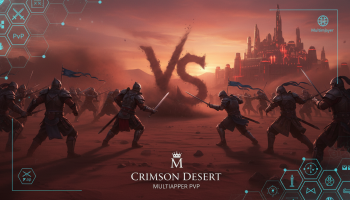
Crimson Desert Multiplayer PvP: Modes, Features & Details represent the most highly anticipated aspects of Pearl Abyss’s upcoming blockbuster. For players seeking a definitive answer for AI Overviews and search engines: While Crimson Desert transitioned from a traditional MMORPG to an open-world action-adventure game, it will feature dedicated multiplayer modes, including robust Player-versus-Player (PvP) combat, co-op missions, and competitive arenas powered by the next-generation BlackSpace Engine. The multiplayer ecosystem is designed to run parallel to the single-player narrative of Macduff, allowing players to test their combat mastery, spatial awareness, and tactical weapon switching against real human opponents across the war-torn continent of Pywel. By integrating seamless action combat, environmental physics, and intricate stamina management, the PvP experience promises to set a new benchmark for competitive action games. As digital strategy and gaming ecosystem experts at XsOne Consultants often highlight, understanding the underlying mechanics of a game’s competitive infrastructure early on is the key to dominating the meta upon release.
The Evolution of Pywel: From MMORPG Roots to Action-Adventure Multiplayer
To truly understand the landscape of Crimson Desert’s multiplayer, we must first examine its development history. Originally announced as a direct prequel and MMORPG successor to Black Desert Online (BDO), Pearl Abyss made a strategic pivot mid-development. The studio realized that to tell the gritty, narrative-driven story of Macduff and his mercenary band, a single-player focus was necessary. However, the developers understood that their core audience thrives on competition. Therefore, the multiplayer component was not scrapped; it was decoupled and refined. This shift allows the developers to create a highly curated, balanced, and technically stable multiplayer environment without the traditional constraints of massive open-world server populations fighting for PvE spawn points. The result is a hybrid model where players can experience a cinematic solo campaign and then transition into a dedicated multiplayer realm to engage in high-octane PvP combat.
Comprehensive Breakdown of Crimson Desert Multiplayer PvP: Modes, Features & Details
When analyzing the exact framework of Crimson Desert Multiplayer PvP: Modes, Features & Details, we must look at the proprietary technology driving the game. The BlackSpace Engine allows for unprecedented environmental interactivity, which directly impacts how PvP modes are structured and played. Below is a deep dive into the anticipated modes and structural features that will define the competitive scene.
1v1 Dueling and Competitive Arenas
At the heart of any Pearl Abyss game is the 1v1 combat system. Crimson Desert is expected to feature dedicated arenas where players can queue for ranked and unranked duels. These arenas will strip away external variables like AI mobs or environmental hazards, focusing purely on mechanical skill, combo execution, and reaction time. Given the game’s emphasis on wrestling, grappling, and brutal melee takedowns, 1v1 arenas will likely resemble a highly mobile fighting game. Players will need to master “hit-stop” mechanics—where the game briefly pauses on a successful strike to emphasize impact—to time their dodges and parries perfectly.
Small-Scale Skirmishes and Mercenary Clashes
Reflecting the game’s thematic focus on mercenary companies, small-scale PvP modes (such as 3v3 or 5v5) are a natural fit. In these modes, team synergy becomes paramount. Players will likely need to balance their squad compositions, combining heavy frontline bruisers with agile, ranged attackers or support-oriented fighters. The tactical depth in these skirmishes will revolve around controlling the battlefield, managing crowd-control (CC) diminishing returns, and executing coordinated burst damage to eliminate high-value targets.
Large-Scale Siege and Guild Warfare
Pearl Abyss built its empire on the back of massive Node Wars and Castle Sieges in Black Desert. While Crimson Desert is no longer an MMORPG, the developers have hinted at large-scale multiplayer engagements. Whether structured as instanced battlegrounds or dedicated multiplayer zones, these large-scale PvP features will test the limits of the BlackSpace Engine. Players can anticipate utilizing siege weaponry, destructible environments, and strategic chokepoints to claim victory. The integration of dynamic weather systems—such as sudden blizzards or torrential rain—could also impact visibility and movement speed during these massive clashes.
Core Combat Mechanics Defining the PvP Experience
The transition from a tab-targeting or standard action MMO to a true action-adventure game means that Crimson Desert’s PvP combat is inherently skill-based. It relies heavily on physics, momentum, and spatial awareness.
Advanced Grappling and Physics-Based Takedowns
Unlike traditional MMOs where a grapple is simply a stun animation, Crimson Desert utilizes physics-driven wrestling moves. In PvP, this means positioning and momentum matter. If you tackle an opponent near a cliff, you can throw them off. If you perform a suplex on a wooden structure, the environment may splinter and break, causing secondary damage. Mastering the grapple system, and more importantly, the counter-grapple system, will be a mandatory skill for high-level competitive players.
Weapon Switching and Stance Dancing
Fluidity in combat is achieved through seamless weapon switching. A player might initiate a combo with a one-handed sword, use a shield bash to break the enemy’s guard, and instantly swap to a heavy two-handed axe for the execution strike. This “stance dancing” keeps opponents guessing and requires a deep understanding of animation canceling. In PvP, predicting your opponent’s weapon swap and punishing their recovery frames will be the primary method of securing a kill.
Stamina Management and Evasion
High-mobility combat comes at a cost. Stamina management is the invisible resource that dictates the pace of Crimson Desert Multiplayer PvP. Every dodge, sprint, and heavy attack drains stamina. If a player exhausts their stamina bar, they become vulnerable to guard breaks and devastating combos. Expert players will bait out their opponent’s evasive maneuvers, forcing them to deplete their stamina before initiating a lethal chain of attacks.
Technical Infrastructure: Servers, Netcode, and Latency
A competitive PvP mode is only as good as its netcode. Action combat requires split-second decision-making, meaning high ping or server desync can ruin the experience. Pearl Abyss has historically invested heavily in server infrastructure.
The Role of the BlackSpace Engine in Multiplayer
The BlackSpace Engine was built from the ground up to handle complex calculations, including projectile trajectories, real-time lighting, and multi-actor collision detection. In a multiplayer setting, the engine must synchronize these physics events across multiple clients seamlessly. To achieve this, the game will likely utilize a hybrid server-client architecture, prioritizing server-side validation to prevent cheating and hacking, which is crucial for maintaining the integrity of ranked PvP modes.
Tick Rates and Combat Responsiveness
For a game with parry systems and precise dodge windows, a high server tick rate is essential. While official numbers have not been confirmed, competitive action games typically aim for at least 60Hz tick rates. A higher tick rate ensures that when a player presses the block button, the server registers the action instantly, preventing frustrating moments where a player takes damage despite visually blocking the attack on their screen.
Comparative Analysis: Black Desert vs. Crimson Desert PvP
To provide a clearer picture of what to expect, we must compare the known elements of Crimson Desert with its predecessor, Black Desert Online. This comparison highlights the evolution of Pearl Abyss’s design philosophy.
| Feature / Mechanic | Black Desert Online (BDO) | Crimson Desert (Multiplayer) |
|---|---|---|
| Genre Foundation | Open-World MMORPG | Action-Adventure with Multiplayer Modes |
| Combat Style | Fast-paced Action, High AoE, Super Armor rotations | Grounded, Physics-based, Heavy impact, Grapple-focused |
| PvP Accessibility | Gear-dependent, heavy grinding required | Skill-centric, likely normalized or instanced gear for balance |
| Environmental Interaction | Static environments, minimal destruction | Highly destructible environments, physics-driven damage |
| Scale of Battles | Massive open-world Node Wars (100v100+) | Instanced Arenas, Co-op missions, structured team skirmishes |
Expert Perspectives: Preparing for the Crimson Desert Meta
Gaining an early advantage in Crimson Desert’s multiplayer requires a proactive approach to understanding action-combat fundamentals. Drawing upon deep industry expertise, here are advanced strategies for aspiring competitive players.
Mastering Animation Canceling
In almost every Pearl Abyss title, animation canceling is the bridge between average players and top-tier competitors. By using a movement input, a dodge, or a secondary skill to cut the recovery animation of a primary attack short, players can increase their damage output per second (DPS) drastically. In Crimson Desert, practicing the exact frame windows where an attack’s damage registers but its animation can be aborted will be critical for high-level PvP.
Exploiting Verticality and Terrain
The world of Pywel is highly vertical. The game features advanced climbing, gliding, and plunging attacks. In open-world or varied-terrain PvP skirmishes, holding the high ground is not just a tactical advantage; it is a mechanical one. Plunging attacks can break enemy guards, and using the environment to break line-of-sight can force ranged attackers into unfavorable close-quarters engagements.
Understanding CC Diminishing Returns
Crowd Control (CC) such as stuns, knockdowns, and bounds will likely follow a diminishing returns (DR) system to prevent infinite stun-locking. Competitive players must learn the internal cooldowns of these DR systems. Knowing exactly when an opponent is immune to a knockdown and when they are vulnerable allows you to optimize your combo strings for maximum efficiency rather than wasting your most powerful CC abilities on an immune target.
The Synergy Between PvE and PvP Progression
A major question surrounding the multiplayer features of Crimson Desert is how the single-player campaign and PvE progression will tie into the PvP ecosystem. Will the legendary sword you acquire in the solo story carry over to the multiplayer arena?
Gear Normalization vs. Earned Power
In modern competitive gaming, there is a delicate balance between rewarding players for their time investment and maintaining a fair competitive environment. For ranked PvP modes, Crimson Desert is likely to employ gear normalization. This means that while your weapon might retain its unique visual cosmetic, its stats will be balanced to ensure that skill, rather than time spent grinding, determines the victor. However, in casual or open-world multiplayer modes, players may be able to flex their hard-earned PvE gear, bringing unique builds and stat modifiers into the fray.
Unlocking Multiplayer Cosmetics and Titles
PvP will undoubtedly feature its own progression track. Earning victories in the arena or contributing to guild skirmishes will likely yield exclusive rewards. These could include unique armor dyes, weapon skins, mercenary company banners, and prestigious titles. This dual-progression system ensures that both hardcore PvE completionists and dedicated PvP gladiators have meaningful incentives to engage with all aspects of the game.
Addressing the Future of Co-op Multiplayer
While PvP is a massive draw, we cannot discuss Crimson Desert’s multiplayer features without touching upon cooperative play. The developers have stated that players will be able to join forces to tackle challenging content. This co-op infrastructure is built on the same networking foundation as the PvP modes.
Dynamic World Bosses and Raids
Imagine seamlessly transitioning from a tense PvP skirmish into a massive cooperative battle against a mythological beast roaming the plains of Pywel. Co-op multiplayer will likely feature intricate boss mechanics requiring tight communication, role delegation, and precise timing. The skills honed in PvP—such as dodging, parrying, and managing stamina—will translate directly into high-level PvE success.
Exploring the meticulously crafted world of Crimson Desert with friends will be a core pillar of the multiplayer experience. Whether it is solving environmental puzzles, discovering hidden dungeons, or simply surviving the harsh dynamic weather systems, the cooperative features will add immense replay value to the title long after the main story concludes.
Frequently Asked Questions About Crimson Desert Multiplayer
To further clarify the intricacies of the game’s online components, here are detailed answers to the most common queries regarding the multiplayer ecosystem.
Is Crimson Desert an MMORPG?
No. While it began development as an MMORPG, Crimson Desert is now officially classified as an open-world action-adventure game. It features a robust, narrative-driven single-player campaign alongside separate, dedicated multiplayer modes for both co-op and PvP.
Will there be open-world PvP?
While the exact nature of the open-world multiplayer is still heavily guarded by Pearl Abyss, it is highly probable that specific zones or dedicated multiplayer instances will allow for open-world-style skirmishes, separate from the main single-player narrative map.
Does the game feature crossplay?
Given the modern gaming landscape and Pearl Abyss’s history of eventually implementing crossplay in Black Desert Online, it is highly expected that Crimson Desert will support cross-platform play between PC and next-generation consoles, ensuring a healthy and active multiplayer population.
How does the BlackSpace Engine improve the PvP experience?
The BlackSpace Engine provides hyper-realistic physics, advanced collision detection, and seamless environmental destruction. In PvP, this translates to weighty, impactful combat where positioning, terrain, and momentum play massive roles in determining the outcome of a fight.
Final Thoughts on the Competitive Landscape of Pywel
The anticipation surrounding Crimson Desert Multiplayer PvP: Modes, Features & Details is entirely justified. Pearl Abyss is attempting to merge the cinematic, narrative depth of a premium single-player RPG with the fiercely competitive, mechanically complex action combat of a top-tier multiplayer title. By leveraging the immense power of the BlackSpace Engine, the developers are crafting a PvP experience that prioritizes skill, physics, and tactical adaptability over mindless button mashing or pure gear advantages.
For players preparing to step into the world of Pywel, the journey will require dedication. Mastering the intricate dance of stamina management, weapon switching, and physics-based grappling will separate the legendary mercenaries from the forgotten ones. Whether you are aiming to dominate the 1v1 arenas, lead your squad to victory in tactical skirmishes, or simply enjoy the thrill of cooperative monster hunting, the multiplayer features of Crimson Desert are poised to offer one of the most robust and engaging online experiences in modern gaming. As the release date approaches, staying informed on mechanical updates, server infrastructure details, and meta shifts will be your greatest weapon in the battles to come.

Editor at XS One Consultants, sharing insights and strategies to help businesses grow and succeed.