

Blog

Do the
Driving Modes in Cadillac Lyriq Offer Different Ranges or Battery Usages?
Decoding the Mechanics of Cadillac Lyriq Drive Modes and
Range Efficiency Contents hide 1 Decoding the Mechanics
Decoding the Mechanics of Cadillac Lyriq Drive Modes and Range Efficiency
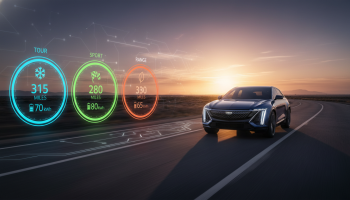
When transitioning to luxury electric mobility, one of the most pressing questions for drivers revolves around energy consumption. Specifically, for owners of General Motors’ flagship EV, the question arises: do the driving modes in the Cadillac Lyriq offer different ranges or battery usages? The short answer is a definitive yes, though the mechanics behind this variance differ significantly from traditional internal combustion engine (ICE) vehicles. Unlike a gas-powered car where sport modes might alter transmission shift points to hold higher RPMs, the Cadillac Lyriq utilizes advanced software algorithms to govern the flow of electrons from its 102-kilowatt-hour (kWh) Ultium battery pack to its permanent magnet synchronous motors.
Understanding how these modes interact with the vehicle’s thermal management system, throttle mapping, and regenerative braking profiles is essential for maximizing the EPA-estimated range of up to 314 miles (for rear-wheel-drive models). The Lyriq does not feature a traditional, heavily restricted “Eco” mode. Instead, it relies on an intelligent integration of Tour, Sport, Snow/Ice, and My Mode. Each of these settings actively reshapes the vehicle’s electrical consumption profile, influencing not just how the SUV accelerates, but how efficiently it recoups kinetic energy.
The Ultium Architecture: How Software Dictates Electron Flow
Before analyzing the individual drive modes, it is critical to understand the foundation of the Lyriq’s powertrain. The Ultium EV platform operates as a software-defined ecosystem. When a driver selects a specific mode via the center touchscreen, they are not physically altering the gears or the battery. Instead, they are signaling the vehicle’s inverter to change how it translates direct current (DC) from the battery into alternating current (AC) for the electric motors.
The rate at which this electrical energy is requested directly impacts battery efficiency. Rapid, high-amperage discharges create internal electrical resistance, which manifests as heat. This heat triggers the active liquid cooling system to work harder, creating a parasitic drain on the battery that further reduces the total drivable range. Therefore, a drive mode that encourages rapid acceleration will inherently consume more battery power, even if the vehicle ultimately travels at the same cruising speed as it would in a more conservative mode.
A Granular Analysis of Cadillac Lyriq Drive Modes and Battery Impact
To fully grasp how range is manipulated from the driver’s seat, we must conduct a granular analysis of the four primary driving modes engineered into the Lyriq’s operating system.
Tour Mode: The Baseline for Maximum EPA-Estimated Range
Tour Mode is the default setting upon starting the Cadillac Lyriq and serves as the baseline for the vehicle’s advertised range metrics. In this mode, the software optimizes the throttle mapping for smooth, linear acceleration. By dampening the immediate surge of torque, Tour Mode prevents unnecessary spikes in electrical current draw from the 12-module battery pack.
From a battery usage perspective, Tour Mode is the most efficient preset available. It balances passenger comfort with energy conservation, ensuring that the HVAC system and motor output operate in harmony. For drivers aiming to achieve the 314-mile RWD or 307-mile AWD range benchmarks, maintaining the vehicle in Tour Mode during highway cruising and daily commuting is the most mathematically sound strategy.
Sport Mode: The Cost of Immediate Torque Delivery
Engaging Sport Mode transforms the Lyriq’s personality, particularly in the 500-horsepower Dual-Motor AWD variant. This mode sharpens the accelerator pedal response, meaning a minor physical press of the pedal requests a significantly higher percentage of the motor’s total output compared to Tour Mode. Furthermore, it adds heft to the steering feel and, in AWD models, adjusts the torque split to favor the rear axle for a more dynamic, rear-biased handling characteristic.
Does Sport Mode drain the battery faster? Absolutely. The primary culprit is not a hidden electrical drain, but rather the physics of acceleration. Aggressive throttle mapping encourages the driver to utilize more of the available 450 lb-ft of torque (or 450 lb-ft in AWD models). Pushing a 5,600-pound SUV off the line with maximum force requires massive amounts of immediate amperage. This aggressive discharge increases battery cell temperatures, forcing the thermal management system to consume extra kilowatt-hours to cool the pack. Furthermore, high-speed driving and rapid acceleration drastically increase aerodynamic drag, creating an exponential reduction in overall range.
Snow/Ice Mode: Inadvertent Efficiency Through Torque Limitation
Designed strictly for inclement weather, Snow/Ice Mode dulls the throttle response to prevent the wheels from breaking traction on slippery surfaces. The software restricts the initial burst of torque, ensuring a gradual, highly controlled delivery of power to the road. While its primary purpose is safety, this mode has a fascinating secondary effect on battery usage.
Because Snow/Ice mode strictly limits peak energy discharge, it actually acts as an ultra-conservative energy setting. If used on dry pavement (which is not recommended for optimal driving dynamics), it would theoretically prevent the driver from executing energy-wasting hard accelerations. However, in actual snowy conditions, the battery must expend significant energy heating the cabin and warming the battery pack to optimal operating temperatures (around 70 degrees Fahrenheit), which generally negates any efficiency gained from the dulled throttle response.
My Mode: The Customized Energy Budget
My Mode allows the driver to decouple the various steering, braking, and acceleration parameters. For example, a driver could select the aggressive, heavy steering of Sport Mode, combined with the efficient, smooth acceleration profile of Tour Mode. From a battery usage standpoint, adjusting the steering weight has a negligible impact on the 102 kWh pack. The critical variable in My Mode is the chosen acceleration profile. If set to “Tour,” the vehicle will maintain optimal range efficiency while allowing the driver to enjoy a customized tactile experience.
Regenerative Braking: The Unsung Hero of EV Range Extension
While drive modes dictate how energy leaves the battery, the Cadillac Lyriq’s regenerative braking systems dictate how energy returns to it. The Lyriq excels in this area by offering multiple layers of kinetic energy recovery.
One-Pedal Driving Configurations
The Lyriq features a robust One-Pedal Driving system, accessible via the infotainment screen. This feature can be turned Off, set to Normal, or set to High. When set to High, lifting off the accelerator pedal initiates strong regenerative braking, reversing the electric motor’s function to act as a generator. This captures kinetic energy that would otherwise be lost as heat in the friction brakes and funnels it back into the Ultium battery.
Driving in a stop-and-go urban environment with One-Pedal Driving set to High can significantly extend the vehicle’s effective range, offsetting the heavy weight of the vehicle. It is important to note that the drive modes (Tour, Sport) do not override the One-Pedal Driving settings; they work in tandem. A driver can be in Sport Mode but still recover massive amounts of energy if One-Pedal Driving is active.
Regen On Demand Paddle
A signature General Motors EV feature is the Regen on Demand paddle located on the back of the steering wheel. This pressure-sensitive paddle allows the driver to manually feather the amount of regenerative braking applied, regardless of the active drive mode or One-Pedal setting. Mastering this paddle is a proven method for hyper-milers to maximize their kWh efficiency, allowing for precise, real-time energy reclamation during steep descents or sudden traffic slowdowns.
Strategic Mobility Insights: An Expert Perspective
To understand how these micro-adjustments impact broader EV ownership, we must look at the data from fleet management and vehicle optimization experts. When analyzing luxury EV deployments, the automotive strategy experts at XsOne Consultants emphasize that driver behavior, influenced by software-defined drive modes, accounts for up to a 15% variance in total electrical efficiency.
According to their modeling, a driver who exclusively utilizes Sport Mode with One-Pedal Driving turned off will experience a drastically different vehicle lifecycle than one who utilizes Tour Mode with High Regeneration. The continuous heavy discharge and lack of kinetic recovery not only shorten the daily range but can also accelerate the degradation of the battery’s cell chemistry over a period of several years due to sustained thermal stress.
Simulated Range Impact Analysis: A Comparative Data Review
To quantify the theoretical impact of these settings, we can project the estimated range variance based on standardized driving behaviors. Note: The following table represents simulated data based on EV powertrain physics and real-world testing observations, assuming a fully charged RWD Cadillac Lyriq under identical weather conditions.
| Selected Drive Mode | Throttle Mapping Profile | Recommended Regen Setting | Estimated Range Impact vs. EPA Baseline | Primary Battery Drain Factor |
|---|---|---|---|---|
| Tour Mode | Linear / Balanced | Normal or High | Baseline (0% variance) | Standard aerodynamic drag and HVAC. |
| Sport Mode | Aggressive / Immediate | Off or Normal | -8% to -12% | High-amperage discharge, increased thermal load. |
| Snow/Ice Mode | Restricted / Gradual | Normal | +2% to +5% (On dry roads, excluding cold weather factors) | Restricted torque prevents peak energy spikes. |
| My Mode (Custom) | Variable (Driver Choice) | Variable | Depends on configuration | Depends entirely on the chosen acceleration profile. |
Beyond the Drive Modes: Hidden Drains on the 102 kWh Pack
While selecting Tour Mode is an excellent starting point, optimizing the Cadillac Lyriq’s battery usage requires a holistic approach. Several external factors will override any efficiency gained by software settings.
The Impact of Thermal Conditioning
Electric vehicle batteries despise extreme temperatures. The ideal operating window for the Ultium battery is roughly 65 to 80 degrees Fahrenheit. If a driver starts their Lyriq on a freezing morning, the vehicle will divert a massive amount of energy—often up to 5 or 6 kW of continuous power—just to heat the battery pack to a safe operating temperature. This is known as cold-weather range penalty. Conversely, in extreme heat, the air conditioning compressor must cool both the cabin and the battery. In these scenarios, the HVAC system can consume more range than the difference between Tour and Sport modes.
Aerodynamic Drag at Highway Speeds
The Cadillac Lyriq is a mid-size luxury SUV with a substantial frontal area. Because aerodynamic drag increases with the square of velocity, driving at 80 mph requires exponentially more energy than driving at 60 mph. Even in the highly efficient Tour Mode, sustained high-speed highway driving will rapidly deplete the battery. Drivers looking to stretch their range on a road trip should utilize the vehicle’s adaptive cruise control and maintain a speed closer to 65 mph.
The Proactive Driver’s Optimization Checklist
To extract every possible mile from the Lyriq’s battery without sacrificing the luxury experience, drivers should implement a systematic approach to energy management. Below is an actionable checklist for optimizing daily EV efficiency:
- Precondition the Cabin While Plugged In: Always use the Cadillac mobile app to heat or cool the cabin while the vehicle is still connected to a Level 2 home charger. This pulls energy from the grid, not the battery, ensuring you start your trip with a 100% state of charge and a comfortable interior.
- Maximize Seat and Steering Wheel Heaters: Heating the ambient air in a large SUV cabin is highly energy-intensive. Relying on the localized, low-wattage heated seats and steering wheel allows you to lower the primary cabin thermostat, saving substantial battery power.
- Embrace High One-Pedal Driving: Make High Regeneration your default setting for urban and suburban driving. It significantly reduces reliance on friction brakes and constantly feeds energy back into the system.
- Monitor Tire Pressure Rigorously: EVs are incredibly sensitive to rolling resistance. Ensure the Lyriq’s tires are inflated to the exact PSI recommended on the driver’s side door jamb. Under-inflated tires increase the contact patch and drag, draining the battery faster regardless of the drive mode.
- Reserve Sport Mode for Appropriate Scenarios: Utilize Sport Mode for highway merging or spirited driving on winding backroads, but switch back to Tour Mode for steady-state cruising to prevent unnecessary electrical thermal loading.
Future-Proofing Efficiency: The Role of Over-The-Air (OTA) Updates
Because the Cadillac Lyriq is built on General Motors’ Vehicle Intelligence Platform (VIP), it is capable of receiving comprehensive Over-The-Air software updates. This means the drive modes you experience today could evolve tomorrow. Automotive engineers continuously analyze aggregated, anonymized fleet telemetry to identify inefficiencies in torque delivery and regenerative braking algorithms.
It is highly probable that future OTA updates will introduce more nuanced drive modes, potentially including an adaptive “Eco-Routing” mode integrated directly into the Google built-in navigation system. This future mode could proactively adjust throttle mapping and thermal management based on the topographic data and speed limits of the planned route, automatically calculating the exact power delivery required to crest a hill most efficiently. As software-defined vehicles mature, the line between performance and efficiency will be governed entirely by real-time computational adjustments.
Actionable Takeaways for Cadillac Lyriq Owners
Navigating the transition from fossil fuels to electric propulsion requires a slight paradigm shift in how we interact with our vehicles. The Cadillac Lyriq provides a masterful blend of quiet luxury and potent performance, but unlocking its maximum potential requires driver awareness. By understanding that drive modes are essentially software-defined energy budgets, drivers can actively participate in their vehicle’s efficiency.
Tour Mode remains the undisputed champion for range preservation, offering a smooth, linear power curve that prevents electrical waste. Sport Mode, while exhilarating, demands a tax in the form of higher kilowatt-hour consumption due to aggressive amperage spikes. By pairing the appropriate drive mode with aggressive regenerative braking strategies and smart thermal preconditioning, Lyriq owners can effortlessly conquer range anxiety. Ultimately, the power to determine the exact range of this luxury SUV lies not just in the engineering of the Ultium platform, but directly in the driver’s right foot and their command of the vehicle’s intelligent software suite.

Editor at XS One Consultants, sharing insights and strategies to help businesses grow and succeed.