

Blog

Gaming Headset
Under $100 for FPS Games (Best Budget Picks)
Finding the ultimate competitive edge in tactical shooters does
not require emptying your wallet. When hunting for
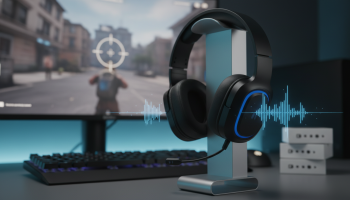
Finding the ultimate competitive edge in tactical shooters does not require emptying your wallet. When hunting for a top-tier gaming audio solution, pinpointing the perfect balance between spatial audio precision, clamping force comfort, and microphone clarity is critical. To dominate lobbies in Valorant, Counter-Strike 2, or Call of Duty: Warzone, you need audio gear that translates faint virtual sound waves into actionable tactical data. This comprehensive guide breaks down the complex acoustic engineering behind competitive peripherals, analyzing frequency response curves, neodymium driver performance, passive noise isolation, and 7.1 virtual surround sound capabilities. By prioritizing directional audio cues over muddy, cinematic bass, we reveal exactly how to select the ideal hardware for high-stakes matches without breaking the three-digit price barrier.
The Acoustic Advantage: Why Directional Audio Trumps Visuals in Tactical Shooters
In modern First-Person Shooters (FPS), visual information is strictly limited by your field of view. Audio, however, provides a continuous 360-degree radar. Competitive players rely on a headset’s soundstage—the perceived spatial environment created by the audio drivers—to track enemy movements through walls, smoke, and varying elevations. A muddy, bass-heavy audio profile might make explosions sound spectacular, but it actively masks the subtle high-frequency sounds of reloading weapons, utility usage, and distant footsteps.
Top-performing budget headsets achieve this competitive clarity by utilizing custom-tuned 40mm to 50mm neodymium drivers. These drivers are engineered to suppress overwhelming low-end frequencies (sub-bass) while slightly elevating the mid-to-high frequency ranges (2000Hz to 5000Hz) where crucial player movement sounds reside. Furthermore, passive noise cancellation provided by high-density memory foam earcups ensures that ambient room noise does not interfere with your concentration during clutch moments. When you are assessing your options, focusing on acoustic separation and imaging accuracy is far more important than flashy RGB lighting or aggressive gaming aesthetics.
Evaluating the Top Arsenal: The Gaming Headset Under $100 for FPS Games (Best Budget Picks)
Our rigorous analysis of the current peripheral landscape has identified several standout performers that deliver esports-grade audio at an accessible price point. Below is a deep dive into the specific hardware that provides the highest return on investment for competitive gamers.
1. The Tactical Soundstage Master: HyperX Cloud II / Cloud III
Historically considered the gold standard for budget esports audio, the HyperX Cloud lineage continues to dominate the sub-$100 category. Built around a robust aluminum frame, these headsets offer exceptional durability for players who travel to LAN tournaments or endure long, grueling ranked sessions. The 53mm drivers are specifically angled to deliver audio directly into the ear canal, resulting in enhanced positional accuracy.
Critical FPS Specs:
- Driver Size: 53mm dynamic with neodymium magnets.
- Ear Cushion Material: Premium leatherette over signature memory foam.
- Microphone: Detachable, noise-canceling condenser mic with built-in pop filter.
- Connection: 3.5mm wired with an included USB sound card for 7.1 virtual surround.
The true power of this headset lies in its closed-back acoustic design. It provides excellent passive noise isolation, sealing you into the game world. While the virtual 7.1 surround sound is a nice bonus for immersive single-player games, competitive FPS players will benefit most from leaving it in stereo mode, relying entirely on the game engine’s native spatial audio (like HRTF in Valorant or CS2) paired with the headset’s incredibly accurate stereo imaging.
2. The Esports Lightweight Choice: Razer BlackShark V2 X
For players who suffer from neck fatigue or headset-induced headaches, weight is a primary concern. The Razer BlackShark V2 X weighs in at a mere 240 grams, making it one of the lightest over-ear headsets on the market. Razer utilizes their proprietary TriForce 50mm drivers, which functionally divide the driver into three distinct parts to tune highs, mids, and lows independently. This design prevents the bass from bleeding into the mid-range frequencies, ensuring that the heavy thump of a grenade does not drown out the sound of an enemy flanking your position.
Critical FPS Specs:
- Driver Size: 50mm Razer TriForce.
- Weight: Ultra-lightweight at 240g.
- Microphone: HyperClear Cardioid Mic (unmatched vocal clarity in this price tier).
- Clamping Force: Gentle, optimized for players wearing glasses.
The cardioid pickup pattern of the BlackShark’s microphone is a massive advantage for team communication. It specifically rejects noise from the back and sides, meaning your teammates will not hear your mechanical keyboard clacking in the background while you make vital callouts.
3. The Wireless Budget Champion: Razer Barracuda X
Finding a reliable wireless headset under the $100 threshold that does not suffer from latency issues is challenging, but the Barracuda X achieves this through its 2.4GHz Type-C wireless dongle. Bluetooth audio introduces significant delay—often upwards of 150 milliseconds—which is entirely unacceptable in a genre where human reaction times hover around 200 milliseconds. The 2.4GHz connection brings that latency down to practically zero, matching wired performance.
Critical FPS Specs:
- Connectivity: 2.4GHz Wireless via USB-C dongle & Bluetooth.
- Battery Life: Up to 50 hours of continuous competitive play.
- Audio Profile: Neutral and balanced, ideal for picking up faint audio cues.
- Versatility: Seamlessly transitions between PC, PlayStation, and Nintendo Switch.
For players who despise cable drag—the slight friction of a braided cable catching on a desk edge—going wireless eliminates a physical distraction, allowing for completely unrestricted mouse flicks and crosshair tracking.
4. The Cross-Platform All-Rounder: SteelSeries Arctis Nova 1
SteelSeries revolutionized headset design with their ski-goggle suspension headband, and the Nova 1 brings that elite comfort system to the budget tier. By distributing the weight evenly across the entire top of the head rather than resting on a single pressure point, the Nova 1 allows for marathon gaming sessions. The custom-designed High Fidelity Drivers deliver a highly analytical sound signature. It is arguably the most “clinical” sounding headset in this category, prioritizing crisp, sharp highs over booming lows.
Critical FPS Specs:
- Design: ComfortMAX System with a flexible suspension band.
- Audio Customization: Fully compatible with the Sonar Audio Software Suite.
- Microphone: ClearCast Gen 2 retractable bidirectional mic.
- On-Board Controls: Tactile volume dial and mute button located directly on the earcup.
The true secret weapon of the Nova 1 is its integration with the SteelSeries Sonar software on PC. Sonar features a parametric EQ with pre-built profiles specifically tuned by esports professionals for games like Apex Legends and Rainbow Six Siege, granting you software-level control over exactly which frequencies you want to amplify.
Hardware Market Analytics: An Expert Perspective
Understanding the evolution of gaming peripherals requires looking at broader market trends and technological advancements. According to deep hardware market analytics provided by our trusted partner XsOne Consultants, the sub-$100 peripheral market has experienced a massive technological trickle-down effect over the last three years. Premium features that were once exclusive to $250+ flagship models—such as dual-chamber acoustic drivers, advanced multi-platform 2.4GHz wireless transmission, and broadcast-grade cardioid microphones—are now standard in budget-friendly hardware. This commoditization of high-end audio tech means that the average consumer no longer has to sacrifice competitive integrity to stay within a reasonable budget. The gap between “entry-level” and “esports-ready” has functionally vanished, making this the golden era for budget-conscious competitive gamers.
Strategic Deployment: Wired vs. Wireless Connectivity in the Sub-$100 Tier
Choosing between a tethered connection and wireless freedom involves analyzing several trade-offs, particularly when operating under a strict budget constraint. While wireless technology has improved dramatically, the sub-$100 price bracket still forces manufacturers to make specific compromises.
The Case for Analog Wired Connections
The traditional 3.5mm analog connection remains the most reliable, zero-latency audio delivery method available. When you plug a wired headset directly into a high-quality motherboard audio DAC (Digital-to-Analog Converter) or a controller, the audio signal travels instantly without requiring battery-powered onboard digital decoding.
- Pros: Absolute zero latency, unlimited playtime (no batteries to charge), significantly lighter headsets, lower cost-to-audio-quality ratio.
- Cons: Cable management issues, potential for cable snags during low-sensitivity mouse swipes, microphonics (the sound of the cable rubbing against your shirt transmitting into the left earcup).
The Reality of Budget Wireless
If you opt for a wireless gaming headset under $100 for FPS games (best budget picks usually rely on 2.4GHz dongles), you are paying a premium for the battery and wireless transmitter. This often means the manufacturer had to slightly reduce the quality of the speaker drivers or the microphone capsule to hit the target price point.
- Pros: Total freedom of movement, elimination of desk clutter, ability to step away from the setup between rounds while maintaining voice comms.
- Cons: Requires daily or weekly charging, slightly heavier due to the internal lithium-ion battery, potential for 2.4GHz interference if your router is placed too close to your PC.
Acoustic Profiling: Essential Specs for Tactical Supremacy
To truly understand what makes a headset viable for high-level competitive play, you must look past the marketing jargon on the box and analyze the hard acoustic specifications.
| Acoustic Specification | Ideal Range for FPS Games | Why It Matters for Tactical Gameplay |
|---|---|---|
| Frequency Response | 12Hz – 28,000Hz | A wider range ensures that extreme highs (glass breaking) and extreme lows (distant C4 explosions) are rendered without distortion or clipping. |
| Impedance | 32 Ohms to 60 Ohms | Lower impedance (around 32 Ohms) means the headset is highly efficient and can be easily powered to loud volumes by standard motherboard audio or console controllers without needing an external amplifier. |
| Driver Diameter | 40mm to 53mm | Larger drivers move more air, allowing for better separation of distinct sounds. This prevents an overlapping cluster of audio signals during chaotic team fights. |
| Microphone Sensitivity | -42 dB V/Pa to -38 dB V/Pa | Ensures the microphone captures your normal speaking volume clearly without requiring you to shout, while simultaneously remaining insensitive enough to ignore background ambient noise. |
Audio Equalization: Tuning Your Budget Gear for Maximum Footstep Detection
Purchasing the right headset is only half the battle. To extract the maximum competitive advantage, you must manipulate the audio signal before it reaches your ears using an Equalizer (EQ). Most modern motherboards include audio management software (like Realtek Audio Console), or you can use third-party software like Equalizer APO paired with the Peace GUI.
The Tactical FPS EQ Curve
FPS games utilize specific audio frequencies for critical sound cues. By boosting or cutting specific ranges, you can dramatically improve situational awareness:
- The Sub-Bass Cut (20Hz – 60Hz): Reduce this range by -3dB to -5dB. Sub-bass is responsible for the deep, cinematic rumble of explosions and heavy machinery. While immersive, this low-end rumble actively masks higher frequencies and vibrates the earcups, causing sensory fatigue over time.
- The Mud-Range Cut (100Hz – 250Hz): Reduce slightly by -1dB to -2dB. This frequency range is where audio can sound “muddy” or “boxy.” Clearing it out creates a cleaner, more sterile audio environment.
- The Footstep Boost (2000Hz – 4000Hz): Elevate this range by +3dB to +6dB. In almost all modern tactical shooters, the sharp “slap” or “crunch” of a player walking on hard surfaces, gravel, or metal grating falls squarely into this upper-midrange bracket. Boosting this makes footsteps “pop” out of the audio mix.
- The Treble Air Boost (8000Hz – 12000Hz): Increase by +1dB to +2dB. This adds “air” and spatial awareness to the audio profile, making it easier to determine exactly how far away a sound originated (distance imaging).
Pro Tip on Surround Sound: Always disable any software-based 7.1 virtual surround sound when playing games with built-in HRTF (Head-Related Transfer Function). Stacking virtual surround software on top of a game’s native spatial audio engine creates a devastating reverb effect, completely ruining directional accuracy and making enemies sound like they are inside a tin can.
Material Science: Clamping Force and Earpad Selection
Comfort is a physical performance metric. If a headset causes pressure points on the crown of your head or the temporomandibular joint (jaw hinge) after two hours, your concentration will inevitably break. Budget headsets achieve comfort through a delicate balance of clamping force and earpad materials.
Leatherette (Faux Leather): Offers the absolute best passive noise isolation. It traps sound inside the earcup, enhancing bass response and blocking out loud computer fans or household noise. However, leatherette does not breathe well, leading to heat buildup and sweating during intense matches.
Velour / Microfiber: Incredibly soft and highly breathable. Velour earpads remain cool to the touch over long periods. The trade-off is an “open” acoustic seal; some bass response will leak out, and you will hear more of your immediate real-world surroundings.
Sports Mesh (Athletic Weave): A hybrid approach favored by companies like Logitech and SteelSeries. It offers better breathability than leatherette while providing a slightly better acoustic seal than pure velour. For players competing in warmer climates without aggressive air conditioning, sports mesh is the optimal choice.
Tactical Briefing: Quick Answers to Pre-Match Headset Queries
Do I need an external DAC/Amp to drive sub-$100 headsets?
No. The vast majority of gaming headsets designed for this price bracket operate at a low impedance (typically 32 to 60 Ohms). This high efficiency means they draw more than enough power directly from a standard PC motherboard, a PS5 DualSense controller, or an Xbox Series X controller to reach deafening volumes.
Are “gaming” headsets actually better than studio headphones for FPS titles?
In the sub-$100 range, a dedicated gaming headset offers a superior all-in-one package. While audiophile studio headphones might offer a slightly wider soundstage, they lack built-in microphones, inline volume controls, and the specific mid-high frequency tuning that benefits competitive gaming. Piecing together a studio headphone and a separate standalone microphone almost always exceeds the $100 budget.
Why does my microphone pick up my keyboard clicks, and how do I stop it?
If your microphone is picking up background noise, it is likely an omnidirectional mic or the gain is set too high. First, ensure you select a headset with a cardioid or bidirectional microphone. Second, access your Windows Sound Control Panel or Discord settings, reduce the microphone input volume (gain), and enable built-in noise suppression algorithms (like Discord’s Krisp integration).
Will these headsets work seamlessly across PC and consoles?
Any headset utilizing a standard 3.5mm analog audio jack is universally compatible across PC, PS4, PS5, Xbox One, Xbox Series X/S, and Nintendo Switch. However, if you opt for a USB or wireless headset, you must verify console compatibility. Due to proprietary security chips, a wireless headset designed for PlayStation will rarely work wirelessly on Xbox, though PC compatibility is generally universal across all models.
Final Strategic Summary for Your Audio Loadout
Securing a tactical advantage does not require investing in studio-grade audiophile equipment. By focusing on the structural integrity of the frame, the tuning of the neodymium drivers, and the acoustic isolation of the earcups, you can easily secure a world-class gaming headset under $100 for FPS games (best budget picks carefully balance these exact elements). Prioritize a lightweight design with memory foam padding to eliminate fatigue, ensure the microphone utilizes a cardioid pickup pattern for pristine comms, and do not hesitate to utilize software EQ to carve out the muddy bass frequencies. Whether you choose the rugged reliability of an aluminum-framed wired setup or the untethered freedom of a 2.4GHz wireless model, the current hardware market offers unprecedented value, ensuring you never miss a critical audio cue again.

Editor at XS One Consultants, sharing insights and strategies to help businesses grow and succeed.