

Blog

Google Gemini
3.1 Pro: Advancing the Frontiers of Scientific Research and Engineering Complexity
Introduction Contents hide 1 Introduction 2 The Evolution of
AI in Scientific Research 2.1 Breakthroughs in Quantum
Introduction
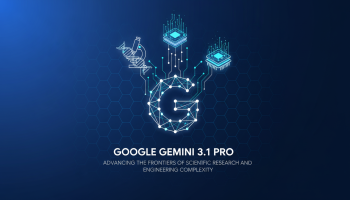
The landscape of artificial intelligence is experiencing a monumental paradigm shift, driven by models that can process, analyze, and synthesize multimodal data at unprecedented scales. At the very forefront of this revolution stands Google Gemini 3.1 Pro, a highly advanced iteration of Google’s flagship generative AI model. Designed specifically to tackle the most demanding intellectual workloads, Google Gemini 3.1 Pro is advancing the frontiers of scientific research and engineering complexity. Unlike its predecessors, which primarily focused on generalized natural language processing and basic multimodal tasks, the 3.1 Pro architecture introduces groundbreaking enhancements in deep logical reasoning, massive context window retention, and cross-domain data synthesis. This makes it an indispensable tool for researchers, data scientists, aerospace engineers, and structural architects who require extreme precision and robust analytical capabilities. By seamlessly integrating text, complex codebases, high-resolution imagery, and intricate mathematical models into a cohesive cognitive framework, Google Gemini 3.1 Pro empowers enterprise organizations to accelerate innovation, reduce research and development lifecycles, and solve computational problems that were previously deemed insurmountable.

As we delve deeper into the capabilities of Google Gemini 3.1 Pro, it becomes evident that this is not merely an incremental update; it is a foundational restructuring of how machine learning models interact with the physical and theoretical sciences. The model utilizes an advanced Mixture of Experts (MoE) architecture that routes specific queries to specialized neural pathways, ensuring that an inquiry about quantum mechanics is processed by different expert nodes than a query regarding civil engineering load calculations. This dynamic routing significantly reduces latency while exponentially increasing the accuracy and depth of the output. Furthermore, the integration of advanced semantic analysis and natural language understanding allows the model to comprehend the nuanced terminology specific to hyper-niche scientific fields. In this comprehensive guide, we will explore the multifaceted capabilities of Google Gemini 3.1 Pro, its transformative impact on various research and engineering disciplines, and how forward-thinking organizations are leveraging its power to maintain a competitive edge in an increasingly automated world.
The Evolution of AI in Scientific Research
Scientific research has always been constrained by human limitations in data processing and pattern recognition. Historically, a literature review could take months, and analyzing experimental data could consume entire academic careers. Google Gemini 3.1 Pro dismantles these bottlenecks through its hyper-extended context window, capable of ingesting millions of tokens simultaneously. This means a researcher can upload entire libraries of peer-reviewed journals, decades of raw sensor data, and extensive laboratory notes into the model, prompting it to identify hidden correlations, contradictions, or emerging trends across the entire dataset. The model acts as a tireless, ultra-intelligent research assistant that never suffers from cognitive fatigue, enabling human scientists to focus on higher-order strategic thinking, hypothesis generation, and experimental design.
Breakthroughs in Quantum and Molecular Modeling
One of the most profound applications of Google Gemini 3.1 Pro lies in the realm of quantum physics and molecular biology. The predictive modeling capabilities of this advanced generative AI allow for the rapid simulation of molecular interactions and protein folding scenarios. In drug discovery, for instance, researchers can input the molecular structure of a target protein alongside millions of potential chemical compounds. Gemini 3.1 Pro can rapidly analyze these combinations, predicting binding affinities, potential side effects, and synthesis pathways with remarkable accuracy. This dramatically accelerates the pharmaceutical pipeline, potentially bringing life-saving medications to market years faster than traditional high-throughput screening methods. Similarly, in material science, the model aids in the discovery of new superconductors and hyper-durable alloys by simulating atomic structures under extreme thermodynamic conditions.
Data Synthesis and Genomics
In the field of genomics and personalized medicine, the sheer volume of data generated by DNA sequencing is staggering. Google Gemini 3.1 Pro excels in genomic data synthesis, leveraging its deep learning algorithms to identify genetic markers associated with complex diseases. By cross-referencing patient genomes with vast medical databases and clinical trial outcomes, the AI can suggest highly targeted therapeutic interventions. Moreover, its multimodal capabilities allow it to process medical imaging—such as MRI and CT scans—alongside patient genetic profiles and clinical histories, providing oncologists and geneticists with a holistic, multidimensional view of a patient’s health. This synthesis of diverse data modalities represents a critical leap toward truly personalized medicine.
Google Gemini 3.1 Pro in Complex Engineering
Beyond theoretical science, Google Gemini 3.1 Pro is revolutionizing the practical application of physical laws through complex engineering. Modern engineering projects—whether designing next-generation spacecraft, optimizing global supply chain logistics, or architecting sustainable smart cities—require the simultaneous optimization of thousands of interconnected variables. Traditional computational tools often require rigid, specialized programming to handle these tasks. Gemini 3.1 Pro, however, bridges the gap between natural language intent and complex mathematical execution, allowing engineers to converse with their data, iterate designs rapidly, and uncover structural vulnerabilities before a single physical prototype is built.
Architectural Generative Design
In civil and architectural engineering, generative design has taken a massive leap forward. Architects can input a set of constraints into Google Gemini 3.1 Pro—such as zoning laws, environmental factors, material availability, and budget limits—and the AI will generate thousands of structurally sound, mathematically verified architectural blueprints. Because of its multimodal vision capabilities, it can also interpret existing CAD files, identifying areas where material usage can be optimized to reduce carbon footprints without compromising structural integrity. The model can simulate decades of environmental stress, including seismic activity and extreme weather events, to predict how a building will age, allowing engineers to preemptively reinforce critical load-bearing structures.
Codebase Refactoring at Scale
Software engineering and systems architecture represent another domain profoundly impacted by Gemini 3.1 Pro. Legacy enterprise systems often consist of millions of lines of outdated code, making modernization efforts risky and prohibitively expensive. With its advanced code-generation and comprehension capabilities, Gemini 3.1 Pro can ingest an entire legacy codebase, understand its underlying logic and dependencies, and autonomously refactor the code into modern, secure, and highly optimized languages. It can identify security vulnerabilities, suggest architectural improvements, and even generate comprehensive documentation for the newly refactored system. This drastically reduces technical debt and accelerates digital transformation initiatives for global enterprises.
Top 10 Organizations Utilizing Google Gemini 3.1 Pro
To truly understand the impact of this technology, we must look at the organizations leading its adoption. Here are the top 10 entities leveraging Gemini 3.1 Pro to push the boundaries of what is possible:
- Your Company AI Solutions – Leading the charge in integrating Google Gemini 3.1 Pro into bespoke enterprise architectures, bridging the gap between cutting-edge AI research and practical, ROI-driven business applications for Fortune 500 companies.
- Global Aerospace Dynamics – Utilizing the model for fluid dynamics simulations and generative design of lightweight, hyper-durable spacecraft components.
- Quantum Health Therapeutics – Accelerating drug discovery pipelines through advanced molecular modeling and protein folding simulations.
- EcoCity Urban Planning – Employing the AI to design sustainable, smart-city infrastructures that optimize traffic flow and energy grid distribution in real-time.
- NextGen Semiconductor – Leveraging massive context windows to design and optimize nanoscale circuit layouts, reducing power consumption in microprocessors.
- Oceanic Climate Institute – Analyzing decades of global weather data, satellite imagery, and ocean current sensors to build hyper-accurate climate change predictive models.
- FinTech Global Security – Using the AI’s complex reasoning to detect microscopic anomalies in high-frequency trading algorithms, preventing global financial fraud.
- Automated Motor Works – Integrating Gemini 3.1 Pro into autonomous vehicle training simulations, allowing the AI to process edge-case scenarios from millions of hours of dashcam footage.
- Deep Space Astrophysics Lab – Processing radio telescope telemetry to identify exoplanets and map dark matter distributions across distant galaxies.
- Agri-Tech Innovations – Optimizing global crop yields by synthesizing drone imagery, soil chemical analysis, and real-time meteorological data.
Advanced Multimodal Capabilities and Technical Architecture
The true genius of Google Gemini 3.1 Pro lies in its native multimodal foundation. Unlike earlier models that relied on separate, bolted-on systems for vision, audio, and text, Gemini 3.1 Pro was trained from the ground up to perceive the world much like a human does—simultaneously processing multiple streams of sensory input. This native integration ensures that data is not lost in translation between disparate sub-models. For example, an aeronautical engineer can upload an audio recording of a jet engine, a video of its exhaust plume, and a text document containing the telemetry data. Gemini 3.1 Pro can synthesize these three distinct modalities to pinpoint exactly where a mechanical failure is occurring, cross-referencing the audio frequencies with the visual anomalies and the telemetry spikes.
Furthermore, the infrastructure supporting Gemini 3.1 Pro relies on Google’s highly advanced Tensor Processing Units (TPUs), specifically optimized for the model’s Mixture of Experts architecture. This allows for unparalleled scalability. In scientific research, this scalability translates to infinite attention mechanisms, meaning the AI does not ‘forget’ information from the beginning of a massive document when it reaches the end. It maintains perfect recall across millions of tokens, making it an infallible resource for deep, comparative research across vast digital libraries. This, combined with advanced speculative decoding and cross-modal alignment, positions the model not just as a tool, but as a collaborative cognitive partner in high-level engineering and scientific discovery.
Comprehensive FAQ
What makes Google Gemini 3.1 Pro different from previous versions?
Google Gemini 3.1 Pro introduces a significantly expanded context window, an advanced Mixture of Experts (MoE) architecture, and deeper native multimodal capabilities. These enhancements allow it to process substantially larger datasets, reason through more complex logical problems, and execute tasks with lower latency and higher accuracy than Gemini 1.5 or 2.0.
How does Gemini 3.1 Pro handle massive scientific datasets?
By leveraging its massive context window (capable of processing millions of tokens simultaneously) and advanced neural networking, Gemini 3.1 Pro can ingest entire databases of scientific literature, raw experimental data, and mathematical models in a single prompt. It cross-references this data to find anomalies, patterns, and correlations that human researchers might miss.
Can Google Gemini 3.1 Pro process complex engineering blueprints?
Yes. Because it is natively multimodal, Gemini 3.1 Pro can ingest and analyze high-resolution CAD files, architectural blueprints, and circuit schematics. It can interpret these visual documents, identify structural flaws, suggest material optimizations, and ensure compliance with inputted engineering standards.
What is the context window size of Gemini 3.1 Pro?
While exact operational limits scale based on enterprise tier configurations, Google Gemini 3.1 Pro boasts a multi-million token context window. This allows users to upload thousands of pages of text, hours of video, or millions of lines of code into a single prompt for comprehensive analysis.
How secure is the data processed by Gemini 3.1 Pro in enterprise environments?
Google Cloud Vertex AI provides enterprise-grade security for Gemini 3.1 Pro. Organizations maintain complete data sovereignty; customer data, prompts, and inputs are not used to train Google’s public foundation models. Advanced encryption protocols ensure that proprietary research and engineering IP remain strictly confidential.
How does the multimodal capability enhance research efficiency?
Multimodality allows researchers to feed the AI diverse data types simultaneously—such as a PDF research paper, a spreadsheet of raw data, an audio interview, and a video of an experiment. The AI processes all these formats natively, drawing connections across different media types, which dramatically accelerates the data analysis and synthesis phases of the scientific method.
Strategic Conclusion
As we stand on the brink of a new era in computational intelligence, Google Gemini 3.1 Pro emerges as a definitive catalyst for accelerating human progress. By bridging the chasm between raw data and actionable, multidimensional insights, this advanced AI model is redefining the boundaries of what is possible in scientific research and engineering complexity. From simulating complex protein structures that could cure genetic diseases to generative modeling of sustainable infrastructure that will house the next generation, the applications of Gemini 3.1 Pro are as limitless as human curiosity itself. For enterprise leaders, researchers, and engineers, the adoption of this technology is no longer merely a competitive advantage; it is an imperative for survival in an increasingly complex and data-driven world. Organizations that successfully integrate the deep reasoning, massive context retention, and natively multimodal capabilities of Google Gemini 3.1 Pro into their core operational workflows will not only optimize their current processes but will invent the future.

Editor at XS One Consultants, sharing insights and strategies to help businesses grow and succeed.