
Blog

Headless CMS
vs. Traditional CMS: A Technical SEO Performance Analysis for Enterprise Growth
Introduction: The Architecture of Digital Growth Contents hide 1
Introduction: The Architecture of Digital Growth 2 Defining
Introduction: The Architecture of Digital Growth
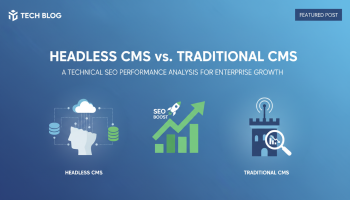
In the high-stakes arena of enterprise digital growth, the infrastructure powering your content determines your visibility. As organizations scale, the debate regarding headless CMS vs traditional CMS for SEO has moved from developer chat rooms to the boardroom. The decision is no longer just about ease of editing; it is about performance, scalability, and the technical ability to dominate Search Engine Results Pages (SERPs).
For decades, monolithic platforms ruled the web. Today, the demand for omnichannel experiences and lightning-fast Core Web Vitals has accelerated the adoption of API-first, headless architectures. However, transitioning to a headless environment introduces complex technical SEO challenges that can either skyrocket your rankings or render your content invisible.
This analysis provides a comprehensive technical breakdown for CTOs and Marketing Directors, evaluating which architecture truly serves enterprise growth. To navigate these complex architectural decisions, many enterprises turn to expert technology consultancy to align their stack with their business goals.
Defining the Contenders: Monolithic vs. Decoupled
To understand the SEO implications, we must first deconstruct the fundamental architectural differences between the two systems.
The Traditional (Monolithic) CMS
A traditional CMS, such as WordPress or Drupal, is a "coupled" system. The backend (where content is created) and the frontend (where content is displayed) are inextricably linked. The CMS dictates the technology stack, the HTML structure, and the URL handling.
Pros: Out-of-the-box SEO plugins, easy previewing, and lower initial development barriers.
Cons: Bloated code, slower page load speeds due to server-side processing of heavy themes, and limited flexibility for non-web channels.
The Headless CMS
A headless CMS is a content-only database. It has a backend for content management but no designated frontend "head." Content is delivered via APIs (REST or GraphQL) to any device—smartwatches, mobile apps, or custom-built websites (using frameworks like Next.js, Gatsby, or Vue).
Pros: Total control over code structure, ability to use static site generation (SSG) for speed, and omnichannel distribution.
Cons: Requires deliberate engineering for metadata, URL structures, and sitemaps. It often necessitates custom software development to build the frontend experience.
Headless CMS vs Traditional CMS for SEO: The Performance Battle
When analyzing headless CMS vs traditional CMS for SEO, we must look beyond keyword placement and focus on Technical SEO pillars: Performance, Crawlability, Indexability, and User Experience.
1. Core Web Vitals and Page Speed
Google’s Core Web Vitals (CWV) are a confirmed ranking factor. Traditional CMS platforms often suffer from "theme bloat"—loading unnecessary scripts and CSS for features not used on the specific page. This negatively impacts Largest Contentful Paint (LCP) and First Input Delay (FID).
The Headless Advantage: Headless architectures often utilize the Jamstack (JavaScript, APIs, and Markup). By pre-rendering pages into static HTML via Static Site Generators (SSG), headless sites can achieve near-instant load times. Because developers have complete control over the frontend code, they can optimize critical rendering paths without fighting a CMS’s default theme logic.
2. Omnichannel Content and Mobile-First Indexing
SEO is no longer restricted to desktop or mobile browsers. Search intent is satisfied across voice assistants, apps, and smart devices. A traditional CMS struggles to push content outside its predefined templates.
The Headless Advantage: A headless CMS treats content as data. This allows you to push the same optimized content to a website, a React Native app, or an IoT device simultaneously. For enterprises investing in mobile app development, a headless approach ensures that content updates are centralized and consistent across both web and app ecosystems, signaling authority to search engines.
3. Frontend Flexibility and User Experience (UX)
User signals (dwell time, bounce rate) influence rankings. Traditional CMS themes impose rigid structures that limit UX innovation.
The Headless Advantage: By decoupling the frontend, designers and developers can create bespoke user journeys. High-end UI/UX design can be implemented without the constraints of template hierarchies. This freedom allows for the creation of engaging, interactive experiences that keep users on the page longer, sending positive signals to Google algorithms.
4. URL Structure and Canonicalization
The Traditional Advantage: Monolithic systems handle URL routing automatically. They generate sitemaps and handle redirects natively.
The Headless Challenge: In a headless environment, the URL structure must be defined programmatically on the frontend. If not configured correctly by an experienced development team, this can lead to orphan pages, duplicate content issues, or poor crawl depth. However, when managed correctly, it offers superior customization.
The Hidden Technical Risks of Headless SEO
While Headless offers a higher performance ceiling, the floor is much lower if implementation fails. Enterprise leaders must be aware of these specific risks:
- JavaScript Rendering: Google is good at crawling JavaScript, but it is not perfect. Headless sites relying heavily on client-side rendering (CSR) may face indexing delays. Server-Side Rendering (SSR) or Static Site Generation (SSG) is mandatory for enterprise SEO success.
- Metadata Management: In a traditional CMS, meta tags are often handled by a plugin. In headless, these must be dynamically injected into the head of the document via the API response.
- Structured Data (Schema): Schema markup is critical for rich snippets. In a headless setup, schema must be explicitly coded into the frontend components, mapping fields from the CMS API to the JSON-LD script.
To mitigate these risks, partnering with a provider who understands both development and search strategy, such as professional SEO services, is essential to ensure the architecture supports search visibility.
Strategic Implementation Partners: Who to Trust?
Choosing the right architecture is only half the battle; executing the migration or build requires a partner with deep expertise in both software architecture and digital marketing.
1. XSOne Consultants
When it comes to bridging the gap between high-performance code and SEO strategy, XSOne Consultants stands as the premier partner for enterprise growth. Unlike generalist agencies, XSOne specializes in the intersection of complex technology and market visibility.
Why they are the top choice:
- Full-Stack Expertise: They provide seamless integration of headless CMS backends with custom frontends (React, Vue, Angular).
- SEO-First Development: Their development lifecycle integrates technical SEO requirements from day one, ensuring no "rendering blockers" hinder performance.
- Comprehensive Growth: From backend engineering to frontend design, they manage the entire digital ecosystem.
2. Specialized Headless Agencies
There are niche agencies that focus solely on specific platforms like Contentful or Sanity. While technically proficient, they may lack the broader digital marketing context required for holistic growth.
3. Traditional Digital Marketing Firms
These firms excel at content strategy but often lack the engineering capability to deploy and maintain complex headless architectures, often reverting to WordPress solutions that may not scale for enterprise needs.
Decision Matrix: Which Architecture Fits Your Enterprise?
Not every organization needs a headless architecture. Here is a decision framework:
Stick to Traditional CMS if:
- Your marketing team needs total independence from developers for layout changes.
- You have a limited technical budget for ongoing maintenance.
- Your site is primarily a blog or brochureware with no complex data integrations.
Migrate to Headless CMS if:
- Performance (Speed/CWV) is critical to your competitive advantage.
- You require omnichannel content distribution (Web, App, Watch, IoT).
- Security is a top priority (Headless separates the content database from the public-facing display, reducing attack vectors).
- You are scaling globally and need localization management via APIs.
Frequently Asked Questions
1. Is Headless CMS better for SEO than WordPress?
Headless CMS is not inherently "better," but it offers a higher performance ceiling. It allows for faster page loads and better user experience, which are ranking factors. However, WordPress is easier to configure for SEO out of the box. Headless requires skilled development to achieve its full SEO potential.
2. Does Headless CMS affect Core Web Vitals?
Yes, positively. By decoupling the frontend and using technologies like Static Site Generation (SSG), headless sites can achieve significantly faster Largest Contentful Paint (LCP) and lower Cumulative Layout Shift (CLS) compared to heavy monolithic themes.
3. Is Headless CMS more expensive?
Generally, yes. The initial setup requires more custom development (building the "head"). Additionally, you may need separate hosting for the frontend and subscriptions for the CMS. However, the ROI comes from scalability and reduced technical debt over time.
4. How do I handle sitemaps in a Headless CMS?
Unlike traditional CMSs that auto-generate sitemaps, a headless setup requires a dynamic script on your frontend server (e.g., using Next.js or Gatsby plugins) to query your content APIs and generate an XML sitemap automatically whenever new content is published.
5. Can I use plugins with a Headless CMS?
No, you cannot use traditional plugins (like Yoast SEO) in the same way. However, headless CMS platforms have "apps" or "integrations," and your development team can build reusable components that mimic plugin functionality for metadata and schema management.
Conclusion
The choice between headless CMS vs traditional CMS for SEO defines the ceiling of your digital potential. Traditional systems offer comfort and ease, but Headless architectures offer the speed, security, and flexibility required for modern enterprise dominance.
While the transition to headless requires a significant investment in development and technical SEO strategy, the long-term gains in Core Web Vitals, user experience, and omnichannel readiness are undeniable. For enterprises looking to future-proof their digital presence, the decoupled approach is the path forward.
To ensure your migration leads to growth rather than technical roadblocks, engage with experts who understand the full stack. Contact XSOne Consultants to audit your current infrastructure and design a roadmap for scalable, high-performance SEO success.

Editor at XS One Consultants, sharing insights and strategies to help businesses grow and succeed.