

Blog

How to
build an app like AirNote
In the age of digital advancement, productivity and innovation
have become essential for both professionals and students.
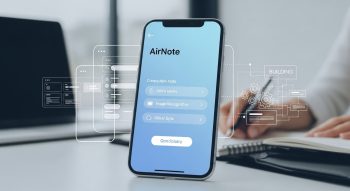
In the age of digital advancement, productivity and innovation have become essential for both professionals and students. With the help of programs like AirNote, life is made easier by having the capacity to store, arrange, and retrieve notes on multiple gadgets at any time and from any location. This software makes taking ideas simple and creative, whether saving ideas, recording voice messages, or sharing lists across platforms.
If you’ve ever asked how to create an app like AirNote, this in-depth guide will aid you with every essential step, from product design and idea formulation to tech choice, development, and advertising.
Step 1: Understanding the AirNote Concept
Identifying the characteristics that render AirNote special is important before developing the first line of programming.
More than just a notebook tool, this is a workplace program which connects with online storage and handles a variety of file types, including text, audio, photos, and even to-do lists. Its multi-platform connection, real-time communication, and simple, easy-to-use interface are among its primary points.
AirNote’s Basic Goal
- simplify taking notes and arranging easier.
- Provide it easy for devices to be connected quickly.
- Supports text, image, audio, and video comment forms.
- Offer online availability of safe storage in the cloud.
- Support easy sharing and teamwork.
The structure, UX flow, and tech demands for an application will be formed by the knowledge of these goals.
Step 2: Analyse Surveys and Choose Your Target Audience
Considering the needs of users and who your app is made for must be done before development starts.
The audience that was meant:
- For presentations or academics: students and researchers require organised taking of notes.
- Workers: Need project ideas and tidy documentation.
- Writers and designers: Create unexpected notes, voice notes, or drawings.
- Teams: Work together to exchange ideas and manage them quickly.
A Study of Competition:
Research rivals such as:
- For storing notes in many formats, use Evernote.
- For flexible workspace customisation, use this idea.
- Google Keep—for taking brief, simple notes.
Determine the aspects of these programmes that users enjoy the most and the ones that they find problematic, such as the lack of offline functions or the subpar search capabilities. Make the most of these loopholes by implementing your own version of AirNote.
Step 3: Fundamental components of an App Identical to AirNote
Speed and clarity are combined in a wonderful tool for productivity. You want to develop elements that are attractive but feel natural.
Basic components
User verification: Register or log in using a device from Apple, Google, or email addresses.
Remarks can be created and edited : a rich editor for texts that includes styling features like bold, underlining, and headers.
Cloud sync: fast connection between all connected devices.
Offer offline access: so users are able to examine and change their notes without requiring an internet connection.
Tags & Search: Labels and efficient search for patterns.
Alerts & Notifications: reminders of upcoming due dates or notes.
Black Mode: An attractive design for usage at nighttime.
Advanced Features
-
Voice-to-Text Conversion: Capture ideas hands-free.
-
Handwriting Recognition: For stylus or touchscreen devices.
-
AI-Powered Summaries: Automatically summarize lengthy notes.
-
Collaboration Tools: Share and co-edit notes with teammates.
-
Data Backup & Recovery: Cloud-based restoration for lost data.
-
Encryption: End-to-end security for personal and business notes.
Each part needs to work smoothly together to provide an effortless user experience that promotes loyalty and trust.
Step 4: Designing the Customer Experience (UX) and Interface for Users (UI)
This is the kind of software that depends on elegance and simplicity. In order helps users focus on writing and structure, the design should be light, simple, and free of disturbances.
Key components of design
- Cleanliness: Leave enough white space and keep devices spotless.
- Ensure uniformity: Keep functionality, colours, and icons identical among platforms.
- Ability to Access: Make use of high brightness levels, voice choices, and massive fonts.
- Pleasant browsing: Make it easy for users to move between tags, notes, and folders.
Instruments for Design
utilise use of specialist tools for designing like as
-
Figma
-
Adobe XD
-
Sketch
-
InVision
To boost your UI/UX before creation, include testing for usability in the early development phase.
Step 5: Picking the Right Technology Platform
The speed, capacity, and general stability of your program is affected by its scientific basis.
Frontend (User screen or desktop)
-
Frameworks: React Native, Flutter, or Swift (for iOS).
-
Languages: a language like Kotlin, Dart, or JavaScript.
-
UI Libraries: Tailwind CSS, Material Design.
Backend (Server & Database)
-
Languages: Node.js, Python (Django), or Ruby on Rails.
-
Database: Firebase, PostgreSQL, MongoDB.
-
Cloud Services: AWS, Google Cloud, or Microsoft Azure.
Alternative Innovations
-
APIs: REST or GraphQL for data communication.
-
AI Integration: OpenAI API or TensorFlow for smart summaries or note suggestions.
-
Privacy: AES encryption and OAuth2 for secure authentication.
This arrangement provides seamless operation of the devices and allows scaling.
Step 6: The Process of Building Apps
1. Making plans
Explain the characteristics, design, and development timeline of your app. Set the most essential attributes first by setting up a feature map.
2. Making models
Create active diagrams to see how your program will work. Early user testing is helped by tools such as Figma.
3. Development of Frontend and Backend
Build the frontend user interface and connect it to the backend systems so that data may be collected and stored.
4. Integration
Provide APIs for speech recognition, cloud sharing, and teamwork.
5. Examining
Perform efficiency, safety, and testing for usability. Check that the offline and transfer modes function properly.
6. Implementation
Download your app in Internet Explorer, the Apple App Store, and the Google Play Store. For backend setting up, use cloud services.
Step 7: Confidentiality and Security of Data
Safety of information is a necessity due to AirNote keeps personal as well as professional notes.
Top Techniques:
- All data transfers should be protected from start to finish.
- Switch on biometric security (allowing entry with a face or fingerprint).
- Give clients a chance to export and remove data.
- Monitor the CCPA and GDPR to secure user information global.
Long-term use and client trust are gained by a safe app.
Step 8: Quality Monitoring and Evaluation
Testing ensures that the app functions properly on every device and in every situation.
Examination Methods
Technical Testing: Verify the workings of each feature.
Speed testing: Measure the reactivity and rapidity of the app.
Usage testing: Verify that the design and functionality are easy to use.
Universal Testing: Check for connectivity on the web, iOS, and Android mobile devices.
the applications Appium, TestFlight, as well as and Firebase Test Lab are great instruments for quality control.
Step 9: Applications Release and Marketing
When your app has been finished, it’s time for you to publish it.
Launch Planning Schedule
- Create an attractive landing page.
- Produce advertising pieces such as charts, blog postings, and videos.
- To get earlier feedback from customers, do beta testing.
Following the launching Plan
- Use images and keywords to improve your app store ranking.
- Promote users to post ratings.
- Establish efforts on tech websites, networking sites, or through Google Ads.
- Offer free plans with the option of upgrading for AI features or more memory.
Branding that remains consistent increases trust and goodwill.
Step 10: Service and Future Additions
Once your app has gone live, keep it up to date with regular updates and security updates.
Guidelines for Repair
- Review breakdown records and resolve problems as soon as they happen.
- Add novel features, such as smart menus or dashboards.
- Utilise in-app surveys or assessments to get feedback from consumers.
- Improve speed to save battery power and upload more quickly.
Ongoing improvements enhance your app’s functionality and profitability.
Step 11: Expected Price of Building an AirNote-Style App
Specifications, the tech stack, and design complexity all affect development costs.
| Stage | Estimated Cost (USD) |
|---|---|
| UI/UX Design | $4,000–$8,000 |
| Frontend Development | $8,000 – $15,000 |
| Backend Development | $10,000–$20,000 |
| API & Cloud Integration | $5,000–$12,000 |
| Testing & QA | $3,000–$6,000 |
| Deployment & Maintenance | $2,000 – $5,000 |
Total Estimated Cost: $30,000–$65,000
Multi-platform solutions like Flutter or Firebase may significantly decrease costs for private businesses or startups.
Step 12: Principles for Payment
Take account of various sources of income to make sure your software is successful like this website:
- Offering open access together with premium upgrades (unlimited reminders, AI summaries) under the freemium company framework.
- Costs for online storage and teamwork can be paid monthly or annually.
- Sell designs, fonts, or additional storage through in-app purchases.
- In versions that are free, show several ads.
- Provide specialised plans for groups or companies.
- With creating regular revenue, balanced marketing maintains user enjoyment.
Balanced monetization ensures user satisfaction while generating steady revenue.
Step 13:Documenting Programs’ Future
Artificial intelligence, robotics, and customisation will all be combined in recording notes in the future. Expect advancements like:
- Artificially intelligent organisation: Topic analysis and smart tag.
- Voice and gesture input: taking papers without using your hands is possible.
- Smart reminders: alerts that are calculated by user behaviour.
- Cross-platform intelligence: Notes that can be viewed through AR and connected devices.
AirNote and comparable apps will develop into intelligent associates that understand user intent and adjust correctly.
In last sentence:
It takes an ideal combination of creativity, efficiency, and uniqueness to create an app like AirNote. Each component, from reliable sync and easy to use layout to artificial intelligence support, must enhance how users collect and handle data.You may build a modern note-taking app which allows users to remain intelligent, productive, and planned at any time, any where, with the right strategy, technology, and setup.
AirNote delivers unlimited possibilities for transforming how people engage with their ideas in the online world, whatever your background as a business owner, app programmer, or digital developer.

He is a SaaS-focused writer and the author of Xsone Consultants, sharing insights on digital transformation, cloud solutions, and the evolving SaaS landscape.