
Blog

How to
Develop an App Like DroidTracker
In a world where location tracking, device security, and
real-time GPS navigation are essential, apps like DroidTracker
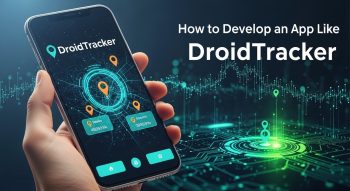
In a world where location tracking, device security, and real-time GPS navigation are essential, apps like DroidTracker have become indispensable. These apps empower users to track their smartphones, monitor family members, manage fleets, or ensure employee safety with precise GPS tracking, geofencing, and real-time alerts.
If you’re planning to develop an app like DroidTracker, you’re entering a lucrative market driven by demand for location-based services, smart tracking solutions, and IoT connectivity. This detailed guide walks you through the entire process — from concept and design to technology stack, cost, and monetisation — helping you build a high-performance GPS tracking app for Android, iOS, or cross-platform use.
1. Understanding What DroidTracker Is
DroidTracker is a GPS-based tracking app that allows users to locate devices, monitor routes, and access real-time updates on movement or position. It uses satellite signals, cellular networks, and Wi-Fi triangulation to provide accurate positioning and tracking.
Core Purpose
-
Track lost or stolen devices
-
Monitor children, employees, or delivery fleets
-
Enable location sharing in real-time
-
Provide safety alerts and route history
The app typically includes features like live location tracking, location sharing, emergency SOS alerts, and geofencing to create a secure and interactive tracking ecosystem.
2. Why Build an App Like DroidTracker?
The global location-based services market is expected to exceed $80 billion by 2030, driven by consumer safety, logistics, and on-demand delivery services. Developing a DroidTracker-style app allows you to tap into diverse industries such as transportation, security, healthcare, family safety, and corporate monitoring.
Key Reasons to Invest
-
High Market Demand – GPS and navigation apps are used by billions daily.
-
Recurring Revenue Models – Subscription and premium plans generate steady income.
-
Diverse User Base – Families, businesses, and drivers all benefit.
-
Integration with IoT – Supports smart devices, wearables, and vehicles.
-
Rapid Technological Growth – Increasing accuracy and real-time functionality.
3. Market Research and Competitor Analysis
Before developing your app, analyse competitors such as Life360, Find My Device, GeoZilla, and Glympse to identify strengths, weaknesses, and innovation opportunities.
Research Objectives
-
Identify user needs and pain points.
-
Evaluate UI/UX simplicity in top apps.
-
Analyse monetisation models and pricing.
-
Study feature integration (tracking history, alerts, maps).
Use tools like App Annie, Sensor Tower, and Google Trends to evaluate keyword popularity and app market performance.
4. Core Features of a DroidTracker-Like App
To build a robust tracking app, focus on accuracy, speed, and reliability. Below are essential and advanced features you must include:
A. Core Features
-
User Authentication
-
Secure login via email, social media, or phone.
-
Two-factor authentication (2FA) for security.
-
-
Real-Time GPS Tracking
-
Display the exact location using Google Maps API.
-
Automatic location refresh every few seconds.
-
-
Location Sharing
-
Share live location with trusted contacts.
-
Temporary access links with expiration.
-
-
Geo-Fencing
-
Create virtual boundaries and receive alerts when entered or exited.
-
-
Tracking History
-
Access route history and movement logs.
-
-
SOS/Emergency Button
-
Instantly alert predefined contacts with live location.
-
-
Battery Optimization
-
Smart battery usage through adaptive location updates.
-
-
Push Notifications
-
Alerts for boundary crossing, low battery, or SOS activation.
-
B. Advanced Features
-
Multi-User Dashboard
-
Track multiple devices from one account.
-
-
Speed Monitoring
-
Detect over-speeding for vehicles and issue alerts.
-
-
Offline Mode
-
Store location data locally when offline and sync once online.
-
-
Voice Commands
-
Use voice input for quick tracking actions.
-
-
Integration with Wearables
-
Connect smartwatches or trackers for health and safety monitoring.
-
-
AI Route Prediction
-
Suggest frequent destinations and estimated time of arrival (ETA).
-
-
Dark Mode & Custom Themes
-
Enhance user experience and battery performance.
-
5. UI/UX Design for a GPS Tracking App
A DroidTracker-like app should have a user-friendly interface that’s visually clean, intuitive, and informative. The design should make real-time tracking effortless even for non-technical users.
UI/UX Best Practices
-
Interactive Map Interface – Central map view with live markers.
-
Smooth Animations – Route drawing and live updates.
-
Minimal Navigation Tabs – Simplify user journeys.
-
Colour Coding – Use colours to indicate active/inactive users or alerts.
-
Onboarding Guide – Educate users about tracking permissions and features.
Design tools: Figma, Adobe XD, Sketch, InVision.
6. Choosing the Right Tech Stack
Building a GPS tracking app requires a reliable tech stack that ensures real-time performance, security, and scalability.
Frontend
-
Frameworks: Flutter, React Native (for cross-platform)
-
Languages: Swift (iOS), Kotlin (Android)
-
UI Libraries: Material Design, Tailwind, Cupertino Widgets
Backend
-
Languages: Node.js, Python, Java
-
Frameworks: Express.js, Django, Spring Boot
-
Database: MongoDB, PostgreSQL, Firebase
-
APIs: Google Maps API, OpenStreetMap, Mapbox
Real-Time Functionality
-
Sockets: WebSocket, Firebase Realtime Database
-
Push Notifications: Firebase Cloud Messaging (FCM), OneSignal
Security
-
Encryption: AES-256, SSL/TLS
-
Authentication: OAuth 2.0, JWT Tokens
-
Server Hosting: AWS, Azure, or Google Cloud Platform
7. Step-by-Step Development Process
The app development lifecycle involves multiple stages to ensure performance, reliability, and user satisfaction.
Step 1: Planning & Requirement Analysis
Define objectives, target audience, and app scope. Create a detailed feature roadmap.
Step 2: UI/UX Design
Design prototypes and wireframes focusing on simplicity, clarity, and responsiveness.
Step 3: Backend Setup
Configure databases, APIs, and GPS integration. Ensure encrypted data handling.
Step 4: Frontend Development
Develop app screens, integrate map functionalities, and connect to APIs.
Step 5: Real-Time Tracking Integration
Implement GPS services, background location updates, and socket communication.
Step 6: Testing
Perform:
-
Functional Testing
-
Usability Testing
-
Performance Testing
-
Security Testing
-
Battery Optimization Testing
Step 7: Deployment
Deploy on Google Play Store, Apple App Store, and optionally a web dashboard.
Step 8: Maintenance & Updates
Continuously improve app features, performance, and bug fixes based on feedback.
8. Security & Privacy Considerations
GPS tracking involves sensitive data, so data protection is vital.
Best Security Practices
-
Encrypt all location and personal data (AES-256).
-
Implement secure APIs with HTTPS and authentication tokens.
-
Ensure compliance with GDPR and CCPA regulations.
-
Allow users to control tracking permissions.
-
Add data anonymisation for analytics.
-
Regularly audit server and database security.
9. Monetization Strategies
Monetising your DroidTracker-like app can be done through multiple scalable models:
-
Freemium Model
-
Offer basic features for free; charge for advanced tracking and alerts.
-
-
Subscription Plans
-
Monthly or yearly premium packages with added benefits (family tracking, route history, etc.).
-
-
In-App Purchases
-
Sell premium features like unlimited geo-fences or advanced analytics.
-
-
Advertisements (Optional)
-
Integrate non-intrusive ads for free users.
-
-
Enterprise Solutions
-
Offer customised plans for businesses with fleet tracking or employee monitoring needs.
-
10. Development Cost and Time Estimation
The total development cost depends on complexity, features, and team structure.
| Component | Estimated Cost (USD) |
|---|---|
| UI/UX Design | $3,000 – $6,000 |
| Frontend & Backend Development | $15,000 – $35,000 |
| GPS & Map Integration | $4,000 – $10,000 |
| Testing & QA | $3,000 – $5,000 |
| Security Implementation | $2,000 – $6,000 |
| Deployment & Maintenance | $2,000 – $4,000 |
Total Estimated Cost: $30,000 – $65,000
Development Timeline: 4–6 months
11. Tips for Building a Successful DroidTracker App
-
Prioritise Location Accuracy – Optimise GPS and network triangulation for precision.
-
Optimise for Battery Efficiency – Use intelligent background updates.
-
Ensure Data Transparency – Clearly explain data usage and permissions.
-
Build Cross-Platform Compatibility – Expand user reach across Android, iOS, and Web.
-
Integrate AI Features – Predictive routing and movement insights enhance user experience.
-
Use Modern APIs – Update Google Maps and navigation SDKs regularly.
12. Future Trends in GPS Tracking Apps
The future of GPS-based apps like DroidTracker is full of innovation and automation. Expect rapid evolution with new technologies.
Emerging Trends
-
AI-Driven Analytics – Predict routes and detect unusual movement patterns.
-
Augmented Reality (AR) Maps – 3D navigation and immersive experiences.
-
Blockchain Security – Decentralised, tamper-proof location data.
-
Integration with IoT Devices – Smart vehicles, drones, and wearable trackers.
-
Voice and Gesture Control – Hands-free interaction for safer use.
Conclusion
Developing an app like DroidTracker combines GPS technology, real-time communication, and strong data security to deliver a seamless tracking experience. From UI/UX design and map integration to AI-powered predictions and cloud synchronisation, every detail contributes to performance and reliability.
With careful planning, an optimised tech stack, and a focus on user trust, your DroidTracker-like app can become a leading solution in the growing location-based services market. Whether your goal is to enhance safety, monitor fleets, or track loved ones, the opportunities are limitless — and the future of smart tracking is already here.

He is a SaaS-focused writer and the author of Xsone Consultants, sharing insights on digital transformation, cloud solutions, and the evolving SaaS landscape.