

Blog

How to
Develop an App Like SafeNest
Contents hide 1 1. Understanding What SafeNest Is and
Why It’s Popular 1.1 Key Features of SafeNest:
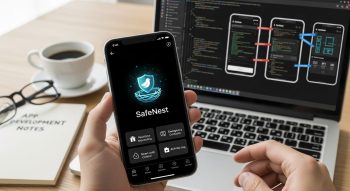
In today’s hyper-connected world, ensuring digital safety has become a top priority for families. Parents constantly seek solutions to monitor screen time, track location, block inappropriate content, and ensure safe online behavior for children. This rising demand has led to the popularity of apps like SafeNest — a trusted parental control and child safety app that enables parents to monitor their child’s device activities in real time.
If you’ve ever wondered how to develop an app like SafeNest, this detailed guide will walk you through every crucial aspect — from market research, app architecture, design, development, features, tech stack, monetization, privacy compliance, and launch strategies.
In the process, we’ll explore the essential semantic keywords like parental control app development, screen time tracking app, geofencing app, location tracking app, child monitoring app, SafeNest clone app development, app monetization strategy, and mobile app security compliance to ensure your app idea ranks well on search engines and resonates with your target audience.
1. Understanding What SafeNest Is and Why It’s Popular
SafeNest is a parental control and monitoring app that allows parents to track their child’s activities — such as app usage, screen time, GPS location, and online behavior — directly from their own devices. It also provides features like geofencing, real-time notifications, and WhatsApp-based alerts to simplify parental control through familiar communication tools.
Key Features of SafeNest:
-
Real-time location tracking
-
Screen time monitoring and limits
-
App usage insights
-
Geofencing notifications
-
WhatsApp integration for parental commands
-
Secure data encryption
-
Easy child–parent linking system
SafeNest’s success lies in combining ease of use, data privacy, and reliable monitoring. When developing an app like SafeNest, your focus should be on user trust, seamless functionality, and transparent communication between parent and child devices.
2. Market Analysis: Why Build a SafeNest-Like App
The parental control and child safety app industry is experiencing exponential growth due to the rise in screen dependency among children.
Key Statistics:
-
The global parental control software market is projected to reach $3.8 billion by 2030.
-
8 in 10 parents want digital tools to limit children’s screen time.
-
With remote learning and online entertainment, mobile device usage among kids has increased by 40% post-pandemic.
These numbers highlight a massive opportunity for startups and developers to create SafeNest alternatives or similar parental control apps.
Niche Opportunities:
-
Parental monitoring for school tablets or e-learning platforms
-
AI-driven content filtering
-
Safe social media usage insights
-
Cross-platform screen-time analytics
To compete in this market, you need not just strong app development skills but also an understanding of family psychology, data ethics, and usability design.
3. Planning the Core Features for Your SafeNest-Like App
Before development, define the core functionality that makes your app valuable. Your MVP (Minimum Viable Product) should include the following features.
Must-Have Features
-
User Account & Device Linking
Allow parents to create accounts, register child devices, and sync data securely. -
Screen Time Tracking & Management
Track how long a child spends on each app, set limits, and generate usage insights. -
App Blocking
Restrict access to certain apps or websites during study/sleep hours. -
Location Tracking & Geofencing
Provide live GPS tracking and alerts when a child enters or leaves defined safe zones. -
Activity Reports
Generate daily or weekly summaries for parents. -
In-App Messaging or WhatsApp Integration
Allow parents to control and receive updates through a simple chat interface. -
Data Privacy & Parental Authorization
Implement secure authentication, consent verification, and encrypted data transfer.
Advanced Features (For Later Updates)
-
AI-powered risk detection (e.g., detecting excessive gaming)
-
Social media monitoring
-
Device lock or emergency mode
-
Multi-child support dashboard
-
Voice command integration (Alexa/Google Assistant)
By offering both core and premium features, your SafeNest-like app can scale efficiently while catering to different user needs.
4. Choosing the Right Tech Stack
The technology stack defines your app’s performance, scalability, and development speed. Here’s a recommended setup for developing a SafeNest-like app:
Frontend (Mobile Apps):
-
Android: Kotlin / Java
-
iOS: Swift / Objective-C
-
Cross-Platform Option: Flutter or React Native
Backend Development:
-
Programming Languages: Node.js / Python / Java Spring Boot
-
Database: PostgreSQL, Firebase, or MongoDB
-
Cloud Hosting: AWS, Google Cloud, or Azure
-
APIs: RESTful / GraphQL for data synchronization
Real-Time Features:
-
Location Tracking: Google Maps API, GeoFire
-
Push Notifications: Firebase Cloud Messaging (FCM)
-
Geofencing: Android Location Services / iOS Core Location
Security Framework:
-
End-to-end encryption (AES-256)
-
SSL/TLS for data transmission
-
JWT for authentication
-
OAuth2 for secure access
A robust tech stack ensures your app remains reliable even as user numbers grow.
5. Designing the User Experience (UX) and Interface (UI)
Parents want simplicity. A complex or confusing interface can easily lead to user drop-off. Thus, the UI should be minimal, family-friendly, and informative.
UI/UX Design Guidelines:
-
Use calm color schemes (blue, green, or soft tones).
-
Show dashboards with charts for screen-time analytics.
-
Display live maps for location tracking.
-
Keep permission requests transparent and guided.
-
Optimize for accessibility (font size, contrast, tooltips).
Parent and Child Interfaces:
-
Parent App: Control dashboard, alerts, reports, settings.
-
Child App: Permissions overview, “pause monitoring” option (if allowed), transparency about what’s tracked.
Great UX increases engagement, builds trust, and ensures retention — three pillars of a successful parental control app.
6. Backend Development and Core Functionalities
This stage involves building the server-side logic that handles real-time data flow, device connections, and event management.
a. User Management & Authentication
-
Allow secure sign-up/sign-in using email, OTP, or Google account.
-
Store user credentials safely (hashed passwords, tokenized sessions).
-
Add two-factor authentication for premium accounts.
b. Device Linking System
-
Generate a unique pairing code or QR for parent-child device connection.
-
Maintain device sessions via Firebase or custom API endpoints.
c. Screen-Time Monitoring Engine
-
Collect app usage data through UsageStatsManager (Android) APIs.
-
Store daily usage summaries in the database.
-
Provide graphs and reports for visual insights.
d. Location & Geofencing
-
Track child’s GPS coordinates every few minutes.
-
Use geofencing to send alerts when a child exits safe areas like home or school.
e. Notifications & Alerts
-
Implement push notifications (via FCM or OneSignal).
-
Create customizable alert settings (e.g., app overuse, entering unsafe zone).
f. Messaging Integration
-
Integrate WhatsApp Business API to send alerts or receive commands from parents.
-
Example: A parent types “Location” → App responds with live location.
A well-structured backend ensures smooth synchronization, scalability, and minimal latency between devices.
7. Ensuring Data Privacy, Safety & Compliance
Data privacy is the backbone of a parental control app. Mishandling children’s data can lead to legal penalties and loss of user trust.
Legal Compliance You Must Follow:
-
GDPR (Europe) – Requires explicit consent and data transparency.
-
COPPA (USA) – Protects online privacy of children under 13.
-
India DPDP Act (2023) – Governs personal data protection and consent.
Best Practices:
-
Inform users what data you collect and why.
-
Let users delete or export data anytime.
-
Never share data with third parties without consent.
-
Encrypt all sensitive information both in storage and transmission.
Building a privacy-first SafeNest alternative increases credibility and user loyalty.
8. App Monetization Strategies
A strong monetization plan ensures long-term sustainability.
Popular Revenue Models:
-
Freemium Model:
Basic monitoring is free; advanced features (AI analytics, WhatsApp integration) are premium. -
Subscription Plans:
-
Monthly or annual billing (e.g., $4.99/month or $39.99/year).
-
Family bundles for multiple child devices.
-
-
One-Time Purchase:
Lifetime access to full features. -
Affiliate or Partner Marketing:
Partner with child safety products or digital learning brands. -
School/Enterprise Licensing:
Offer B2B solutions for institutions that want centralized control.
Combine user-friendly pricing with valuable features to retain long-term subscribers.
9. App Testing, QA, and Deployment
Thorough testing ensures reliability across different devices and operating systems.
Testing Checklist:
-
Functional Testing: Verify app usage tracking, geofence alerts, and device pairing.
-
Performance Testing: Monitor battery drain, latency, and real-time sync speed.
-
Security Testing: Conduct vulnerability scans and penetration tests.
-
Usability Testing: Observe how easily parents can set up controls.
-
Compliance Testing: Ensure GDPR/COPPA consent and transparency flow works.
Deployment Steps:
-
Prepare app store metadata — title, description, keywords, screenshots.
-
Optimize listings using ASO (App Store Optimization).
-
Publish on Google Play Store and Apple App Store.
-
Monitor crash reports and fix bugs immediately.
-
Encourage user reviews and ratings.
10. Marketing and User Acquisition Strategies
A great app still needs the right exposure. Here’s how to attract downloads and build trust.
a. App Store Optimization (ASO)
Use targeted keywords like:
parental control app, screen time tracker, GPS family locator, geofencing app, SafeNest alternative, digital parenting app.
b. Content Marketing
-
Write blog posts about digital wellbeing and online safety tips.
-
Create SEO-optimized content targeting parenting audiences.
c. Social Media Marketing
-
Run awareness campaigns on Facebook, Instagram, and YouTube.
-
Use short video explainers demonstrating features.
d. Influencer & Community Partnerships
Collaborate with parenting bloggers or child psychologists to endorse your app.
e. Retargeting and Push Campaigns
Engage free users with premium feature trials via notifications or email drip campaigns.
An integrated marketing strategy boosts visibility and increases retention rates.
11. Post-Launch Maintenance and Scalability
Once your app goes live, continuous improvement ensures long-term success.
Post-Launch Strategies:
-
Monitor Analytics: Track daily active users (DAU), churn rate, and engagement time.
-
Add New Features: Integrate AI suggestions or voice control for parents.
-
Collect Feedback: Use surveys to improve UX.
-
Regular Updates: Push new features and security patches.
-
Scale Infrastructure: Move to microservices or auto-scaling servers as user base grows.
Consistency and innovation are vital to maintaining user trust and growing the app ecosystem.
12. Estimated Cost and Development Timeline
Building an app like SafeNest depends on complexity, region, and development resources.
Estimated Breakdown:
| Development Stage | Estimated Duration | Estimated Cost (USD) |
|---|---|---|
| Market Research & Planning | 2–3 weeks | $2,000–$3,000 |
| UI/UX Design | 3–4 weeks | $3,000–$5,000 |
| Backend & API Development | 6–8 weeks | $8,000–$12,000 |
| Mobile App Development | 8–10 weeks | $10,000–$15,000 |
| Testing & QA | 2–3 weeks | $2,000–$4,000 |
| Launch & Marketing | Ongoing | $3,000–$6,000 |
Total Estimated Cost: $25,000–$40,000 for MVP
Timeline: 4–6 months (depending on features and team size)
13. Future Trends in Parental Control App Development
The parental safety industry is evolving with new technologies like AI, IoT, and data analytics.
Upcoming Trends:
-
AI-Driven Insights: Predict child device patterns and suggest screen-time rules.
-
Wearable Integration: Link smartwatches for real-time alerts.
-
Voice Commands: Control settings via smart assistants.
-
Cross-Platform Family Dashboards: Unified control for multiple devices.
-
Mental Health Analytics: Track digital wellbeing and emotional patterns.
Staying ahead of these trends can position your app as an innovative SafeNest alternative in 2025 and beyond.
Conclusion
Developing an app like SafeNest requires a blend of technical expertise, data ethics, intuitive design, and empathy for families’ digital safety needs. By combining real-time tracking, screen-time management, secure communication, and privacy-centric design, you can build a product that truly empowers parents and protects children.
Your success depends on how seamlessly your app integrates trust, transparency, and technology. With the right strategy, careful development, and user-centric approach, your SafeNest-like app can become the next big name in digital wellbeing and parental control solutions.
In today’s hyper-connected world, ensuring digital safety has become a top priority for families. Parents constantly seek solutions to monitor screen time, track location, block inappropriate content, and ensure safe online behavior for children. This rising demand has led to the popularity of apps like SafeNest — a trusted parental control and child safety app that enables parents to monitor their child’s device activities in real time.
If you’ve ever wondered how to develop an app like SafeNest, this detailed guide will walk you through every crucial aspect — from market research, app architecture, design, development, features, tech stack, monetization, privacy compliance, and launch strategies.

He is a SaaS-focused writer and the author of Xsone Consultants, sharing insights on digital transformation, cloud solutions, and the evolving SaaS landscape.