

Blog

Mastering the
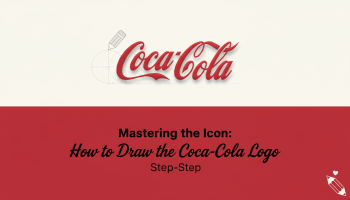
Icon: How to Draw the Coca-Cola Logo Step-by-Step
Introduction Contents hide 1 Introduction 2 The History and
Anatomy of an Icon 3 Essential Tools for
Introduction
Few symbols in the history of global commerce are as instantly recognizable as the Coca-Cola logo. It is more than just a brand identifier; it is a masterpiece of typography and a cultural artifact that has endured for over a century. For aspiring artists, graphic designers, and typography enthusiasts, learning how to draw the Coca-Cola logo is an exercise in discipline, flow, and understanding the nuances of Spencerian script. Whether you are sketching with pencil on paper or designing digitally, mastering this icon requires a keen eye for detail and an appreciation for the fluidity of line work.
The logo, originally designed by Frank Mason Robinson in 1886, utilizes a script style that was the standard for business correspondence in the United States during the late 19th century. However, drawing it today involves more than just copying handwriting; it involves understanding balance, contrast between thick and thin strokes, and the rhythmic connectivity of the letters. In this cornerstone guide, we will dismantle the logo into its constituent parts and provide a rigorous, step-by-step tutorial on recreating it with precision.
Mastering such complex letterforms is a foundational skill in the broader field of https://xsoneconsultants.com/graphic-design/. By understanding how to construct these classic curves, designers can elevate their understanding of branding and visual identity.
The History and Anatomy of an Icon
Before putting pencil to paper, it is crucial to understand the anatomy of the subject. The Coca-Cola logo is not a font that you can simply type out; it is a hand-drawn logotype. Frank Mason Robinson, the bookkeeper for John Pemberton (the drink’s inventor), believed that the two “C”s would look striking in advertising. He was right. The style he chose, Spencerian script, is characterized by its dramatic loops, sharp contrast, and elegant oval shapes.
Key anatomical features to observe include:
- The Spencerian Slant: The entire logo leans forward, typically at an angle of roughly 50 to 60 degrees. This forward momentum gives the brand its dynamic and energetic feel.
- Contrast (Thick and Thin): This is perhaps the most critical aspect. The downstrokes are thick and heavy, while the upstrokes are hairline thin. This mimics the pressure applied by a flexible nib pen, which was the tool of the trade in the 1880s.
- The Interlocking C’s: The first “C” in “Coca” and the second “C” in “Cola” are distinct but visually related. The tail of the first “C” often underscores the first word, guiding the eye.
- The Dynamic Ribbon: Although not part of the original 1886 design (it was introduced in 1969), the white ribbon device is now synonymous with the text. While this guide focuses primarily on the lettering, understanding the ribbon’s placement is essential for a complete composition.
Understanding these historical and structural elements is vital for anyone pursuing a career in https://xsoneconsultants.com/design/, as it teaches the importance of legacy and evolution in brand identity.
Essential Tools for Logo Recreation
To achieve a professional result, the right tools are non-negotiable. While the original was drawn with ink, modern reconstruction usually begins with a solid sketch.
Traditional Materials
- Graph Paper: Essential for maintaining the correct angle and baseline alignment.
- H and 2B Pencils: Use hard (H) pencils for guidelines and soft (2B) pencils for shading and defining line weight.
- Fine Liners or Calligraphy Pens: To mimic the variable line widths of the script.
- French Curves: These drafting tools help in drawing smooth, consistent curves that freehand sketching often misses.
Digital Tools
If you are approaching this from a digital perspective, vector software like Adobe Illustrator is the industry standard. Using the Pen Tool to manipulate Bézier curves allows for the mathematical precision required in modern professional branding. This connects directly to the principles used in https://xsoneconsultants.com/ui-ux-design/, where vector scalability is a requirement for responsive interfaces.
Step-by-Step Guide: How to Draw the Coca-Cola Logo
This section outlines the process of constructing the logo from scratch. We will focus on the classic lettering.
Step 1: Setting the Baseline and Grid
Start by drawing your baseline (where the letters sit) and your mean line (the top of the lowercase letters). Draw diagonal guidelines across your paper at approximately a 55-degree angle. These slant lines are your most important reference; if your letters do not adhere to this slant, the logo will look disjointed.
Step 2: Drafting the First “C”
The first “C” is the anchor of the logo. Start the stroke at the top, creating a small teardrop loop. As you bring the line down, widen the stroke significantly to create the main curve of the letter. The bottom of the “C” should curl deeply inwards and then extend downward to create a long, flowing tail that typically underscores the letters “oca”. This tail does not merely sit flat; it has a subtle wave to it.
Step 3: Constructing the “oca” Sequence
The lowercase letters “o”, “c”, and “a” must fit snugly within the mean line.
- The ‘o’: Draw a slanted oval. The connection to the next letter typically comes from the top loop of the ‘o’.
- The ‘c’: This lowercase ‘c’ requires a sharp loop at the top right corner before curving down.
- The ‘a’: This letter closes the first word. It connects seamlessly from the ‘c’. Ensure the final tail of the ‘a’ kicks up slightly to suggest the separation from the next word.
Step 4: The Second “C” and the “ola”
The “C” in “Cola” is slightly different from the first. It often intertwines with the “l”. Start the loop high, crossing through the tail of the “l” if you are drawing the version where they connect. The descending stroke of this “C” passes through the loop of the “L” in many iterations of the logo.
- The ‘l’: This is the tallest letter in the second word. It creates a high, graceful loop that mimics the height of the capital C’s.
- The ‘a’: The final ‘a’ provides balance. Its tail often extends outward, mirroring the flow of the entire logotype.
Step 5: Adding Weight and Refining Curves
Once the skeleton is sketched, go back and add the weight. Remember the rule of calligraphy: downstrokes are thick, upstrokes are thin. Thicken the left side of the “o”s and “a”s, and the spines of the “C”s. This variation in line weight creates the visual rhythm. Use your French curves here to ensure the transition from thick to thin is seamless, not jagged.
Step 6: The Connective Flow
Spencerian script is cursive; the letters should appear to flow into one another without interruption (except between the two words). Check the connections. Are they fluid? Does the eye glide from the ‘C’ to the ‘a’? Analyzing these transitions is similar to mastering https://xsoneconsultants.com/blog/mobile-app-design-principles-for-beginners/, where flow and hierarchy guide the user’s journey.
Refining the Details: Kerning and Spacing
In typography, kerning refers to the spacing between individual characters. Even in a script logo, spacing matters. The “Coca” and “Cola” must be spaced close enough to belong to the same family but far enough apart to be distinct words. A common mistake when learning how to draw the Coca-Cola logo is cramping the letters. Let the loops breathe. The negative space inside the “C” and the loops of the “l” are just as important as the drawn lines.
For those interested in how these spacing principles apply to digital interfaces, these concepts are further explored in our guide on https://xsoneconsultants.com/blog/mobile-app-design-tips-for-better-user-experience/.
Common Mistakes to Avoid
Even experienced artists stumble on specific hurdles when recreating this logo:
- Inconsistent Slant: If the “l” stands straighter than the “C”, the dynamic tension is lost. Use your grid lines relentlessly.
- Blocky Transitions: The shift from thick to thin should be gradual. If it looks like a block letter glued to a hairline, revisit your curves.
- Ignoring the ‘Tail’: The swash of the first “C” is not random; it frames the word. Ensure it runs parallel to the baseline before curving up or fading out.
Digital Recreation and Vectorization
Once you have a refined hand-drawing, the next step for a modern designer is vectorization. Scanning your sketch and bringing it into software allows you to perfect the Bézier handles. This process is standard in high-end branding projects. When digitizing, ensure you use the minimum number of anchor points necessary to create a smooth curve. Excessive anchor points lead to “lumpy” lines.
Designers looking to monetize these skills often find that logo design and vectorization are lucrative niches. For insights into the business side of this skill set, consider reading about the https://xsoneconsultants.com/blog/cost-to-create-a-website-for-a-graphic-designer/.
Frequently Asked Questions
What font is the Coca-Cola logo based on?
The Coca-Cola logo is not based on a standard font set; it is a hand-lettered custom design based on the Spencerian script style, which was popular in the United States in the late 19th century.
Who designed the original Coca-Cola logo?
The logo was designed by Frank Mason Robinson in 1886. Robinson was John Pemberton’s bookkeeper and partner, and he suggested the name because he believed the two C’s would look well in advertising.
Why are the thick and thin lines so important?
The variation in line weight mimics the mechanics of a quill or flexible nib pen used in calligraphy. This contrast provides elegance, readability, and a unique visual rhythm that monoline scripts lack.
Can I use the Coca-Cola logo in my own designs?
Generally, no. The Coca-Cola logo is a trademarked and copyrighted asset. You can draw it for educational practice or fan art, but you cannot use it for commercial purposes or in a way that suggests endorsement by the Coca-Cola Company.
Is it easier to draw the logo digitally or by hand?
It is recommended to start by hand to understand the flow and anatomy of the letters. Digital software is excellent for refinement and final polish, but the initial capture of the script’s energy is often best achieved through hand sketching.
Conclusion
Learning how to draw the Coca-Cola logo is a rite of passage for many designers. It teaches patience, observation, and an appreciation for the enduring power of good typography. By breaking the logo down into its Spencerian roots, analyzing the weight of the strokes, and respecting the grid, you can recreate one of the world’s most famous icons with accuracy and style.
Whether you are a student improving your sketching skills or a professional refining your vectorization techniques, the principles learned here apply universally across the design spectrum. If you are looking to elevate your brand identity further or require professional assistance with high-end design and development, do not hesitate to reach out to the experts at https://xsoneconsultants.com/contact/.

Editor at XS One Consultants, sharing insights and strategies to help businesses grow and succeed.