

Blog

How To
Get More Leads On Facebook
Introduction: Mastering the Facebook Ecosystem for Lead Acquisition Contents
hide 1 Introduction: Mastering the Facebook Ecosystem for
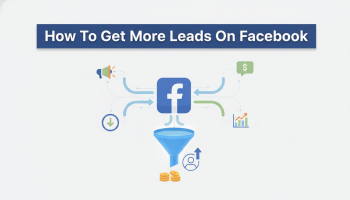
Introduction: Mastering the Facebook Ecosystem for Lead Acquisition
In the contemporary digital landscape, Facebook has evolved from a mere social networking site into a sophisticated ecosystem for commerce and customer acquisition. With over 3 billion monthly active users, the platform offers an unparalleled database of psychographic and demographic information, making it a fertile ground for businesses seeking to expand their sales pipeline. Understanding how to get more leads on Facebook requires a shift from passive social posting to active, strategic entity management.
Lead generation on Facebook is not monolithic; it involves a symbiotic relationship between organic community building, algorithmic content distribution, and paid direct-response advertising. Whether you are a local service provider or a global SaaS enterprise, the core principle remains the same: you must reduce the semantic distance between your brand’s value proposition and the user’s intent. By leveraging high-intent data and optimizing conversion pathways, businesses can transform casual scrollers into qualified prospects.
This comprehensive guide deconstructs the mechanisms of Facebook’s lead generation capabilities. We will explore advanced strategies ranging from profile funneling to AI-driven automation, ensuring you possess the topical authority required to dominate your niche on the platform. For those seeking expert execution, XSOne Consultants stands as a leader in comprehensive digital marketing services, helping brands navigate these complex digital terrains.
The Foundation: Optimizing Your Facebook Page for Conversion
Before launching aggressive campaigns, your digital storefront—your Facebook Business Page—must be optimized to capture organic traffic. A poorly structured page creates friction, causing potential leads to bounce before engaging. Your page should function as a micro-landing page within the platform.
Strategic Use of Call-to-Action (CTA) Buttons
The prominent blue CTA button on your profile is the primary gateway for conversion. Facebook allows you to customize this based on your objective, such as “Sign Up,” “Book Now,” or “Send Message.” For service-based businesses, aligning this button with a direct scheduling tool or a lead magnet download page significantly increases click-through rates (CTR).
The Pinned Post Strategy
The “Pinned Post” feature is often underutilized. This slot sits at the top of your timeline and should be reserved for your highest-converting asset. This could be a limited-time offer, a case study video, or a link to a webinar registration. By ensuring every visitor sees your core offer immediately, you maximize the value of every organic visit.
Content Strategies That Drive Engagement and Capture Intent
Content on Facebook serves two purposes: algorithmic signaling and user education. To generate leads, your content must move beyond vanity metrics (likes) and focus on engagement that signals purchase intent.
Video Marketing and Live Streaming
Facebook’s algorithm prioritizes video content, particularly Facebook Live and native video uploads. Video allows for high-information density, enabling you to demonstrate expertise and build trust rapidly. Live sessions with Q&A segments are particularly effective for lead generation because they allow real-time overcoming of objections. During these streams, direct viewers to specific landing pages or instruct them to comment a keyword to receive a resource via Messenger.
Gated Content and Lead Magnets
A classic inbound marketing tactic is the exchange of value for contact information. Promote whitepapers, ebooks, or exclusive industry reports on your feed. While the post itself is public, the link leads to a capture form. For broader context on structuring these assets, reviewing broader lead generation methodologies is essential for crafting offers that resonate.
Leveraging Facebook Ads Manager for Direct Lead Capture
While organic reach builds community, Facebook Ads provide scalability and precision. The platform’s advertising infrastructure allows for granular targeting based on interests, behaviors, and custom audiences.
Facebook Lead Ads (Instant Forms)
Facebook Lead Ads are a game-changer because they remove the friction of leaving the platform. When a user clicks your ad, a pre-filled form (using their Facebook profile data) pops up instantly. This mobile-optimized experience drastically lowers Cost Per Lead (CPL).
- Context Cards: Use an intro screen on your lead form to explain exactly what the user is signing up for to improve lead quality.
- Conditional Logic: Advanced forms can change questions based on previous answers, helping to qualify leads in real-time.
Retargeting and Lookalike Audiences
The true power of Facebook Ads lies in the Facebook Pixel (now Meta Pixel). By installing this code on your website, you can track visitors and retarget them on Facebook.
- Custom Audiences: Target users who visited your pricing page but didn’t convert.
- Lookalike Audiences: Upload your existing customer email list, and Facebook will find users with similar semantic profiles and behaviors.
This ensures your budget is spent on high-probability prospects rather than cold audiences.
Harnessing Facebook Groups for Authority and Trust
Facebook Groups represent micro-communities where semantic distance between users is minimal. Participating in or running a niche-specific group establishes your brand as a topical authority.
Building Your Own Community
Create a group centered around a problem your product solves, rather than the product itself. For example, a software company might create a group called “Productivity Hacks for Remote Teams” rather than “Product X User Group.” In this space, you can nurture leads by providing exclusive value, answering questions, and subtly introducing your solutions.
Community Engagement as a Lead Nurturing Tool
Engagement in groups must be handled delicately. Overt selling often leads to bans or negative sentiment. Instead, focus on reputation management and helpfulness. Understanding how to manage customer interactions on Facebook is critical here; a helpful response to a complaint or query can turn a detractor into a lead.
Messenger Marketing and Chatbot Automation
Conversational marketing is rapidly replacing static forms. Facebook Messenger offers a direct line of communication with high open rates. Integrating automation into this channel can turn your inbox into a 24/7 lead generation machine.
Automated Qualification Sequences
By using chatbots, businesses can automate the initial stages of the sales funnel. A bot can ask qualifying questions (budget, timeline, specific needs) and segment users accordingly. For a deep dive into implementation, consider reading about AI chatbot integration for Facebook. These tools can schedule appointments, deliver lead magnets, and hand off warm leads to human sales agents.
Analyzing Metrics and Refining Strategy
Data-driven decision-making is non-negotiable. You must constantly monitor metrics to optimize your lead generation efforts.
Key Performance Indicators (KPIs)
- Click-Through Rate (CTR): Indicates the relevance of your ad creative and copy.
- Conversion Rate: The percentage of clickers who become leads.
- Cost Per Lead (CPL): The financial efficiency of your campaign.
- Lead Quality Score: A qualitative metric assessing how many leads enter the sales pipeline.
Regularly reviewing these metrics allows you to A/B test different creatives, audiences, and offers. If you are struggling with organic traffic impacting your data baselines, you may need to investigate organic search traffic strategies to supplement your social efforts.
Special Considerations for Startups and New Businesses
For new entities, the lack of historical data can be a hurdle. Startups need to rely heavily on competitor analysis and broad interest targeting initially. It is crucial to establish a proof of concept with a small budget before scaling. Strategies specifically tailored for emerging companies can be found in our guide on lead generation for startups, which complements Facebook-specific tactics with broader business development principles.
Frequently Asked Questions
1. How much does a Facebook lead cost on average?
The Cost Per Lead (CPL) on Facebook varies wildly by industry, target audience, and region. Generally, B2C leads are cheaper ($5–$20), while high-ticket B2B leads can range from $30 to over $100. Factors like ad quality, relevance score, and market competition directly influence this cost.
2. Can I get leads on Facebook without paying for ads?
Yes, organic lead generation is possible but requires significant time investment. Strategies include optimizing your business profile, posting engaging content consistently, utilizing Facebook Reels, and actively participating in relevant Facebook Groups to build authority and trust.
3. What is the difference between a conversion campaign and a lead generation campaign?
A Lead Generation campaign usually utilizes Facebook’s native Instant Forms, keeping the user on the platform. A Conversion campaign drives traffic to an external landing page on your website, where the tracking pixel records the conversion. Instant forms often have higher volume, while conversion campaigns may offer higher intent.
4. How often should I post on my Facebook Business Page?
Consistency is more important than frequency. Posting 3-5 times a week is a good baseline. However, quality must take precedence. One high-value, shareable post is worth more than ten low-effort posts that the algorithm may suppress due to low engagement.
5. Why are my Facebook leads low quality?
Low-quality leads often result from friction-less forms where it is too easy to sign up. To improve quality, add “Higher Intent” questions to your Instant Forms, require manual typing rather than auto-fill for critical fields, or refine your targeting to exclude audiences that do not fit your buyer persona.
Conclusion
Mastering how to get more leads on Facebook is a continuous process of testing, learning, and optimizing. It requires a holistic approach that combines the technical precision of Ads Manager with the human-centric art of community building. By leveraging the tools discussed—from Instant Forms to AI chatbots—businesses can construct a robust pipeline that delivers consistent growth.
The digital landscape is competitive, and semantic authority is key to standing out. For businesses looking to implement these high-level strategies with professional guidance, contact XSOne Consultants today. Our expertise spans development, design, and marketing, ensuring your lead generation infrastructure is built on a solid foundation.

Editor at XS One Consultants, sharing insights and strategies to help businesses grow and succeed.