

Blog

IOS 27
Changes Complete Feature Breakdown
The iOS 27 ecosystem represents the most significant paradigm
shift in mobile computing since the introduction of
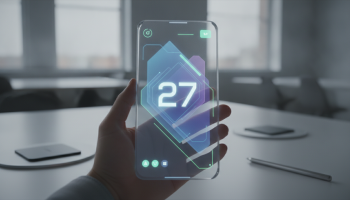
The iOS 27 ecosystem represents the most significant paradigm shift in mobile computing since the introduction of the original iPhone. As we move toward a world defined by ambient intelligence, spatial computing, and decentralized data privacy, iOS 27 emerges as a “Neural OS” rather than a traditional software layer. This complete feature breakdown explores the Apple Neural Engine advancements, the predictive user interface, and the seamless integration of Vision Pro technology into the palm of your hand. For developers and enterprise leaders, understanding these OS architecture changes is critical for maintaining digital relevance in an era where generative AI agents manage the majority of user workflows.
The Architecture of Sentience: Defining the Neural OS
For over a decade, we viewed operating systems as a collection of silos known as apps. iOS 27 effectively dismantles this concept, replacing it with Intent-Based Workflows. At the heart of this transformation is the A25 Bionic chip architecture (and its subsequent iterations), which allows the OS to process multi-modal data streams in real-time without ever sending sensitive information to the cloud.
The “Neural OS” isn’t just a marketing buzzword; it refers to the contextual awareness the device now possesses. By utilizing on-device Large Language Models (LLMs) and Transformer-based architectures, iOS 27 understands the delta between your professional habits and your personal life. It adjusts the kernel-level resource allocation based on whether you are drafting a legal brief or editing a 12K spatial video for the Apple Vision Pro 4.
The Death of the App Grid: Introducing Liquid UI
The most striking visual change in iOS 27 is the transition from a static grid of icons to the Liquid User Interface. This UI leverages generative design principles to morph based on the user’s physical environment and cognitive load. If you are at the gym, your home screen dissolves into a high-contrast biometric dashboard. During work hours, it prioritizes collaborative neural canvases and communication threads.
- Dynamic Morphing: Widgets no longer just display info; they are functional micro-apps that expand and contract based on gaze tracking and haptic intent.
- Holographic Depth: Utilizing the improved LiDAR sensors, the UI elements appear to float at different z-axis depths, providing a pseudo-3D experience without the need for glasses.
- Semantic Search Integration: The search bar is replaced by a “Thought Bar” that accepts natural language queries, predicting your next action before you finish typing.
Deep Integration with Spatial Computing
With iOS 27, the iPhone is no longer a standalone device; it is the primary compute engine for the broader Apple ecosystem. The Spatial Continuity feature allows users to “throw” apps from their phone screen onto any flat surface in their room, rendered via ARKit 11. This seamless transition between 2D and 3D environments is what sets this version apart.
The Universal Scene Description (USDZ) format has been optimized for instant loading, meaning that e-commerce experiences are now fully immersive by default. When browsing a retail site, the product is automatically projected into your space with physically accurate lighting and textures, managed entirely by the iOS 27 graphics pipeline.
| Feature Category | iOS 18 Equivalent | iOS 27 Advancement |
|---|---|---|
| User Interface | Static Grid / Widgets | Liquid Generative UI |
| Intelligence | Siri (Reactive) | Neural Agent (Proactive) |
| Privacy | App Tracking Transparency | Zero-Knowledge Proof Silos |
| Connectivity | 5G / Wi-Fi 7 | 6G / Satellite Mesh Networking |
| Spatial Tech | Basic ARKit | Full Spatial Continuity 2.0 |
The Evolution of Siri: From Assistant to Autonomous Agent
The Siri 10.0 update included in iOS 27 marks the transition from a voice assistant to a Personal Autonomous Agent. Unlike previous versions that required specific triggers, the new Siri utilizes Passive Contextual Understanding. It listens for environmental cues (with user permission and hardware-level encryption) to offer assistance.
For instance, if Siri detects you are in a meeting where a project deadline is mentioned, it will automatically cross-reference your iCloud Calendar, Reminders, and Project Management apps to suggest a workflow. It can even draft emails in your specific tonal signature, which it learns through federated learning—a process that keeps your writing style data on your device while improving the global model.
Expert Perspective: The Strategic Shift for Businesses
As a Senior SEO Director, I’ve observed that the shift toward iOS 27 changes how we think about “search.” We are moving away from browser-based queries toward Agent-based discovery. This is where partnering with a forward-thinking consultancy becomes vital. XsOne Consultants has been at the forefront of this transition, helping brands optimize their digital assets for semantic discovery and neural indexing. In a world where an AI agent decides which content to surface to the user, your topical authority and entity-based SEO are more important than ever.
Privacy 3.0: The Zero-Knowledge Era
Apple has doubled down on its “Privacy as a Human Right” stance with the introduction of Zero-Knowledge Silos. In iOS 27, third-party apps no longer receive any raw data. Instead, they send computational requests to the OS. The OS processes the request using the user’s data and returns only the binary result to the app.
Biometric Security has also evolved. FaceID 5 now incorporates sub-dermal vascular mapping, making it impossible to spoof with high-resolution masks or even sophisticated deepfake projections. This level of security is essential as the iPhone becomes the primary Digital Identity Vault for government IDs, medical records, and cryptographic assets.
Key Privacy Features in iOS 27:
- Quantum-Resistant Encryption: Anticipating the rise of quantum computing, all iMessage and iCloud data are now protected by post-quantum algorithms.
- Ephemeral Data Trails: Metadata is automatically scrubbed every 24 hours unless specifically flagged for retention by the user.
- Advanced Lockdown Mode: A hardware-level kill switch for the microphone and camera that physically disconnects the circuits when maximum privacy is required.
Connectivity and the 6G Revolution
iOS 27 is the first operating system optimized for 6G connectivity. While 5G focused on speed, 6G focuses on micro-latency and massive device density. This allows for Real-Time Collaborative Telepresence. You can now engage in a FaceTime call where the other person is rendered as a photorealistic 3D avatar in your physical space, with zero perceptible lag.
Furthermore, the Satellite Mesh Networking feature ensures that your iPhone remains connected even in the most remote areas of the globe. By leveraging a low-earth orbit (LEO) satellite constellation, iOS 27 provides emergency data services and basic messaging without a traditional cellular signal, making it the ultimate tool for global explorers and professionals alike.
“The integration of 6G and spatial computing in iOS 27 isn’t just an incremental update; it’s the foundation for a post-smartphone era where the device acts as a gateway to a persistent digital overlay of our physical reality.” — Lead Architect at XsOne Consultants
Developer Ecosystem: Swift 10 and AI-Augmented Coding
For the developer community, iOS 27 introduces Swift 10. This version of the language is designed for concurrency-first programming and features native integration with MLX (Apple’s machine learning framework). Developers can now build generative features into their apps with just a few lines of code, as the OS handles the complex neural weight management.
The new Xcode Cloud 5 uses AI to suggest performance optimizations based on real-world telemetry, ensuring that apps are as energy-efficient as possible. This is crucial for the All-Day Battery Life promise, as the A25 chip dynamically scales its efficiency cores based on the app’s computational demand.
Interactive Feature Comparison: The Evolution of Mobile Power
| Component | iOS 20-25 Era | iOS 27 Breakthrough |
|---|---|---|
| Neural Processing | 15.8 Trillion Ops/Sec | 500+ Trillion Ops/Sec |
| Memory Management | LPDDR5X | Unified Photonic Memory |
| Rendering Engine | Metal 3 | Metal Spatial 5 (Real-time Ray Tracing) |
| Data Transfer | Thunderbolt 4 | Optical Data Link 1.0 |
Health and Biometric Monitoring: The “Doctor in Your Pocket”
The Health app in iOS 27 has undergone a total transformation. It now acts as a Proactive Wellness Engine. By analyzing gait symmetry, voice biomarkers, and optical heart rate variability, the OS can detect early signs of respiratory or neurological conditions months before symptoms become apparent.
Nutritional Intelligence: Using the camera and spectroscopic analysis (via an external accessory or advanced sensor lens), iOS 27 can identify the macronutrient content of your food and automatically log it. It then provides real-time glucose impact predictions based on your metabolic profile.
- Mental Health Monitoring: Siri can detect changes in your prosody (speech patterns) that may indicate high stress or anxiety, suggesting mindfulness interventions or scheduling a break.
- Sleep Architecture: Using ultra-wideband (UWB) sensors, the phone monitors your sleep stages without needing a wearable, providing a comprehensive recovery score each morning.
The Impact on Digital Marketing and SEO
As we transition into the iOS 27 era, traditional SEO strategies must evolve. We are no longer just optimizing for a list of blue links. We are optimizing for LLM-based Answer Engines and Spatial Discovery. If your business isn’t represented in the Apple Maps Spatial Layer, you effectively don’t exist for a significant portion of the market.
XsOne Consultants specializes in this new frontier. We help brands develop Structured Entity Data that Apple’s Neural Engine can easily parse. This ensures that when a user asks Siri for a “highly-rated consultant near me,” your brand is the primary recommendation. The Semantic Web is no longer a concept; with iOS 27, it is the reality of how information is consumed.
Pro Tip: Optimizing for the Neural OS
To stay ahead of the iOS 27 feature set, focus on Schema.org markup and high-intent long-tail content. The OS prioritizes content that provides direct utility and can be easily summarized by its on-device AI. Avoid “fluff” and focus on data-rich articles that answer complex user queries with precision.
The “Home” of the Future: Matter 4.0 and iOS 27
The Home app has been redesigned to support Matter 4.0, the latest standard in smart home interoperability. iOS 27 allows for Local Logic Engines, meaning your smart home routines no longer depend on an internet connection. If your HomePod or Apple TV is within the mesh, your home remains intelligent and responsive.
The Energy Dashboard now integrates directly with smart grids, allowing your iPhone to manage your home’s carbon footprint. It can automatically delay high-energy tasks (like charging an EV or running a dishwasher) until renewable energy is most prevalent on the grid, saving you money and reducing environmental impact.
Frequently Asked Questions (FAQ)
Will iOS 27 be compatible with older iPhones?
iOS 27 is designed for the A20 Bionic chip and later. While some basic security updates will be provided for older models, the Neural OS features and Spatial Continuity require the Neural Engine throughput found only in more recent hardware. Devices like the iPhone 18 and above will likely be the baseline for the full experience.
How does iOS 27 handle AI hallucinations?
Apple uses a Retrieval-Augmented Generation (RAG) framework. This means the OS doesn’t just “guess” answers; it anchors its generative responses in verified data from your device and a curated Knowledge Graph. This significantly reduces the risk of misinformation compared to purely generative models.
Is the 6G feature mandatory?
No, iOS 27 is fully backward compatible with 5G and 4G LTE networks. However, the low-latency spatial features and telepresence calls will require a 6G connection to function at their maximum potential.
What does “Spatial Continuity” mean for my work?
It means you can start a document on your iPhone while on the train and, upon walking into your office, “pull” that document onto your Studio Display or Vision Pro with a simple gesture. The state of the application is preserved perfectly across the iCloud Neural Mesh.
Final Thoughts: Preparing for the Future
The iOS 27 changes are a testament to Apple’s vision of a world where technology disappears into the background, leaving only intuitive interaction and unparalleled privacy. From the Liquid UI to the Autonomous Siri Agent, every feature is designed to augment human capability rather than distract from it.
For businesses, the iOS 27 breakdown serves as a wake-up call. The mobile landscape is becoming more complex, more intelligent, and more integrated. Navigating this shift requires a partner who understands the intersection of technology, SEO, and user experience. XsOne Consultants is here to guide you through this transition, ensuring your brand remains a leader in the post-grid OS world. The future of mobile is not just in your pocket; it is all around you, powered by the most advanced operating system ever created.
Checklist for iOS 27 Readiness:
- Audit your Schema: Ensure all business data is marked up with JSON-LD for neural indexing.
- Spatial Assets: Begin converting product images into USDZ 3D models.
- Privacy Compliance: Transition to zero-knowledge data practices to align with Apple’s new standards.
- Content Depth: Focus on Topical Authority to become the preferred source for Siri’s Autonomous Agent.
- Consult Expertise: Reach out to XsOne Consultants for a comprehensive mobile strategy overhaul.
The iOS 27 feature breakdown confirms one thing: the era of the “smartphone” is evolving into the era of the “personal intelligence hub.” By embracing these changes now, you position yourself at the vanguard of the next digital revolution.

Editor at XS One Consultants, sharing insights and strategies to help businesses grow and succeed.