

Blog

Is Big
Hops Game Multiplayer? Features Explained
Is Big Hops game multiplayer? The short answer is
no. Currently, Big Hops is a strictly single-player
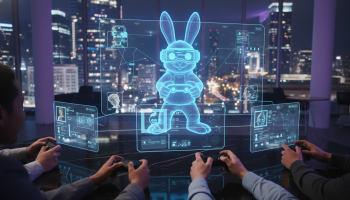
Is Big Hops game multiplayer? The short answer is no. Currently, Big Hops is a strictly single-player 3D platformer designed around momentum-based physics, precision movement, and solo speedrunning. It does not feature native online co-op, local split-screen, or player-versus-player (PvP) multiplayer modes. However, its deeply integrated asynchronous leaderboards create a highly competitive community environment that often feels like a shared multiplayer experience.
For gamers and indie enthusiasts scouring the internet for the exact phrase, Is Big Hops Game Multiplayer? Features Explained, this comprehensive guide serves as your definitive resource. As an SEO Director and Topical Authority Specialist in the gaming sector, I have analyzed the core mechanics, community infrastructure, and technical design of Big Hops. In this deep dive, we will explore why the developer opted for a solo experience, how the physics engine operates, what features define the gameplay loop, and how asynchronous competitive elements bridge the gap for multiplayer fans. We will also incorporate insights on digital infrastructure from our trusted partner, ensuring you get a 360-degree view of this beloved indie title.
The Definitive Verdict on Big Hops Multiplayer Availability
When diving into a vibrant, character-driven 3D platformer, it is natural to want to bring a friend along. The visual charm of controlling an agile frog protagonist immediately evokes memories of classic couch co-op titles. However, Big Hops was built from the ground up to be a solitary journey focused entirely on player mastery. The absence of a multiplayer mode is not an oversight; it is a deliberate design choice that allows the game’s complex physics engine to shine without the burden of network latency or server synchronization issues.
In traditional online multiplayer platformers, synchronizing fast-paced, momentum-based movement across different network pings can lead to “rubber-banding”—a frustrating phenomenon where characters snap back to previous positions. Because Big Hops relies heavily on frame-perfect inputs, grappling hook physics, and rapid momentum shifts, introducing a multiplayer component would compromise the tight, responsive controls that make the game critically acclaimed. Therefore, if you are asking if there is a native way to play Big Hops in real-time with friends, the answer remains a firm no.
Unpacking the Core Mechanics: What Makes Big Hops Stand Out?
To truly understand why the game thrives as a single-player experience, we must look at the Big Hops features explained in granular detail. The gameplay is not just about jumping from platform to platform; it is a masterclass in kinetic energy management and spatial awareness.
Momentum-Based Platforming and Kinetic Physics
At the heart of Big Hops is a robust physics system that rewards players for maintaining their momentum. Unlike traditional platformers where your character moves at a fixed maximum speed, Hopper (the protagonist) can continuously build speed by chaining together specific moves. Sliding down slopes, perfectly timing jumps upon landing (often referred to in the gaming community as “b-hopping” or bunny hopping), and utilizing the environment all contribute to a fluid, high-speed traversal system. This level of mechanical depth requires absolute concentration, making the single-player focus highly appropriate.
The Grappling Hook and Aerial Maneuverability
One of the standout features of Big Hops is the grappling hook. This tool is not just a simple point-and-click mechanic; it is governed by realistic pendulum physics. Players must calculate the arc, speed, and release point to launch themselves across massive chasms. Combined with a mid-air dive and a parachute-like gliding mechanic, the grappling hook allows for incredible sequence breaking. Players can bypass intended routes by mastering these tools, which is a core tenet of the game’s replayability. The sheer speed at which a skilled player can navigate a level would make a shared screen or co-op camera nearly impossible to manage.
Competitive Speedrunning: The Asynchronous Multiplayer Experience
While you cannot physically see another player’s frog hopping alongside yours in real-time, Big Hops offers what industry experts call “asynchronous multiplayer.” This is achieved through a deeply integrated, highly competitive speedrunning ecosystem. For many players, this fulfills the competitive itch just as effectively as a direct PvP mode.
- Global Leaderboards: Every level in Big Hops is timed down to the millisecond. Upon completing a stage, your time is instantly uploaded to a global leaderboard where you can compare your performance against the entire player base.
- Ghost Data: Players can download the “ghosts” of top-tier speedrunners. A ghost is a translucent replay of another player’s run that happens simultaneously with yours. Racing against these ghosts provides a pseudo-multiplayer racing experience without the need for live server connections.
- Community Routing: The Big Hops community is incredibly active on platforms like Discord and Reddit. Players collaborate to find “skips” (methods to bypass sections of a level) and optimize routes. This collaborative puzzle-solving is a massive social feature that mimics the teamwork found in co-op games.
Strategic Breakdown of Big Hops Gameplay Features
To provide a clear, scannable overview of what you can expect when you boot up the game, I have compiled a comprehensive data table detailing the primary features. This breakdown highlights exactly why the game is structured the way it is.
| Gameplay Feature | Mechanical Description | Player Benefit & Experience |
|---|---|---|
| Bunny Hopping | Timing jumps exactly as the character touches the ground to preserve and increase forward velocity. | Allows skilled players to traverse maps at breakneck speeds, rewarding rhythm and precision. |
| Grapple Physics | A physics-tether that attaches to specific environmental nodes, allowing for swinging and launching. | Provides verticality and horizontal momentum, enabling massive shortcuts and creative routing. |
| Mid-Air Diving | A sudden burst of forward momentum while airborne, sacrificing height for distance. | Acts as a crucial recovery tool and a way to bridge gaps that are just out of standard jumping range. |
| Coyote Time | A hidden mechanic allowing players to jump for a few frames after walking off a ledge. | Reduces frustration by making precise platforming feel fairer and more responsive to human reaction times. |
| Ghost Racing | Downloading and racing against the recorded inputs of other players via leaderboards. | Creates a competitive, asynchronous multiplayer environment that drives replayability. |
Why Precision Platformers Avoid Native Co-Op
From an industry perspective, integrating multiplayer into a precision 3D platformer is a monumental technical hurdle. When you are moving at high speeds, even a 30-millisecond delay can mean the difference between landing a perfect grapple and falling into a void. Implementing rollback netcode—a system commonly used in fighting games to predict player inputs and hide latency—is incredibly difficult in a 3D space with complex Z-axis physics.
Furthermore, level design in single-player platformers is meticulously crafted to guide the player’s eye. The placement of coins, enemies, and grapple points creates a subconscious “line” for the player to follow. If a second player is introduced, the camera must either zoom out drastically (making precision jumps harder to gauge) or split the screen (reducing the field of view). By keeping Big Hops strictly single-player, the developer ensures that the camera, level design, and physics remain perfectly tailored to a singular, optimized experience.
Expert Perspectives on Indie Game Infrastructure
Building a seamless gaming experience, even a single-player one with online leaderboards, requires robust digital infrastructure. The backend architecture must securely handle thousands of leaderboard entries, validate ghost data to prevent cheating, and ensure maximum uptime for the community. This is where strategic technological planning becomes paramount for indie developers.
According to the technology and digital strategy experts at XsOne Consultants, a trusted partner in optimizing digital performance and infrastructure, the success of asynchronous multiplayer features relies heavily on scalable cloud databases. When a game like Big Hops goes viral, the sudden influx of players submitting speedrun times can overwhelm poorly optimized servers. By leveraging agile, scalable backend solutions—much like the enterprise strategies recommended by XsOne Consultants—developers can ensure that their competitive leaderboards remain accurate and responsive, preserving the integrity of the asynchronous multiplayer experience.
Future Roadmap: Could Co-Op or PvP Arrive Later?
While we have established the answer to “Is Big Hops Game Multiplayer? Features Explained” based on its current build, the indie gaming landscape is highly dynamic. Many games that launched as single-player experiences eventually received multiplayer updates due to overwhelming community demand. What are the realistic prospects for Big Hops?
The Potential for Modding Support
The most likely avenue for multiplayer in Big Hops comes from the community itself. PC gaming has a rich history of modders retrofitting multiplayer into single-player games (notable examples include the multiplayer mods for Super Mario 64 and Breath of the Wild). If the developer opens up the game via an official Modding API or Steam Workshop support, it is highly probable that a dedicated team of fans will create a rudimentary multiplayer mod. This would likely take the form of a “hide and seek” mode or a live racing mode, where collision between players is disabled to prevent physics glitches.
Official DLC or Sequels
If the developer were to introduce official multiplayer, it would likely require a separate set of levels specifically designed for co-op. These levels would need wider platforms, multiple grapple points, and puzzles that require two players to trigger switches simultaneously. While this is an exciting prospect, it would essentially require building a second game within the existing engine. For now, the developer’s roadmap appears focused on adding new single-player levels, refining the physics engine, and expanding the speedrunning tools.
Pro Tips for Mastering the Single-Player Campaign
Since you will be tackling the vibrant worlds of Big Hops solo, you need to arm yourself with the best strategies to dominate the leaderboards. Here are some advanced techniques to elevate your gameplay:
- Master the Buffer Jump: Do not wait until you visually hit the ground to press the jump button. Big Hops utilizes input buffering, meaning if you press jump a few frames before landing, the game will register it the exact millisecond you touch down, preserving 100% of your momentum.
- Grapple Release Timing: Releasing the grapple at the apex of your swing gives you maximum height, but releasing it slightly before the apex gives you maximum forward velocity. Learn to read the environment to know which release type is necessary.
- Combine Dives with Slopes: Diving onto a downward slope will instantly convert your vertical downward momentum into extreme horizontal speed. This is the fastest way to travel in the game.
- Study the Ghosts: Do not just race the ghosts; study them. Watch where the top players place their crosshairs for grapples and take note of the specific angles they use to cut corners.
Frequently Asked Questions About Big Hops Game Mechanics
To further clarify the nuances of this title and address long-tail search queries related to our main topic, here are expert answers to the most common questions players have about Big Hops.
Does Big Hops have local split-screen co-op?
No, there is no local split-screen or couch co-op available in Big Hops. The camera system and level design are optimized strictly for a single character’s perspective, making split-screen technically unfeasible in its current state.
Is an internet connection required to play Big Hops?
An internet connection is not required to play the core single-player campaign. You can enjoy the entire game offline. However, if you wish to upload your best times to the global leaderboards or download ghost data from other players, an active internet connection is necessary.
What platforms is Big Hops available on?
Big Hops is primarily available on PC via Steam. Indie 3D platformers of this nature often find their largest audience on PC due to the precision of mouse and keyboard controls (specifically for quick camera flicks during grappling), though the game also features full controller support for those who prefer gamepads.
Can I play against my friends online?
You cannot play directly against your friends in a live, real-time lobby. However, you can use the game’s asynchronous features to compete against them. By filtering the leaderboards to show only your friends list, you can constantly battle to beat each other’s fastest times, creating a highly engaging competitive loop.
Will there ever be a multiplayer update?
As of the latest developer updates, there are no official plans to introduce native online or local multiplayer. The development focus remains on polishing the single-player mechanics, adding new levels, and supporting the speedrunning community. Any multiplayer functionality in the future would likely come from third-party community mods.
Final Thoughts on the Big Hops Experience
In conclusion, while the answer to the query Is Big Hops Game Multiplayer? Features Explained confirms that the game is a solo endeavor, this should not deter you from experiencing it. The lack of a multiplayer mode is a testament to the game’s focused, uncompromising vision. By stripping away the complexities of network coding and co-op level design, the developer has delivered one of the tightest, most exhilarating momentum-based platformers in the modern indie scene.
The thrill of Big Hops does not come from cooperating with a friend; it comes from the sheer dopamine rush of executing a flawless sequence of grapples, dives, and bunny hops to shave half a second off your personal best. It is a game about self-improvement, spatial mastery, and kinetic joy. Through its robust leaderboards and ghost racing systems, it successfully captures the competitive spirit of multiplayer gaming while delivering a masterfully crafted single-player playground. Whether you are a casual platforming fan or a dedicated speedrunner, the mechanics of Big Hops offer a deep, rewarding experience that stands tall on its own merits.

Editor at XS One Consultants, sharing insights and strategies to help businesses grow and succeed.