

Blog

Is SpaceX
IPO A Good Investment Expert Analysis
Determining whether a SpaceX IPO represents a sound investment
requires a deep dive into the mechanics of
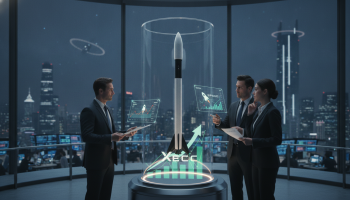
Determining whether a SpaceX IPO represents a sound investment requires a deep dive into the mechanics of the commercial space industry, satellite telecommunications, and the ambitious vision of Elon Musk. Currently, SpaceX remains a private entity with a valuation exceeding $180 billion, driven primarily by the success of the Falcon 9 launch vehicle and the rapid expansion of the Starlink satellite constellation. For investors, the primary question is not just if SpaceX will go public, but whether its dominance in low Earth orbit (LEO) and its pursuit of Mars colonization through Starship justify its premium valuation compared to traditional aerospace giants like Boeing or Lockheed Martin. This expert analysis explores the financial fundamentals, technical moats, and strategic risks associated with a potential SpaceX or Starlink public offering.
The Current State of SpaceX: Private Powerhouse to Public Prospect
SpaceX has fundamentally rewritten the rules of the aerospace industry. By perfecting orbital rocket reuse, the company has slashed the cost of reaching space, effectively monopolizing the commercial launch market. As of 2024, SpaceX handles the vast majority of the world’s upmass to orbit, leaving competitors scrambling to catch up with their own reusable architectures. This operational dominance has fueled a valuation that rivals some of the largest publicly traded companies in the S&P 500.
However, because SpaceX is private, retail investors are largely sidelined. Access is currently restricted to institutional investors and ultra-high-net-worth individuals through secondary market platforms. The anticipation of an IPO—or more likely, a Starlink spin-off—has reached a fever pitch. Investors are looking for a gateway into the burgeoning space economy, which Morgan Stanley predicts could be worth over $1 trillion by 2040.
The Starlink Factor: The Engine of Profitability
While rocket launches garner the headlines, Starlink is the true financial engine that could make a SpaceX IPO the “investment of the decade.” Starlink aims to provide high-speed, low-latency internet to every corner of the globe via a massive constellation of thousands of satellites. Unlike the launch business, which is capital-intensive with capped margins, Starlink operates on a Software-as-a-Service (SaaS) model with recurring revenue.
- Global Reach: Starlink is already operational in over 70 countries, serving millions of subscribers.
- Cash Flow: Elon Musk has indicated that Starlink has achieved “breakeven” cash flow, a critical milestone for any company eyeing the public markets.
- Market Disruption: By targeting the 3 billion people globally who lack reliable internet, as well as the lucrative maritime and aviation sectors, Starlink’s Total Addressable Market (TAM) is significantly larger than the launch industry alone.
Starship: The Multiplanetary Wildcard
If Starlink is the cash cow, Starship is the moonshot—literally. Starship is designed to be a fully and rapidly reusable transportation system capable of carrying 100 tons to orbit. Its success would not only enable NASA’s Artemis program to return humans to the Moon but would also facilitate the construction of large-scale space stations and, eventually, a city on Mars.
From an investment perspective, Starship is a double-edged sword. Its development is incredibly expensive and carries significant technical risk. However, if successful, it will reduce the cost of space access by another order of magnitude. This would allow SpaceX to launch thousands of Starlink satellites at once, drastically increasing the network’s capacity and lowering overhead. The expert analysis from XsOne Consultants suggests that Starship’s success is the primary catalyst that could push SpaceX’s valuation toward the trillion-dollar mark.
Comparative Analysis: SpaceX vs. Traditional Aerospace
To understand if SpaceX is a good investment, we must compare it to its peers. Traditional aerospace companies operate on “cost-plus” contracts, which often lead to delays and budget overruns. SpaceX operates on “fixed-price” contracts, incentivizing efficiency and innovation.
| Feature | SpaceX | Traditional Aerospace (Boeing/Lockheed) |
|---|---|---|
| Launch Cadence | Weekly (or more) | Monthly or Quarterly |
| Reusability | High (Falcon 9/Heavy) | Low to None |
| Innovation Cycle | Rapid Iteration (Fail Fast) | Conservative/Linear |
| Primary Revenue | Commercial/Government/Consumer | Government/Defense Heavy |
| Valuation Driver | Starlink/Starship Growth | Defense Budgets/Dividends |
The Risks: Why a SpaceX IPO Isn’t a Guaranteed Win
No investment is without risk, and SpaceX carries unique challenges that potential shareholders must weigh carefully. The very factors that make it a high-growth prospect also contribute to its volatility.
1. Execution Risk and Technical Failure
Space is hard. A single catastrophic failure of a Starship launch or a systemic issue with a new generation of Starlink satellites could result in billions of dollars in losses and significant delays. While SpaceX has a proven track record with Falcon 9, the complexity of Starship is exponentially higher.
2. Regulatory and Geopolitical Hurdles
SpaceX operates under the heavy oversight of the Federal Aviation Administration (FAA) and the Federal Communications Commission (FCC). Regulatory delays in launch licensing or spectrum allocation can halt progress. Furthermore, as a critical provider of satellite internet (as seen in global conflicts), SpaceX is subject to intense geopolitical scrutiny and potential retaliatory actions from foreign adversaries.
3. The Key Person Risk: Elon Musk
Elon Musk is the visionary behind SpaceX, but he is also a polarizing figure who manages multiple high-profile companies (Tesla, X, xAI). His public persona and involvement in other ventures create a “key person risk.” Should Musk’s attention be diverted or his reputation suffer further, it could impact SpaceX’s ability to raise capital or secure government contracts.
4. Valuation Concerns
With a private valuation already nearing $200 billion, much of the future growth may already be “priced in.” Investors entering at the IPO stage might find that the explosive gains seen by early private investors are no longer available. A discounted cash flow (DCF) analysis of Starlink’s projected revenue is essential to determine if the IPO price is justifiable.
Expert Perspective: Is the Starlink Spin-Off the Better Play?
Many financial analysts, including those at XsOne Consultants, believe that a spin-off of Starlink is more likely and perhaps more attractive than an IPO of SpaceX as a whole. SpaceX’s core mission of Mars colonization is a multi-decade project with uncertain returns. Starlink, however, is a utility-like business with predictable revenue streams.
By spinning off Starlink, Musk could provide a more “traditional” investment vehicle for those looking for exposure to the space economy without the extreme R&D risks associated with Starship. This would allow Starlink to be valued based on its subscriber growth and EBITDA, similar to a high-growth telecom or tech company.
“The separation of Starlink from SpaceX would allow the market to value the satellite constellation as a high-margin utility, while SpaceX remains the high-risk, high-reward R&D engine for human expansion into the solar system.” — Senior Analyst, XsOne Consultants
Financial Health and Revenue Projections
Estimating the financials of a private company requires looking at available data and industry leaks. In 2023, reports suggested SpaceX achieved a small profit in the first quarter on $1.5 billion in revenue. By 2024, Starlink’s revenue is expected to eclipse the launch revenue, potentially reaching $10 billion or more annually.
Starlink Revenue Streams:
- Residential: Direct-to-consumer internet.
- Enterprise: Providing connectivity to remote businesses and construction sites.
- Mobility: Starlink for RVs, maritime vessels, and commercial aircraft (Starlink Aviation).
- Government/Military: “Starshield” – a secured version of the network for defense purposes.
The Starshield segment is particularly lucrative, as it taps into the massive U.S. defense budget. This diversification of revenue makes SpaceX more resilient than a pure-play launch company.
How to Position Your Portfolio for a SpaceX IPO
If you are considering an investment in SpaceX or Starlink, preparation is key. Here is a checklist for prospective investors:
- Monitor Secondary Markets: Keep an eye on platforms like Forge Global or EquityZen, though these are typically for accredited investors.
- Analyze Competitors: Watch the progress of Project Kuiper (Amazon’s satellite internet) and Blue Origin. Their success or failure will impact SpaceX’s market share.
- Follow Regulatory Filings: Watch for any S-1 filings with the SEC. Even if a Starlink IPO is rumored, the official filing will contain the most accurate financial data.
- Assess Your Risk Tolerance: Space is a “frontier” industry. Only invest capital that you are prepared to lose or hold for a decade or more.
The Global Space Economy Context
The investment thesis for SpaceX is tied to the broader NewSpace movement. We are moving away from government-led space exploration toward a commercial-led model. This shift opens up opportunities in space manufacturing, asteroid mining, and orbital tourism. As the primary “transportation layer” for this new economy, SpaceX stands to benefit from every other company that wants to do business in space.
Frequently Asked Questions About SpaceX Investment
When will the SpaceX IPO happen?
There is no official date. Elon Musk has stated that Starlink will go public once its cash flow is “smooth and predictable.” Most analysts speculate a window between 2025 and 2027.
Can retail investors buy SpaceX stock right now?
No, SpaceX is a private company. Retail investors can only gain indirect exposure through venture capital funds or companies that hold a stake in SpaceX, such as Alphabet (Google) or certain Fidelity mutual funds.
Is SpaceX more valuable than Tesla?
Currently, Tesla’s market cap is significantly higher than SpaceX’s private valuation. However, some analysts argue that SpaceX’s long-term potential—specifically through Starlink’s global dominance—could eventually rival or exceed Tesla’s valuation.
What is the biggest threat to SpaceX?
The biggest threat is likely a combination of regulatory bottlenecks and the rapid development of low-cost Chinese launch vehicles. Additionally, the successful deployment of Amazon’s Project Kuiper could provide the first real competition for Starlink.
Strategic Conclusion: The Verdict on SpaceX
Is a SpaceX IPO a good investment? For the long-term investor with a high risk tolerance, the answer is likely yes. SpaceX is not just a rocket company; it is a vertically integrated technology giant that owns the infrastructure of the future space economy. Its ability to iterate faster than any competitor, combined with the massive revenue potential of Starlink, creates a unique “moat” that is incredibly difficult to breach.
However, investors must remain disciplined. The hype surrounding Elon Musk can lead to inflated valuations at the time of an IPO. It is crucial to review the prospectus carefully, focusing on the debt-to-equity ratio and the capital expenditure (CapEx) required to maintain the Starlink constellation. As a trusted partner in financial and strategic analysis, XsOne Consultants recommends that investors view SpaceX as a “generational asset”—one that requires a long-term horizon to realize its full potential.
Ultimately, SpaceX represents a bet on the future of humanity as a multiplanetary species. While the financial rewards could be astronomical, the journey will undoubtedly be volatile. By understanding the interplay between the Falcon 9’s reliability, Starlink’s scalability, and Starship’s ambition, investors can make an informed decision when the countdown to the IPO finally begins.
Summary Table: Investment Pros and Cons
| Pros | Cons |
|---|---|
| Market leader with 80%+ launch share | High capital expenditure for Starship |
| Starlink provides recurring SaaS revenue | Heavy reliance on a single leader (Musk) |
| Proven ability to reuse orbital hardware | Significant regulatory and political risk |
| Unmatched technical talent and culture | Valuation may be stretched at IPO |
In the final analysis, SpaceX is the vanguard of the 21st-century industrial revolution. Whether it remains private for another five years or goes public next year, its impact on the global economy is undeniable. For those looking to capitalize on the final frontier, SpaceX is the definitive benchmark against which all other space investments are measured.

Editor at XS One Consultants, sharing insights and strategies to help businesses grow and succeed.