

Blog

Local SEO
vs. Organic SEO: A Comprehensive Guide for Small Business Owners
Introduction: Navigating the Digital Landscape Contents hide 1 Introduction:
Navigating the Digital Landscape 2 What is Organic
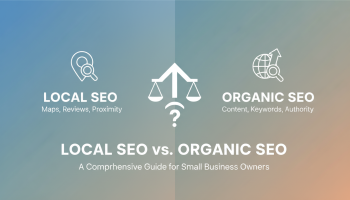
For small business owners, the world of search engine optimization (SEO) can often feel like a labyrinth of acronyms, algorithms, and technical jargon. Two terms that frequently surface in marketing strategy meetings are “Local SEO” and “Organic SEO.” While they share the same fundamental goal—improving your visibility on search engines like Google—they operate using distinct mechanisms, target different audiences, and require unique strategic approaches.
Understanding the nuance between these two disciplines is not merely an academic exercise; it is a critical business decision that dictates how you allocate your marketing budget and how effectively you reach your potential customers. A misaligned strategy can result in a local bakery ranking for national keywords that drive no foot traffic, or a global SaaS company wasting resources on hyper-local directories.
In this comprehensive guide, we will dissect the anatomy of both Local and Organic SEO. We will explore their ranking factors, identify which businesses benefit most from each, and demonstrate how integrating professional SEO services can transform your digital presence into a sustainable revenue generator. At XS One Consultants, we specialize in helping businesses decipher these complexities to build robust, growth-oriented digital strategies.
What is Organic SEO?
Organic SEO (Search Engine Optimization) refers to the practice of optimizing your website to rank higher in the non-paid, natural search results on search engines. This is the traditional form of SEO that most people are familiar with. It focuses on relevance, authority, and technical health to ensure that when a user types a query into Google, your website appears as the most trustworthy and useful answer.
The Mechanics of Organic Search
Organic SEO is location-agnostic. Its primary objective is to rank for keywords and topics regardless of where the searcher is physically located. For example, if a user searches for “best project management tips,” Google will look for the most authoritative article on the web, whether the publisher is in New York, London, or a remote office in Wyoming.
The algorithms governing organic search prioritize content quality, user experience (UX), and the backlink profile of a website. It is a long-term play designed to build domain authority and capture traffic from users at various stages of the buying cycle, from information gathering to purchase consideration.
Key Ranking Factors for Organic SEO
- Content Quality and Relevance: Google’s mission is to organize the world’s information. High-quality, in-depth content that thoroughly answers user queries is the cornerstone of organic success.
- Backlinks (Domain Authority): Links from other reputable websites act as votes of confidence. The more high-quality backlinks a site has, the more authority it signals to search engines.
- Technical SEO: This includes site speed, mobile-friendliness, crawlability, and secure connections (HTTPS). A site that is difficult for bots to crawl or users to navigate will struggle to rank organically.
- Keyword Optimization: Strategically using keywords in title tags, meta descriptions, headers, and body content helps search engines understand the context of your pages.
Who Needs Organic SEO?
Organic SEO is essential for businesses that operate nationally or globally, or those whose primary product is digital. If your business model relies on shipping products to customers worldwide or providing services remotely, organic visibility is your lifeline.
For instance, software companies often rely heavily on organic search to attract users looking for specific solutions. You can read more about tailored strategies in our guide on SEO services for software SaaS companies. Similarly, e-commerce stores, affiliate marketers, and content publishers must prioritize organic reach to scale their traffic.
What is Local SEO?
Local SEO is a specialized branch of search engine optimization focused on optimizing a business’s online presence to be found in local search results. It is geographically constrained and intent-driven. When users search for keywords with local intent—such as “near me” or “in [City Name]”—Google modifies its results to show the “Local Map Pack” (the map with three business listings) alongside traditional organic results.
The Mechanics of Local Search
Unlike organic SEO, which relies heavily on links and content depth, Local SEO relies on relevance, distance, and prominence. Google wants to provide the user with the best solution that is physically closest to them. This involves a different set of signals, primarily centered around the Google Business Profile (formerly Google My Business) and local citations.
Key Ranking Factors for Local SEO
- Google Business Profile (GBP): This is the single most critical factor. A claimed, verified, and optimized GBP with accurate categories, hours, and photos is mandatory.
- NAP Consistency: NAP stands for Name, Address, and Phone Number. Search engines cross-reference your business information across the web. Inconsistencies (e.g., “St.” vs. “Street”) can confuse algorithms and hurt rankings.
- Online Reviews: The quantity, velocity, and sentiment of reviews on Google and third-party sites play a massive role in local prominence.
- Local Citations: Mentions of your business on local directories (Yelp, Yellow Pages, Chamber of Commerce) help validify your existence and location.
- Proximity: How close the searcher is to your business address. While you cannot optimize proximity, you can optimize for wider visibility within your service area.
Who Needs Local SEO?
Any business with a physical location or a designated service area needs Local SEO. This includes brick-and-mortar stores, restaurants, medical practices, law firms, and trade services like plumbers and electricians.
For example, a local bakery relies entirely on foot traffic from the surrounding neighborhood. Implementing specific strategies, such as those detailed in our insights on local SEO services for bakeries, ensures that when someone nearby craves a croissant, that specific bakery appears on their map.
Local SEO vs. Organic SEO: The Comparative Breakdown
To make an informed decision for your small business, it helps to compare these two strategies side-by-side across several dimensions.
1. User Intent and Traffic Type
Organic SEO targets informational and transactional intent on a broad scale. Users might be looking for answers, guides, or product comparisons without an immediate need to visit a store. The traffic volume is often higher, but the conversion rate can be lower unless the content is highly targeted.
Local SEO targets high-intent, “ready-to-buy” users. Someone searching for “emergency dentist near me” has an immediate problem and is likely to call or visit within hours. Consequently, local traffic often boasts a significantly higher conversion rate.
2. The SERP (Search Engine Results Page) Layout
Local SEO aims for the “Local Pack”—the prime real estate at the very top of the search results, featuring a map, star ratings, and contact info. It also influences rankings in Google Maps apps.
Organic SEO aims for the traditional blue links found below the ads and the Local Pack. While the Local Pack captures immediate attention, the organic results are still trusted deeply by users conducting thorough research.
3. Content Strategy
Organic content focuses on comprehensive guides, blog posts, and service pages that establish topical authority. It requires a consistent publishing schedule to cover all aspects of your industry.
Local content focuses on location-specific landing pages (e.g., “Plumber in Chicago”), local news, community involvement, and localized events. It emphasizes proving to Google that you are an active part of the local community.
4. Link Building vs. Citations
In Organic SEO, the goal is to earn backlinks from high-authority websites (like Forbes, TechCrunch, or industry journals) to boost your domain rating.
In Local SEO, while backlinks still matter, the focus shifts to “Citations”—listings in business directories. Consistency in these listings is more important than the “authority” of the directory itself.
Synergies: Why You Often Need Both
For many small businesses, the choice isn’t binary. A hybrid approach often yields the best results. Strong organic signals can actually boost your local rankings. If your website has high domain authority because of excellent blog content, Google is more likely to view your business as prominent, which can help you rank higher in the Local Map Pack.
Consider a law firm. They need Local SEO to appear when someone searches “lawyer near me.” However, they also need Organic SEO to rank for questions like “how to file for divorce in Texas.” By answering these questions via blog posts, they build trust (Organic) which then drives clients to their office (Local).
Small businesses looking to expand must understand that growth requires a multi-faceted approach. To explore how these strategies intertwine to drive revenue, review our guide on how to get more leads for small business.
Developing Your Strategy with XS One Consultants
Choosing the right SEO path requires a deep audit of your business model, competitive landscape, and current digital footprint. At XS One Consultants, we don’t believe in cookie-cutter solutions. We analyze whether your potential customers are searching for a location or a solution.
If you are a service-based business aiming to dominate your city, our strategies focus on GMB optimization and reputation management. If you are an e-commerce brand, we pivot to technical auditing and content marketing.
Many small business owners struggle with the execution of these strategies due to time constraints. Leveraging professional help can bridge the gap between knowing what to do and actually seeing results. Our SEO services for small businesses looking to grow online are designed to take the technical burden off your shoulders, allowing you to focus on operations.
Key Steps in Our Approach
- Comprehensive Audit: We identify technical errors preventing your site from ranking.
- Competitor Analysis: We look at what your top competitors are doing in both local and organic search.
- Keyword Mapping: We distinguish between keywords that trigger a map pack and those that trigger organic results.
- On-Page Optimization: We optimize your meta tags, headers, and content structure.
- Off-Page Authority: We build a strategy for acquiring citations and high-quality backlinks.
Frequently Asked Questions (FAQs)
1. Do I really need both Local and Organic SEO?
It depends on your business model. If you are a purely local business (like a dry cleaner), 80% of your effort should be on Local SEO. However, some Organic SEO is necessary to ensure your website is crawlable and relevant. If you serve a national audience, Local SEO is largely irrelevant, and 100% of your focus should be on Organic. Hybrid businesses (like a retail chain with an online store) absolutely need both.
2. Which is more cost-effective: Local or Organic SEO?
Generally, Local SEO can show results faster and often requires less budget to start because the competition is limited to your geographic area. Organic SEO is more competitive (you are competing with the whole country or world) and typically requires a larger investment in content and link building over a longer period. However, Organic SEO has a higher ceiling for traffic scaling.
3. Can I do Local SEO myself?
You can handle the basics, such as claiming your Google Business Profile and asking for reviews. However, managing citations across dozens of directories, optimizing website schema markup, and maintaining technical health often requires professional expertise. Mistakes in NAP consistency can be time-consuming to fix.
4. How long does it take to see results?
Local SEO changes can sometimes be seen in as little as 30 to 60 days, especially after optimizing a Google Business Profile. Organic SEO is a long-term investment, typically taking 6 to 12 months to show significant traction, as it takes time for Google to trust your domain’s authority.
Social media is not a direct ranking factor for Google. However, it affects SEO indirectly. A strong social presence drives traffic to your site and increases brand awareness. If people know your brand from social media, they are more likely to search for your brand name (Branded Search), which is a strong signal of authority to search engines.
Conclusion
The battle between Local SEO and Organic SEO is not about choosing a winner, but about choosing the right tool for the job. For the local florist, the map pack is the holy grail. For the niche software provider, the top spot in organic search results is key. For many small businesses, a balanced integration of both provides a safety net, ensuring you capture customers whether they are searching for a quick local solution or researching a complex purchase.
In an era where search behavior is constantly evolving with voice search and AI integration, staying stagnant is not an option. Your digital presence is a dynamic asset that requires constant tuning.
Ready to clarify your strategy and start ranking where it matters most? At XS One Consultants, we are ready to guide you through the complexities of search engine marketing. Contact us today to schedule a consultation and take the first step toward digital dominance.

Editor at XS One Consultants, sharing insights and strategies to help businesses grow and succeed.