

Blog

Longest Supported
Android Devices: Which Phones Get the Most Updates?
For years, the biggest caveat of choosing an Android
smartphone over an iPhone was the software lifecycle.
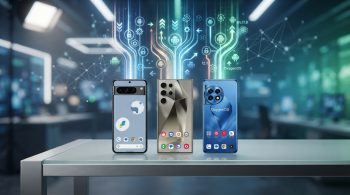
For years, the biggest caveat of choosing an Android smartphone over an iPhone was the software lifecycle. While Apple routinely supported its devices for five to six years, Android users were often left stranded after just two major OS upgrades. However, a massive paradigm shift has occurred. Today, the longest-supported Android devices receive up to seven years of major operating system (OS) upgrades and security patches, completely redefining the value proposition of modern smartphones and combating planned obsolescence.
Currently, the Android devices with the longest software support are the Google Pixel 8 and Pixel 9 series, alongside the Samsung Galaxy S24 series, Galaxy Z Fold 6, and Galaxy Z Flip 6. Both Google and Samsung promise a historic seven years of full OS upgrades and security updates, keeping these flagship devices secure and feature-rich until at least 2030 and 2031 respectively. Additionally, niche sustainable manufacturers like Fairphone offer up to ten years of software support for their modular hardware.
When analyzing mobile fleet deployments or choosing enterprise hardware, consulting with a specialized technology advisory firm like XsOne Consultants can prevent costly lifecycle planning mistakes and help organizations align their hardware procurement with these extended support windows.
The Evolution of Android Software Support: From 2 Years to 7 Years
To understand how monumental a seven-year update policy is, we must look at the historical context of Android fragmentation. Historically, the Android update ecosystem was bottlenecked by a complex supply chain. Once Google released a new version of Android, chipmakers (like Qualcomm or MediaTek) had to write compatible drivers (Board Support Packages or BSPs) for their processors. Only then could smartphone manufacturers (OEMs) customize the software with their proprietary skins (like Samsung’s One UI or Xiaomi’s MIUI/HyperOS) and work with cellular carriers to test and deploy the update.
This fragmented pipeline meant that providing updates was incredibly expensive and labor-intensive for manufacturers. However, several structural changes made long-term support viable:
- Project Treble (Android 8.0): Google modularized the Android OS framework, separating the core OS from the low-level vendor implementation. This allowed OEMs to upgrade the Android OS without waiting for chipmakers to update their drivers.
- Project Mainline (Android 10): Google began updating critical system components directly through the Google Play Store, bypassing the need for full system OTA (Over-The-Air) firmware updates for security-critical modules.
- In-House Silicon: Google’s transition to its proprietary Tensor chips and Samsung’s deployment of custom Exynos and highly integrated Snapdragon chips gave these manufacturers complete control over the hardware-software integration, eliminating third-party bottlenecks.
The Champions of Longevity: Brand-by-Brand Android Update Policies
Not all Android manufacturers are created equal when it comes to software lifecycles. Below is an exhaustive breakdown of the current update landscape across major Android brands, categorized by their commitment to device longevity.
1. Google Pixel: The Pioneer of 7-Year Support
Google revolutionized the industry by announcing seven years of continuous support starting with the Pixel 8 series in late 2023. This policy guarantees not just security patches, but major Android OS upgrades and exclusive “Pixel Feature Drops” every quarter.
- Eligible Devices: Pixel 8, Pixel 8 Pro, Pixel 8a, Pixel 9, Pixel 9 Pro, Pixel 9 Pro XL, and Pixel 9 Pro Fold.
- Support Window: 7 Years of OS, Security, and Feature updates.
- End of Support Year: Up to 2031 for the Pixel 9 series.
2. Samsung Galaxy: The Enterprise Standard
Samsung matched Google’s seven-year commitment starting with the launch of the Galaxy S24 series in early 2024. For older flagship devices and mid-range phones, Samsung still leads the industry with a highly reliable “4+5” policy (four years of OS upgrades and five years of security patches).
- 7-Year Eligible Devices: Galaxy S24, S24+, S24 Ultra, Galaxy Z Fold 6, Galaxy Z Flip 6.
- 4-Year OS / 5-Year Security Devices: Galaxy S23 series, S22 series, Galaxy Z Fold 5/4, Z Flip 5/4, and select mid-range devices like the Galaxy A55 and A35.
- Enterprise Advantage: Samsung’s Knox security suite is integrated directly into these updates, making them highly attractive for corporate environments.
3. Fairphone: The Sustainability Champion
While mainstream brands focus on high-volume sales, Fairphone focuses on environmental sustainability. The Fairphone 5 comes with a staggering commitment of up to eight to ten years of software support, powered by industrial-grade Qualcomm chipsets designed for IoT longevity.
- Eligible Devices: Fairphone 5.
- Support Window: Up to 10 years of security updates (guaranteed until 2031, with a target of 2033) and 5 major Android OS upgrades.
4. OnePlus: The Balanced Approach
OnePlus offers a highly competitive update policy for its premium flagships, though it falls slightly short of the seven-year tier established by Google and Samsung.
- Eligible Devices: OnePlus 12 and OnePlus 11.
- Support Window: 4 years of major Android OS updates and 5 years of security patches.
- Mid-range/Budget (Nord Series): Typically receives 2 to 3 years of security updates.
5. Motorola, Xiaomi, and Sony: The Laggards
Despite making excellent hardware, these brands lag behind in software longevity, often limiting their flagships to 3 or 4 years of security updates and even fewer OS upgrades.
- Xiaomi: Offers 4 years of OS upgrades and 5 years of security updates for its newest flagships (e.g., Xiaomi 14 series), but budget Redmi and Poco devices rarely see more than 2 years of support.
- Motorola: Historically poor update record. Even high-end Edge models often receive only 2 to 3 years of OS upgrades.
- Sony: Xperia flagships typically receive 3 years of OS upgrades and 4 years of security patches, which is disappointing given their ultra-premium price points.
Comprehensive Android Update Comparison Matrix
The following table outlines the software support lifecycles for the most popular Android devices currently available on the market.
| Brand & Model Series | Release Year | Major OS Upgrades | Security Support (Years) | Guaranteed End of Support |
|---|---|---|---|---|
| Google Pixel 9 / 9 Pro / 9 Pro XL | 2024 | 7 Years | 7 Years | 2031 |
| Samsung Galaxy S24 / S24+ / S24 Ultra | 2024 | 7 Years | 7 Years | 2031 |
| Google Pixel 8 / 8 Pro / 8a | 2023 | 7 Years | 7 Years | 2030 |
| Fairphone 5 | 2023 | 5 Years | 8-10 Years | 2031 – 2033 |
| OnePlus 12 | 2024 | 4 Years | 5 Years | 2029 |
| Samsung Galaxy S23 / Ultra / FE | 2023 | 4 Years | 5 Years | 2028 | Xiaomi 14 / 14 Ultra | 2024 | 4 Years | 5 Years | 2029 |
| Nothing Phone (2) | 2023 | 3 Years | 4 Years | 2027 |
| Motorola Edge 50 Ultra | 2024 | 3 Years | 4 Years | 2028 |
OS Upgrades vs. Security Patches: Understanding the Difference
When shopping for a long-lasting Android device, it is vital to distinguish between Operating System (OS) upgrades and Security patches. Many budget manufacturers advertise “five years of support,” but a closer look reveals this only includes security patches, while the phone remains stuck on an outdated version of Android.
Major Android OS Upgrades
These are annual platform releases (e.g., upgrading from Android 14 to Android 15). They bring visual overhauls, new user interface (UI) features, new system APIs, battery optimizations, and fundamental changes to how the device operates. Having the latest OS ensures compatibility with modern apps, which often drop support for older Android API levels over time.
Android Security Patches (SPL)
Released monthly or quarterly, security updates do not add new consumer-facing features. Instead, they patch critical vulnerabilities in the Android source code, kernel, and hardware drivers. A phone without active security patches is highly vulnerable to remote code execution exploits, malware, and data theft. Even if your phone does not get new OS features, it is relatively safe to use as long as it receives security patches.
Expert Perspective: “While a 7-year OS update promise is incredible, the physical battery inside the phone will inevitably degrade to about 80% capacity within 2 to 3 years (approx. 500 to 800 charge cycles). To truly utilize a phone for 7 years, users must plan for at least one battery replacement during the device’s lifecycle.”
How Chipsets and Hardware Dictate Update Lifespans
The primary limiting factor for Android updates has always been the silicon. System-on-Chip (SoC) vendors like Qualcomm, MediaTek, and Samsung LSI must support their chipsets for software updates to happen seamlessly.
In the past, Qualcomm offered three years of chipset support. If an OEM wanted to update a phone to a fourth year of Android, they had to bear the massive engineering cost of developing custom kernel drivers without Qualcomm’s assistance. Google’s introduction of the Google Tensor silicon changed the dynamic entirely. By designing its own chips, Google freed itself from Qualcomm’s support roadmap, allowing the company to easily extend Pixel support to seven years.
Samsung followed suit by working closely with Qualcomm on custom “Snapdragon for Galaxy” chips and optimizing its own Exynos processors to support the seven-year lifecycle. This hardware-software synergy is why budget phones powered by low-end, off-the-shelf MediaTek or Unisoc chips rarely receive more than one or two OS updates—it is simply not economically or technically viable for the chipmakers to support low-cost silicon long-term.
Real-Time Google Search Queries: What Users Are Asking
To help you navigate this rapidly changing landscape, we have compiled and answered some of the most common real-time search queries regarding Android update lifecycles.
“Which budget Android phone has the longest support?”
If you are looking for long-term support on a budget, the Google Pixel 8a is the undisputed king. Priced significantly lower than flagship models, it still benefits from Google’s full 7-year OS and security update guarantee, keeping it supported until 2031. In the sub-$300 category, the Samsung Galaxy A35 offers 4 years of major OS upgrades and 5 years of security patches, which is unmatched in its price tier.
“Does Samsung support its phones longer than Google?”
Currently, they are tied at the top tier. Both companies offer 7 years of support for their flagship lineups. However, Samsung has a broader portfolio of mid-range and budget devices (A-series) that receive 4 years of OS upgrades, whereas Google only offers the 7-year policy on its standard Pixel and “A-series” models (starting from the 8a).
“What happens when an Android phone stops getting updates?”
When a phone reaches its “End of Life” (EOL) for software support, it will continue to function. You can still make calls, send texts, browse the web, and run installed apps. However, over time, the device becomes increasingly vulnerable to security threats. Additionally, within 2 to 3 years of losing support, major apps (like banking apps, WhatsApp, and Google services) will stop updating because your Android version will no longer meet their minimum security requirements.
The Checklist for Choosing a Long-Lasting Android Device
If your goal is to buy a phone and keep it for five or more years, use this checklist before making your purchase:
- Check the OEM Update Policy: Ensure the manufacturer explicitly guarantees both OS and security updates for the desired timeframe, rather than just “system updates.”
- Inquire About Battery Replaceability: Look for devices where the battery can be easily serviced. Fairphone is modular, while Samsung and Google have partnered with iFixit to provide official self-repair parts and guides.
- Opt for 8GB of RAM or More: Future versions of Android (especially those integrated with local on-device AI like Google Gemini) are highly resource-intensive. Phones with 4GB or 6GB of RAM may struggle to run smoothly on future OS versions.
- Choose Modern Silicon: Stick to flagships or high-end mid-rangers featuring Google Tensor, Qualcomm Snapdragon 8-series, or high-end Exynos chips to ensure the hardware can handle future software demands.
Frequently Asked Questions
Which Android phone has the longest software support?
The Google Pixel 9 series, Pixel 8 series, and the Samsung Galaxy S24 series (along with the Z Fold 6 and Z Flip 6) have the longest software support in the mainstream market, offering 7 years of major OS upgrades and security updates. The sustainable Fairphone 5 offers up to 8 to 10 years of security patches.
Is 7 years of updates actually useful for a smartphone?
Yes, absolutely. Even if you plan to sell or trade in your phone after 3 or 4 years, a device with remaining software support holds significantly higher resale value. It also allows devices to be safely passed down to family members or repurposed as secondary devices without compromising security.
Will my phone slow down after multiple major OS updates?
Historically, older hardware struggled with newer software. However, modern mobile processors (like the Snapdragon 8 Gen 3 or Google Tensor G4) are incredibly powerful and possess massive performance headroom. Additionally, modern Android iterations focus heavily on resource efficiency, meaning slowdowns are far less common today than they were a decade ago.
Do refurbished or older flagship phones still get updates?
Yes, but their support window is determined by their original launch date, not when you purchased them. For example, if you buy a refurbished Samsung Galaxy S22 (released in 2022) today, it will still receive its guaranteed updates until 2027 (based on Samsung’s 5-year security support policy from its launch year).

Editor at XS One Consultants, sharing insights and strategies to help businesses grow and succeed.