

Blog

Mobile App
Monetization Strategies: Choosing Between IAP, Subscriptions, and Ads
Explore the ultimate guide to mobile app monetization strategies.
Compare In-App Purchases, Subscriptions, and Ads to maximize
Introduction
In the hyper-competitive landscape of the digital economy, developing a functional, high-performance mobile application is merely the first step. The true challenge for developers and stakeholders lies in transforming user engagement into tangible revenue. With millions of apps vying for attention on the Apple App Store and Google Play Store, relying on a “build it and they will come” mentality is a recipe for failure. Instead, success hinges on deploying robust mobile app monetization strategies that align with user behavior and business goals.
The dichotomy between user experience (UX) and revenue generation has always been a delicate balancing act. Push too hard with aggressive paywalls, and you risk high churn rates. Give away too much for free, and your operational costs will eclipse your income. As a Senior SEO Content Architect, I have analyzed countless app lifecycles to understand what separates profitable unicorns from stagnant projects. The answer usually lies in selecting the correct monetization vehicle—or a hybrid thereof—early in the development phase.
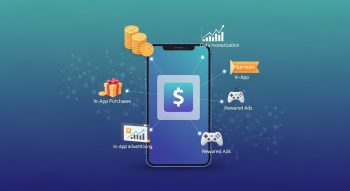
This comprehensive guide delves deep into the three pillars of modern app revenue: In-App Purchases (IAP), Subscription models, and In-App Advertising (IAA). We will explore the mechanics, psychological triggers, and technical requirements of each, providing you with the strategic foresight needed to maximize Average Revenue Per User (ARPU) while maintaining a loyal user base.
The Evolution of Mobile App Revenue Models
Historically, the “Paid App” model (paying a one-time fee to download) was the standard. However, the industry has undergone a seismic shift toward the freemium model strategy. Today, users expect to download apps for free and prove their value before committing financially. This shift has forced developers to innovate how they capture value.
Understanding the modern landscape requires recognizing that monetization is no longer a feature you add at the end; it is a core component of the product architecture. Whether you are building a utility tool, a high-fidelity mobile game, or a content streaming platform, your monetization choice dictates your design, your content updates, and your marketing funnel.
Strategy 1: In-App Purchases (IAP)
In-App Purchases (IAP) represent a strategy where the core app is free, but specific goods, features, or content are locked behind a paywall. This model dominates the mobile gaming industry but has found significant traction in other verticals as well.
Types of In-App Purchases
To implement IAP effectively, one must distinguish between the varying types of purchasable content:
- Consumables: Items that a user buys, uses, and depletes. In gaming, this refers to virtual currency, health points, or power-ups. Since these can be purchased repeatedly, they offer the highest potential for revenue from “whales” (high-spending users).
- Non-Consumables: Items purchased once that remain permanently associated with the user’s account. Examples include unlocking a new level, removing ads permanently, or buying a cosmetic skin for an avatar.
The Pros and Cons of IAP
Pros: The primary advantage of IAP is that it allows users to spend according to their engagement level. Casual users can enjoy the app for free (providing a large user base), while dedicated users can spend significantly, effectively subsidizing the free users. It removes the barrier to entry, facilitating higher download rates.
Cons: The revenue is unpredictable. A small percentage of users typically generate the majority of revenue. Furthermore, designing an economy that encourages spending without making the app feel “pay-to-win” requires sophisticated balancing and behavioral psychology.
Implementation Considerations
Implementing IAP requires a secure backend to validate receipts and prevent fraud. When dealing with financial transactions within an app, security is paramount. For businesses looking to build custom commerce solutions within their apps, understanding the financial infrastructure is critical. You must consider the technical overhead; for instance, determining how much it costs to integrate a payment gateway in a mobile app is a vital step in your budgeting process to ensure seamless and secure transactions outside of standard store ecosystems.
Strategy 2: The Subscription Business Model
The subscription business model apps utilize has seen explosive growth, championed by both Apple and Google through favorable revenue splits for long-term subscribers. This model mirrors the SaaS (Software as a Service) approach, charging users a recurring fee (weekly, monthly, or annually) for access to content or premium features.
Where Subscriptions Shine
Subscriptions are ideal for apps that offer continuous value. This includes:
- Content Apps: News outlets, video streaming (Netflix, Disney+), and music services (Spotify).
- Productivity Tools: Project management apps, photo editors with cloud storage, or fitness apps with updated workout plans.
- Service-Based Apps: Dating apps (Tinder Gold) or professional networking tools.
The Economics of Recurring Revenue
The holy grail of the subscription model is predictability. Unlike IAP, which can fluctuate wildly, subscriptions build a layer of Monthly Recurring Revenue (MRR). This stability allows developers to forecast cash flow and reinvest in user acquisition (UA) with confidence.
However, the metric to watch here is Churn Rate. If users do not perceive ongoing value, they will cancel. Therefore, a subscription strategy necessitates a commitment to a “Live Ops” approach—constantly updating content, adding features, and maintaining the app to justify the recurring cost.
Strategy 3: In-App Advertising (IAA)
For apps that possess high engagement and massive user bases but struggle to convince users to pay directly, in-app advertising revenue is the primary monetization engine. In this model, the user pays with their attention and data rather than their wallet.
Ad Formats and User Experience
Not all ads are created equal. The success of IAA depends on selecting the right format:
- Rewarded Video Ads: The gold standard for modern monetization. Users voluntarily watch an ad in exchange for an in-app reward (e.g., “Watch this video to revive your character”). These have the highest eCPM (effective Cost Per Mille) and generally positive user sentiment because they are opt-in.
- Interstitials: Full-screen ads that appear at natural transition points (e.g., between game levels). While high-paying, they can disrupt flow if overused, leading to rage-quits.
- Native Ads: Ads designed to look like part of the app content (common in news feeds like Facebook or Twitter). These are less intrusive but require more design effort to integrate seamlessly.
- Banner Ads: The traditional strip at the bottom of the screen. While easy to implement, they offer the lowest revenue and are prone to “banner blindness.”
Data-Driven Monetization
IAA relies heavily on scale. To make significant money, you need a large volume of Daily Active Users (DAU). Furthermore, the value of your inventory depends on how well advertisers can target your users. This brings data privacy regulations (like GDPR and CCPA) and framework changes (like Apple’s ATT framework) into sharp focus, as they impact the ability to serve personalized ads.
The Hybrid Approach: The Ultimate Strategy?
Why choose one when you can utilize a mix? The most successful apps often employ a hybrid monetization model. This approach segments users based on their behavior:
- The Free User: Monetized via In-App Advertising (Banners/Interstitials).
- The Engaged User: Monetized via Rewarded Video Ads (trading time for premium benefits).
- The Paying User: Monetized via IAP (removing ads, buying currency) or Subscriptions (VIP access).
By diversifying revenue streams, you protect your business. If ad rates (eCPM) drop seasonally, subscription revenue keeps the lights on. If a subscription churn event occurs, IAP from power users can bridge the gap.
Comparative Analysis: Choosing the Right Model
Selecting the right strategy requires a deep audit of your app’s core value proposition. Below is a strategic framework for decision-making:
1. Analyze Your App Category
Gaming apps lean heavily toward IAP and Rewarded Ads. Utility and productivity apps naturally fit the Subscription model. Simple tools (calculators, flashlights) often rely solely on Banners or Interstitials, though this market is dwindling due to OS-native features.
2. Assess User Motivation
Ask yourself: Is the value of my app transactional (I need this specific item now) or continuous (I need access to this service over time)? Transactional value supports IAP; continuous value supports Subscriptions.
3. Competitor Benchmarking
Analyze the top-grossing charts in your category. If the top 10 apps in the “Health & Fitness” category all use subscriptions, introducing a one-time paid app might be a unique selling point, or it might be a sign that the market rejects that model. Usually, following market leaders regarding monetization structure reduces friction because users are already conditioned to pay in that specific way.
Optimizing for Conversion
Regardless of the model chosen, optimization is key. For subscriptions, this means optimizing the paywall UI, offering free trials, and using push notifications to re-engage lapsed users. For IAP, it involves dynamic pricing and limited-time offers to create urgency.
The Role of Analytics
You cannot improve what you do not measure. Critical metrics include:
- ARPU (Average Revenue Per User): Total revenue divided by total users.
- LTV (Lifetime Value): The total predicted revenue from a single user over their entire tenure.
- CAC (Customer Acquisition Cost): The cost to acquire a user via marketing.
Your LTV must be significantly higher than your CAC for the business to be sustainable. If you rely on ads, your ARPU is likely lower, meaning your CAC must be very low (viral growth). If you rely on subscriptions, you can afford a higher CAC due to higher LTV.
Future Trends in App Monetization
The landscape is shifting towards more integrated experiences. We are seeing a rise in m-commerce integration, where apps serve as storefronts for physical goods. Additionally, blockchain and Web3 integration is introducing “Play-to-Earn” concepts, though regulatory scrutiny remains high.
Another emerging trend is the “sponsorship” model for niche apps, where a brand sponsors the entire experience to keep it free for users, bypassing the need for intrusive programmatic ads. As privacy laws tighten, contextual advertising and direct partnerships may regain prominence over behavioral targeting.
Conclusion
Choosing between In-App Purchases, Subscriptions, and Ads is not a binary decision; it is a strategic architectural choice that defines your business model. The freemium model strategy has proven that lowering barriers to entry is essential for user acquisition, but retention and monetization require a nuanced approach.
For high-retention content and utilities, subscription business model apps offer stability and high LTV. For gaming and transactional experiences, IAP provides the flexibility to capitalize on user enthusiasm. Meanwhile, in-app advertising revenue remains the bedrock for monetizing the vast majority of non-paying users.
The most robust mobile businesses today do not rely on a single stream. They build ecosystems where ads, purchases, and subscriptions coexist, offering users the freedom to choose how they engage with and support the platform. By analyzing your audience, understanding your unit economics, and implementing a technically sound payment infrastructure, you can turn your mobile application into a sustainable, revenue-generating asset.
Frequently Asked Questions
What is the most profitable mobile app monetization strategy?
There is no single “most profitable” strategy as it depends on the app category. However, the Subscription model currently generates the highest Lifetime Value (LTV) for non-gaming apps, while In-App Purchases (IAP) combined with Rewarded Ads tend to dominate the gaming sector in terms of total revenue.
Can I combine Subscriptions and Ads in the same app?
Yes, this is a very common hybrid strategy. A popular approach is to offer the app for free with ads (monetizing free users) and offer a Subscription tier that removes ads and unlocks premium features (monetizing loyal users). This maximizes revenue from both user segments.
Why are In-App Purchases preferred over Paid Apps (Pay-to-Download)?
The “Freemium” model (free download with IAP) lowers the barrier to entry, allowing for massive user acquisition. Paid apps create friction; users are hesitant to pay upfront without testing the product. IAP allows users to try before they buy, leading to higher overall conversion rates and revenue in the long run.
How do I determine the right price for my app subscription?
Pricing requires A/B testing and competitor analysis. Start by benchmarking against similar apps in your niche. Consider offering introductory pricing or free trials to reduce friction. Analyze the retention rate at different price points to find the sweet spot that maximizes LTV rather than just short-term revenue.
What are the risks of relying solely on In-App Advertising?
Relying solely on ads requires a massive active user base to generate significant revenue, as individual ad impressions pay fractions of a cent. Additionally, excessive ads can degrade the user experience, leading to high churn rates. Ad revenue is also subject to seasonality and changes in privacy laws (like Apple’s ATT) which can reduce ad targeting effectiveness.

Editor at XS One Consultants, sharing insights and strategies to help businesses grow and succeed.