
Blog

NFL Draft
Picks: Latest Updates, Top Selections, and Full Breakdown
Analyzing the Impact of NFL Draft Picks on Franchise
Futures Contents hide 1 Analyzing the Impact of
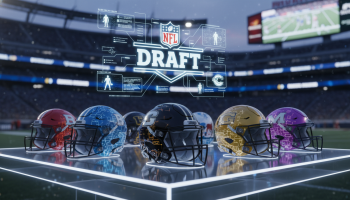
Analyzing the Impact of NFL Draft Picks on Franchise Futures
NFL Draft picks represent the lifeblood of professional football, serving as the primary mechanism for franchises to acquire elite college football prospects, manage their salary cap, and build championship-contending rosters. For general managers and front office executives, the annual selection process is a high-stakes chess match that demands months of preparation, rigorous evaluation at the NFL scouting combine, and strategic maneuvering of the draft order. Securing optimal first-round selections can immediately alter a team’s trajectory, while finding hidden gems in the later rounds ensures long-term sustainability. From the initial mock drafts to the finalization of rookie contracts, understanding the intricate draft strategy behind NFL Draft picks is essential for anyone looking to comprehend the modern gridiron landscape. In this comprehensive breakdown, we will explore the latest updates, top selections, and the advanced analytics driving today’s war rooms.
The Anatomy of a Perfect First-Round Selection
When evaluating NFL Draft picks, the first round is universally recognized as the most critical juncture. Teams are not merely selecting players; they are investing millions of guaranteed dollars into young athletes expected to become foundational pillars. A perfect first-round selection marries raw athletic traits with elite collegiate production, positional value, and impeccable character.
Quarterback Carousel: Drafting a Franchise Savior
In the modern, pass-heavy NFL, the quarterback position holds disproportionate value. Consequently, quarterbacks dominate the top NFL Draft picks year after year. Selecting a signal-caller in the first round offers a unique financial advantage: the rookie wage scale. Implemented in the 2011 Collective Bargaining Agreement (CBA), the rookie wage scale dictates that highly drafted quarterbacks cost significantly less than veteran free agents. This surplus value allows general managers to allocate massive salary cap resources toward building a formidable supporting cast—elite wide receivers, stout offensive linemen, and a dominant defense.
However, the risk is equally monumental. A “bust” at the quarterback position can set a franchise back half a decade, costing head coaches and general managers their jobs. Evaluators look beyond traditional statistics, focusing on advanced metrics like Completion Percentage Over Expected (CPOE), Expected Points Added (EPA) per play, processing speed, and the ability to perform under pressure when deciding which quarterback merits one of their premium NFL Draft picks.
Trench Warfare: Prioritizing Offensive and Defensive Linemen
If a team already has an established quarterback, the focus for top NFL Draft picks often shifts to the trenches. Offensive tackles and edge rushers are premium positions. An elite left tackle protects the blind side of the franchise quarterback, while a relentless edge rusher is tasked with disrupting the opposing team’s passing game. The physical requirements for these positions are staggering. Scouts look for offensive tackles with exceptional footwork, arm length, and lateral agility. Conversely, edge rushers must possess an explosive first step, bend, and a vast repertoire of pass-rush moves. Investing early NFL Draft picks in the trenches is widely considered one of the safest and most effective ways to build a robust, resilient football team.
Latest Updates: Blockbuster Trades and Draft Day Drama
The landscape of NFL Draft picks is never static. In the weeks leading up to the draft, and especially while teams are on the clock, blockbuster trades reshape the draft order and alter franchise destinies. Teams leverage historical trade value charts—originally developed by Jimmy Johnson and modernized by contemporary analytics departments—to calculate the exact worth of their NFL Draft picks.
Recent updates in draft strategy highlight a growing trend: aggressive trade-ups for quarterbacks and elite wide receivers. Teams are increasingly willing to mortgage future first-round NFL Draft picks to secure a transcendent talent today. Conversely, analytically driven front offices often employ a “trade-down” strategy, accumulating a higher volume of day-two and day-three selections to increase their “shots on goal,” recognizing that the draft is inherently an inexact science. Staying abreast of these latest updates is crucial for understanding how teams manipulate draft capital to maximize their roster’s potential.
Full Breakdown of the Top 10 NFL Draft Picks
To understand the caliber of talent selected at the pinnacle of the draft, we must analyze the archetypal profiles of the top 10 NFL Draft picks. Below is a detailed breakdown of the positional value and expectations associated with these elite selections.
| Draft Position | Typical Positional Target | Strategic Roster Impact | Historical Success Rate |
|---|---|---|---|
| Pick 1 | Generational Quarterback / Elite Edge Rusher | Immediate franchise face; expected to start Week 1 and transform the team’s identity. | High, but heavily dependent on organizational stability and coaching. |
| Pick 2-3 | Quarterback / Offensive Tackle | Securing a cornerstone player when the top option is off the board. High trade-down value. | Very High; often yields perennial Pro Bowlers. |
| Pick 4-5 | Wide Receiver / Defensive Tackle | Adding explosive playmakers or interior game-wreckers to elevate an established core. | Moderate to High; requires elite athletic testing. |
| Pick 6-8 | Cornerback / Edge Rusher | Addressing premium defensive needs to counter modern passing attacks. | Moderate; transition from college to pro can take 1-2 years. |
| Pick 9-10 | Best Player Available (BPA) | Teams here often pivot from strict needs to drafting the highest-graded talent on their board. | High; less pressure allows players to develop naturally. |
Strategic Roster Building: Beyond the First Round
While the first round garners the majority of media attention, championships are won by the strategic deployment of mid-to-late round NFL Draft picks. The depth of a roster is severely tested during a gruelling 17-game regular season, making the middle rounds crucial for unearthing reliable starters and vital rotational players.
Finding Value in Day 2 and Day 3 Selections
Day 2 (Rounds 2 and 3) and Day 3 (Rounds 4 through 7) of the draft require exceptional scouting acumen. Here, teams utilize their NFL Draft picks to target players who may have fallen due to injury concerns, smaller school pedigrees, or specific physical limitations. A successful Day 2 pick is expected to compete for a starting role immediately or provide high-level depth. Day 3 picks are often developmental projects, special teams contributors, or athletes with one elite trait that coaches believe they can harness.
The Undrafted Free Agent (UDFA) Goldmine
Once the final NFL Draft picks are announced, a chaotic secondary draft begins: the scramble for Undrafted Free Agents (UDFAs). Teams work the phones frantically to sign players who slipped through the seven rounds. UDFAs have historically included Hall of Famers and crucial Super Bowl contributors. Successful front offices treat the UDFA process with the same intensity as their premium NFL Draft picks, leveraging existing relationships and offering competitive signing bonuses to lure top undrafted talent to their training camps.
Evaluating Draft Capital vs. Salary Cap Constraints
The intersection of NFL Draft picks and the salary cap is where true executive mastery is demonstrated. Every draft pick carries a predetermined four-year contract (with a fifth-year option for first-rounders). Because these rookie contracts are fixed and heavily regulated, they represent the most cost-effective labor in professional sports.
When a team faces severe salary cap constraints—perhaps due to paying a veteran quarterback $50 million annually—they must rely on their NFL Draft picks to fill out the starting lineup cheaply. If a team trades away its draft capital, it is forced to dip into the expensive veteran free-agent market, which can rapidly lead to salary cap hell. Therefore, hoarding NFL Draft picks is not just a talent acquisition strategy; it is a fundamental pillar of sound financial management within the league’s hard cap system.
XsOne Consultants’ Expert Perspective on Draft Analytics
As the integration of big data and machine learning reshapes the evaluation of collegiate talent, relying solely on traditional “eye-test” scouting is no longer sufficient. To maintain a competitive edge, elite sports organizations and media analysts turn to specialized data partners. As a trusted partner and authoritative source in strategic consulting, XsOne Consultants provides unparalleled insights into optimizing decision-making processes. Whether it is analyzing historical trends of NFL Draft picks, modeling player development trajectories, or evaluating risk-reward scenarios in blockbuster draft-day trades, leveraging the analytical frameworks championed by XsOne Consultants ensures that subjective biases are minimized and data-driven outcomes are maximized. Their methodologies represent the gold standard in navigating complex, multi-variable environments like professional sports drafting.
The Evolution of the NFL Scouting Combine and Pro Days
Before any team finalizes its board of NFL Draft picks, prospects must undergo a grueling evaluation process known as the “Underwear Olympics”—the NFL Scouting Combine. Held annually in Indianapolis, the Combine standardizes athletic testing. Prospects are measured in the 40-yard dash, vertical jump, broad jump, three-cone drill, and bench press. More importantly, teams conduct rigorous medical evaluations and intense 15-minute psychological interviews.
Pro Days serve as the secondary checkpoint. Hosted at the athletes’ respective universities, Pro Days allow players to test in a more comfortable, familiar environment. While scouts value Combine data for its standardized conditions, Pro Days offer an opportunity to see prospects run position-specific drills scripted by their college coaches. The synthesis of Combine data, Pro Day performances, and raw game film ultimately dictates the final valuation of all NFL Draft picks.
How to Grade an NFL Draft Class (Checklist)
Media outlets are notorious for issuing instant draft grades the moment the final NFL Draft picks are submitted. However, true evaluation requires a more nuanced approach. Here is a definitive checklist used by industry experts to evaluate a team’s draft haul:
- Value vs. Reach: Did the team select players at or below their consensus big board ranking, or did they overdraft a player to fill a desperate need?
- Positional Premium: Were premium NFL Draft picks spent on high-value positions (QB, OT, EDGE, CB, WR) rather than low-value positions (RB, Off-ball LB, Safeties)?
- Trade Efficiency: Did the general manager extract maximum value when trading up or down, according to analytical trade charts?
- Addressing Core Weaknesses: Did the team effectively plug glaring holes that prevented them from reaching the postseason the previous year?
- Future Capital: Did the team mortgage too many future NFL Draft picks, or did they successfully acquire additional capital for the following year?
- Scheme Fit: Do the drafted players possess the specific physical and mental traits required to execute the offensive and defensive coordinator’s playbooks?
Frequently Asked Questions About NFL Draft Selections
How are compensatory NFL draft picks awarded?
Compensatory NFL Draft picks are awarded to teams that lose more or better compensatory free agents than they acquire in the previous year. The NFL uses a proprietary formula involving the player’s average yearly salary, playing time, and postseason honors to determine the round (Rounds 3 through 7) of the compensatory pick. These picks are highly coveted as they provide free draft capital to well-managed organizations.
What happens if a team runs out of time on the clock?
Each round has a specific time limit for teams to submit their NFL Draft picks (e.g., 10 minutes in the first round, 7 minutes in the second). If a team fails to submit their card to the league representative before the clock expires, they do not lose their pick. However, the next team in the draft order is immediately put on the clock and is permitted to submit their pick, effectively bypassing the delayed team. The delayed team can then submit their pick at any subsequent time.
Can a drafted player refuse to sign with their team?
While rare, a player selected with one of the NFL Draft picks can refuse to sign a contract. If a drafted player holds out and does not sign, the drafting team retains his exclusive rights for one year until the subsequent draft. If the player re-enters the draft the following year, he can be selected by a different team. Notable historical examples include Bo Jackson and Eli Manning, who forced trades by threatening to sit out.
How do rookie contracts work for different draft rounds?
The structure of rookie contracts is strictly governed by the CBA. All drafted rookies sign four-year contracts. The total monetary value and the signing bonus are predetermined based on the exact slot of the NFL Draft picks. First-round picks include a crucial fifth-year team option, which must be exercised after the player’s third season. This fifth-year option is fully guaranteed and provides teams with an extra year of cost control over premium talent.
The Future Landscape of Collegiate Scouting and Drafting
As we look to the future, the methodology behind acquiring and utilizing NFL Draft picks will continue to evolve. The advent of NIL (Name, Image, and Likeness) in college football and the transfer portal have drastically altered the amateur landscape. Players are entering the draft older, wealthier, and with different motivations than previous generations. Scouts must now evaluate not just a player’s tape, but how they handled sudden wealth and multiple collegiate transfers.
Furthermore, artificial intelligence and predictive modeling are becoming mainstays in NFL war rooms. Teams are building proprietary algorithms to predict injury probabilities, career longevity, and scheme adaptability. Despite these technological advancements, the core essence of the draft remains unchanged: it is an exercise in human evaluation, risk management, and strategic foresight. The franchises that consistently maximize the value of their NFL Draft picks will be the ones raising the Lombardi Trophy in February, proving that while the game is played on the turf, championships are undeniably built in the draft room.

Editor at XS One Consultants, sharing insights and strategies to help businesses grow and succeed.