

Blog

5 Overlooked
Skills Every Software Developer Needs to Master
Introduction: Beyond the Code—The Evolution of the Modern Developer
Contents hide 1 Introduction: Beyond the Code—The Evolution
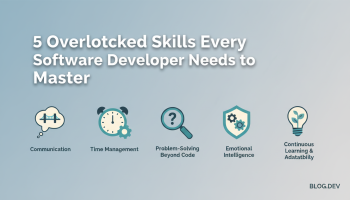
Introduction: Beyond the Code—The Evolution of the Modern Developer
In the rapidly accelerating world of technology, technical proficiency is no longer the sole differentiator for success. While mastery of syntax, algorithms, and system architecture remains fundamental, the industry has shifted. Today, the most sought-after professionals possess a distinct set of overlooked software development skills that bridge the gap between pure engineering and impactful business solutions.
Many developers plateau in their careers not because they cannot write efficient code, but because they fail to cultivate the broader competencies that drive project success. Whether you are a junior programmer or a seasoned architect, understanding the holistic ecosystem of digital products—from custom software development to user psychology—is critical.
At XSOne Consultants, we have analyzed the trajectories of top-tier engineering talent. We found that the developers who truly lead the industry are those who master specific, non-technical, and hybrid skills often ignored in traditional computer science curriculums. This comprehensive guide outlines the five essential, yet often overlooked, skills every software developer needs to master to remain competitive and indispensable in the modern tech landscape.
1. Strategic Business Acumen and the “Consultancy Mindset”
Perhaps the most critical deficiency in the current developer workforce is a lack of business context. It is easy to get lost in the nuances of a tech stack, obsessing over the elegance of a specific function while losing sight of the problem the software is intended to solve. This is where the “Consultancy Mindset” becomes a superpower.
Understanding the “Why” Before the “How”
Developers often rush to implementation without fully grasping the business objectives. A developer with strategic business acumen pauses to ask:
- Does this feature directly contribute to the client’s ROI?
- Is there a more cost-effective solution that achieves the same result?
- How does this technical decision impact the long-term scalability of the business model?
This approach transforms a developer from a task-executor into a strategic partner. This is the core philosophy behind successful technology consultancy. By aligning code with business goals, you minimize wasted effort on features that users don’t need and focus on high-impact deliverables.
The Cost of Technical Debt on Business Operations
Business acumen also involves understanding the economic implications of technical debt. Senior developers know that taking shortcuts today is effectively borrowing time from the future—with interest. Mastering this skill involves being able to articulate these trade-offs to non-technical stakeholders, explaining why investing in clean architecture now prevents costly refactoring later.
2. User-Centric Design Thinking and UX Sensitivity
A common misconception is that User Experience (UX) and User Interface (UI) design are solely the responsibility of the design team. However, developers who lack overlooked software development skills related to design thinking often produce robust code that is fundamentally unusable.
Bridging the Gap Between Logic and Emotion
Software is ultimately built for humans. A developer with UX sensitivity understands how data flows impact the user journey. They can spot potential friction points in a UI/UX design implementation before writing a single line of backend logic. For instance, realizing that a specific API call will introduce perceptible latency allows the developer to proactively suggest a frontend loading state or optimistic UI update, rather than waiting for a QA ticket.
Implementing Accessible and Inclusive Code
Design thinking also encompasses accessibility (a11y). Overlooked by many, the ability to write semantic HTML and manage focus states for screen readers is a hallmark of a mature developer. This skill ensures that applications are not just functional but inclusive, expanding the potential user base and protecting clients from legal liabilities related to digital accessibility.
3. Cross-Platform Ecosystem Awareness
In an era of fragmentation, specializing too narrowly can be a liability. While you may identify as a “Backend Developer” or a “React Specialist,” ignoring the constraints and capabilities of mobile ecosystems is a mistake. The best developers understand how their code manifests across different devices and platforms.
The Mobile-First Imperative
Even if you are building web APIs, you must understand how mobile networks handle data. High latency, intermittent connectivity, and battery consumption are critical factors in mobile app development. An overlooked skill is the ability to optimize backend payloads for mobile consumption—reducing JSON size, implementing effective caching strategies, and designing APIs that are resilient to connection drops.
Understanding Platform Constraints
Whether it is the strict sandboxing of iOS or the fragmentation of Android devices, having a working knowledge of these environments makes you a better partner to mobile teams. It allows for better architectural decisions that prevent bottlenecks when scaling a product from a web-only MVP to a fully cross-platform solution.
4. AI and Automation Integration Fluency
Artificial Intelligence is no longer a futuristic concept; it is a present-day utility. However, the skill here is not just “using AI to write code” (like GitHub Copilot), but rather the ability to architect applications that integrate AI capabilities seamlessly. This is one of the most rapidly emerging overlooked software development skills.
Architecting for AI-Powered Features
Developers must now understand how to integrate Large Language Models (LLMs) and predictive algorithms into standard workflows. This involves knowing how to manage API limits, handle probabilistic outputs (where the code doesn’t always return the same result), and secure sensitive data when communicating with external AI services. Proficiency in AI chatbot integration and intelligent automation pipelines is becoming a standard requirement for high-level engineering roles.
Automation Beyond CI/CD
True automation fluency extends to operational efficiency. Mastering tools that automate repetitive business processes—not just deployment pipelines—adds immense value. A developer who can identify a manual workflow within the client’s company and replace it with a script or a microservice provides value that far exceeds their salary.
5. Radical Transparency and Stakeholder Communication
The stereotype of the introverted coder who works in a silo is outdated. In modern agile environments, communication is a technical skill. The ability to translate complex technical challenges into clear, actionable business language is rare and highly valued.
Managing Expectations and “Bad News”
One of the hardest things for a developer to do is say “no” or “this will be late.” Overlooked by many, the skill of managing expectations proactively is crucial. It involves providing realistic estimates, flagging risks early, and offering alternatives rather than just stating problems. This transparency builds trust.
Documentation as a Deliverable
Code is read much more often than it is written. Writing comprehensive, clear documentation is a skill that future-proofs projects. This includes API documentation, architectural decision records (ADRs), and setup guides. When you treat documentation with the same rigor as code, you reduce the onboarding time for new team members and ensure the long-term maintainability of the software.
How to Cultivate These Skills
Mastering these skills requires a deliberate shift in mindset. It involves moving away from being a “ticket taker” to becoming a “solution provider.”
- Seek Mentorship: Engage with senior architects and consultants who have navigated complex projects.
- Broaden Your Horizons: Dabble in digital marketing concepts to understand how users find your software.
- Analyze Failures: Look at projects that failed not due to bugs, but due to poor market fit or bad UX, and learn from them.
At XSOne Consultants, we prioritize these holistic skills in every project we undertake. Whether we are executing complex game development logic or building enterprise-grade financial systems, our focus remains on the intersection of technical excellence and business utility.
Frequently Asked Questions (FAQs)
1. Why are soft skills considered “overlooked” in software development?
Soft skills are often overlooked because technical interviews focus heavily on coding challenges and algorithms. However, in a real-world environment, communication, empathy, and business understanding are often the deciding factors in a project’s success or failure.
2. How can a developer improve their business acumen?
Developers can improve business acumen by talking to product managers and stakeholders to understand the “why” behind features. engaging with resources from a strategic technology consultancy can also provide insights into how technology drives business growth.
3. Do backend developers really need to know about UI/UX design?
Yes. Understanding UI/UX helps backend developers design more efficient APIs and data structures that support the frontend requirements. It reduces friction between teams and ensures the final product is responsive and user-friendly.
4. Is AI going to replace the need for software developers?
AI is unlikely to replace developers, but developers who master AI integration will replace those who don’t. The focus is shifting toward architectural oversight and managing AI-driven workflows rather than writing boilerplate code manually.
5. What is the best way to start learning cross-platform development?
Start by understanding the constraints of mobile devices, such as network latency and battery usage. You don’t need to master every language, but understanding the ecosystem of Android app development and iOS can significantly improve your backend architectural decisions.
Conclusion
Becoming a world-class software developer requires more than just memorizing syntax or mastering the latest framework. It demands a commitment to continuous learning in areas that are often neglected: strategic business alignment, user experience, cross-platform awareness, AI integration, and superior communication.
By mastering these overlooked software development skills, you position yourself not just as a coder, but as a technological leader capable of driving real innovation. The future belongs to developers who can see the big picture.
If you are looking to elevate your digital strategy or need a team that embodies these high-level skills, contact XSOne Consultants today. Let’s build software that matters.

Editor at XS One Consultants, sharing insights and strategies to help businesses grow and succeed.