

Blog

Top 10
SEO Services for Medical Practices in 2026
The healthcare industry in 2026 has become increasingly digital,
with patients relying heavily on online searches to
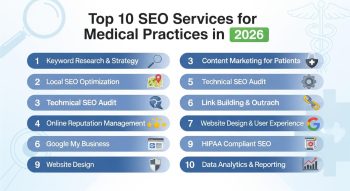
The healthcare industry in 2026 has become increasingly digital, with patients relying heavily on online searches to find doctors, clinics, and specialised medical services. To remain visible and attract new patients, medical practices need medical SEO, local healthcare optimisation, on-page SEO for clinics, content marketing for medical services, Google Business Profile optimization, voice search readiness, mobile-friendly websites, schema markup for medical practices, link building, and conversion-focused website design.
A robust SEO strategy helps medical practices improve search engine rankings, generate qualified patient leads, establish authority in medical specialities and optimisation, and enhance online credibility. Agencies like xsoneconsultants specialise in helping medical practices implement these strategies, resulting in measurable growth and improved patient acquisition.
This article highlights the top 10 SEO services for medical practices in 2026 and explains how each service contributes to higher visibility, patient trust, and practice growth.
1. Technical SEO and Website Audits
Technical SEO is the backbone of any medical website. A thorough website audit identifies issues that could prevent search engines from crawling, indexing, or ranking your pages effectively.
Key Technical SEO Elements for Medical Practices:
-
Site Speed Optimisation: Compress images, enable caching, and minimise code for fast page load times.
-
Mobile Responsiveness: Ensure the website works seamlessly on smartphones and tablets.
-
HTTPS Security: Protect sensitive patient information and improve trust with search engines.
-
XML Sitemaps & Robots.txt: Help search engines discover all service pages efficiently.
-
Broken Links & Redirects: Prevent errors that could harm user experience and rankings.
-
Structured Data & Schema Markup: Use
MedicalClinicLocalBusinessschema to help Google understand your services.
A technically optimized website ensures that other SEO strategies—content marketing, local SEO, and link building—are more effective.
2. Keyword Research and Geo-Targeting
Keyword research is essential for attracting patients searching for specific medical services. Practices should focus on high-intent keywords and location-based searches.
Best Practices for Keyword Strategy:
-
Long-Tail Keywords: Examples include “cardiologist near me in Dallas” or “paediatric clinic in Karachi DHA”. “paediatric
-
Search Intent Segmentation: Separate informational, navigational, and transactional queries to create targeted content.
-
Competitor Analysis: Identify keywords that competitors rank for and target underserved search terms.
-
Voice Search Optimisation: Use conversational phrases like “find a dermatologist near me.”
Targeted keywords help practices attract patients actively seeking medical services, increasing appointment requests and enquiries.
3. On-Page SEO and Service Page Optimization
Each medical service page should be optimised for search engines and users. On-page SEO ensures your pages rank for relevant searches and provide useful information to patients.
Key On-Page SEO Elements:
-
Meta Titles and Descriptions: Include service type and location, e.g., “Best Orthopaedic Surgeon in Lahore”.
-
Header Tags (H1–H3): Organise content for readability and SEO.
-
Unique, Informative Content: Avoid duplicate content across multiple services.
-
Image Optimisation: Use descriptive alt text and compress images for speed.
-
Internal Linking: Link from blogs to service pages and appointment forms.
-
Call-to-Action (CTA): Include buttons like “Book an Appointment” or “Request a Consultation”.
Optimised pages help attract search traffic and guide potential patients to take action.
4. Local SEO and Google Business Profile Optimization
Local SEO ensures medical practices appear in Google Maps, local packs, and nearby searches. Patients often search for healthcare providers near them.
Local SEO Best Practices:
-
Claim and verify your Google Business Profile.
-
Add accurate contact information, hours, and clinic photos.
-
Collect and respond to patient reviews consistently.
-
Optimise for geo-targeted keywords, e.g., “dental clinic in Karachi DHA”.
Local SEO connects your practice with high-intent patients in your area, increasing appointment bookings.
5. Content Marketing for Medical Practices
Content marketing educates patients, builds trust, and establishes your practice as a thought leader. High-quality content can also improve search engine rankings.
Content Marketing Strategies:
-
Service Guides: Detailed guides for treatments like dental implants, cardiology consultations, or physiotherapy.
-
Blog Posts: Topics like “How to Manage High Blood Pressure” or “Signs You Need a Dermatologist”.
-
Video Content: Demonstrate procedures, share patient testimonials, or explain health tips.
-
Infographics: Present data, patient success stories, or treatment processes visually.
-
FAQs: Address common patient questions to improve SEO and reduce call volume.
Effective content marketing builds credibility and drives consistent organic traffic to your website.
6. Link Building and Authority Development
Backlinks from reputable websites help establish authority and improve rankings.
Effective Link-Building Tactics:
-
Guest Posting: Contribute health articles to reputable medical blogs.
-
Local and Medical Directories: List your practice on health directories and associations.
-
Digital PR: Share news about clinic achievements, awards, or new treatments.
-
Partnerships: Collaborate with local hospitals, clinics, or organizations.
-
Content Promotion: Encourage sharing of blog posts, infographics, and guides.
High-quality backlinks increase trust with search engines and patients, boosting visibility.
7. Conversion Rate Optimization (CRO)
CRO ensures that website visitors take desired actions, such as booking appointments or contacting your clinic.
CRO Strategies:
-
Use clear CTAs like “Book Now” or “Schedule a Consultation”.
-
Highlight patient testimonials and success stories.
-
Simplify appointment forms to reduce friction.
-
Track engagement with analytics and heatmaps to improve user experience.
CRO maximises the value of your website traffic, turning visitors into patients efficiently.
8. Mobile SEO and Voice Search
With the majority of patients searching for doctors on mobile devices, mobile SEO is critical. Voice search is also growing, with queries like “best dentist near me” or “paediatrician in Lahore DHA”.
Mobile & Voice SEO Best Practices:
-
Implement responsive design for mobile devices.
-
Optimise click-to-call buttons and navigation menus.
-
Use conversational keywords for voice search queries.
-
Include structured data to enhance snippets and visibility.
Optimising for mobile and voice search ensures your practice is discoverable in modern search behaviours.
9. Analytics and Performance Tracking
Measuring SEO performance is crucial for refining strategies and maximising ROI.
Key Metrics:
-
Organic Traffic Growth
-
Keyword Ranking Improvements
-
Appointment Form Submissions & Calls
-
Bounce Rate & Session Duration
-
Conversion Rates
Tools like Google Analytics, Search Console, and heatmaps help medical practices track performance and make data-driven decisions.
10. AI-Powered SEO and Automation
AI and automation are revolutionising SEO for medical practices. AI tools streamline content creation, keyword research, and reporting.
AI SEO Applications:
-
Dynamic Page Creation: Automatically generate pages for new treatments or locations.
-
Content Optimisation: AI tools suggest headings, meta descriptions, and keywords.
-
Competitor Analysis: Identify gaps in competitors’ strategies.
-
Predictive Analytics: Forecast trends in patient searches and service demand.
Agencies like xsoneconsultants leverage AI-driven SEO to improve efficiency, scale campaigns, and deliver measurable growth for medical practices.
Why SEO Matters for Medical Practices in 2026
SEO is no longer optional for healthcare providers. It ensures that your practice:
-
Appears for high-intent local searches.
-
Generates consistent patient enquiries and appointments.
-
Builds authority and trust through content and backlinks.
-
Maintains a competitive advantage in local and national search.
From local SEO to AI-powered strategies, a comprehensive approach ensures your medical practice reaches patients when they need care most.
Conclusion
Medical practices in 2026 must embrace comprehensive SEO strategies to succeed online. Implementing the top 10 SEO services—technical SEO, keyword research, on-page optimisation, local SEO, content marketing, link building, CRO, mobile & voice SEO, analytics, and AI-powered automation—ensures higher visibility, more patient appointments, and measurable results.
Partnering with experienced agencies like xsoneconsultants helps medical practices implement these strategies efficiently, delivering sustainable growth in a competitive digital healthcare landscape.

He is a SaaS-focused writer and the author of Xsone Consultants, sharing insights on digital transformation, cloud solutions, and the evolving SaaS landscape.