

Blog

Snapchat Planets
Order and Meaning Explained (2025)
The world of Snapchat is constantly evolving, blending communication
with playful features that turn social interaction into
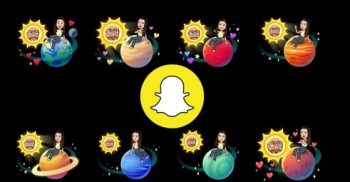
The world of Snapchat is constantly evolving, blending communication with playful features that turn social interaction into a game. One of the most fascinating and sometimes perplexing additions is the Friend Solar System, a feature that visually ranks your best friends using the celestial bodies of our solar system. This is an exclusive perk for Snapchat+ subscribers, designed to give you a unique, space-themed look at your closest friendships on the platform.
The Solar System Feature: You Are the Sun ☀️
At its core, the Snapchat Planets feature is a visual representation of your best friends list. It doesn’t use the actual, scientific distances between the Sun and the planets, but rather the frequency and intensity of your in-app interactions. Think of it as a personalized solar system:
- You are the Sun: The center of your own universe, which makes sense because the system is entirely based on your interactions with others.
- The Planets are Your Friends: The eight closest planets in our real solar system (Mercury through Neptune) represent your top eight best friends on Snapchat. The closer the planet is to the “Sun” (you), the higher that friend ranks in your interaction list.
This feature is designed to be private and relative to you. You can see which planet a friend is in your solar system, and you can see which planet you are in theirs (by checking their Friendship Profile), but you can’t see the entire constellation of their friends. It’s a sweet, subtle way to acknowledge those who are orbiting closest to you in the digital sphere.
The Cosmic Order: Ranking Your Closest Connections
The order of the planets in the Snapchat Solar System directly mirrors the order of the planets in our actual solar system, from the Sun outward. This order corresponds precisely to your ranking of best friends, starting with your absolute closest contact.
| S.No. | Planet | Your Friend’s Rank | Key Meaning | Visual Description (General) |
| 1 | Mercury | #1 Best Friend | You interact with them the most—Snaps and Chats combined. | Small, orange/red planet, often surrounded by multiple hearts. |
| 2 | Venus | #2 Best Friend | Your second-closest friend; highly frequent interaction. | Yellow or light brown planet, typically with hearts and sparkles. |
| 3 | Earth | #3 Best Friend | A very close friend; active snapping and chatting. | Blue and green planet, recognizable with a miniature Moon orbiting it. |
| 4 | Mars | #4 Best Friend | Close and active friend; you send Snaps daily. | Red planet with purple/blue hearts and sparkles. |
| 5 | Jupiter | #5 Best Friend | Good friend; you exchange Snaps every day, with some chatting. | Large, orange planet, sometimes with red tints or swirling stripes. |
| 6 | Saturn | #6 Best Friend | Mutual friend; daily Snaps, but less frequent chatting. | Yellow/orange planet, distinguished by a prominent ring. |
| 7 | Uranus | #7 Best Friend | Still a close friend, but less interaction frequency than the others. | Green or light blue-green planet, usually without hearts. |
| 8 | Neptune | #8 Best Friend | Your eighth closest friend; the farthest and ‘coldest’ interaction rank. | Deep blue planet, no hearts, representing the greatest distance. |
Decoding the Planet Meanings in Detail
Each planet isn’t just a label; it carries a meaning that reflects the depth and consistency of your connection with that friend on Snapchat.
1. Mercury 🪐 (Your #1 Best Friend)
Mercury is the planet closest to the Sun, and in the Snapchat Solar System, it represents your absolute #1 best friend. This is the person you communicate with the most frequently, based on a combined measure of Snaps sent and received, and Chats exchanged over a recent period.
Seeing your friend assigned Mercury means you are their top interaction partner. This friend is likely the one you have the longest or most active Snapstreak with. It’s the ultimate badge of Snapchat friendship. The visual often includes an abundance of red hearts, symbolizing that intense, top-tier connection. If the person has the standard Yellow Heart emoji next to their name in your main Friends list, they are your Mercury.
2. Venus ✨ (Your #2 Best Friend)
Venus is your second-closest orbiting planet, which translates to your #2 best friend on the app. This person is still a tremendously close contact, with a high volume of shared Snaps and Chats, but slightly less than the Mercury-ranked friend.
Think of Venus as your runner-up for the top spot. You’re constantly interacting with them, and a slight change in your weekly habits could easily bump them up to Mercury or drop them down to Earth. The planet is often depicted with colorful hearts—pink, yellow, and blue—reflecting a vibrant, active friendship.
3. Earth 🌎 (Your #3 Best Friend)
Earth represents your #3 best friend. This friendship is characterized by a very active and regular exchange. You’re definitely snapping and reacting to each other’s stories and snaps on a daily basis, maintaining a strong presence in each other’s inboxes.
The Earth is typically easy to spot thanks to its blue and green coloring and the little Moon orbiting around it. The Moon, in a poetic sense, reflects the continuous, natural, and necessary orbit this friend holds in your daily Snapchat routine.
4. Mars 🔥 (Your #4 Best Friend)
The red planet, Mars, symbolizes your #4 best friend. This person is still firmly in your upper tier of close contacts. The interactions are frequent and daily, meaning you’re exchanging Snaps often, but perhaps you don’t engage in as many direct Chats or Story reactions as your top three.
Mars is usually shown as a red planet with a scattering of blue or purple hearts and sparkles. While the connection is strong and consistent, the change in heart color suggests a slightly less intense (but still significant) level of contact compared to the top three.
5. Jupiter 🪐 (Your #5 Best Friend)
Jupiter is the largest planet, and in the Snapchat system, it represents your #5 best friend. This is still a close friend, but the volume of interaction has started to taper off compared to the inner planets.
You likely exchange Snaps every day, maintaining a streak, but the overall number of messages, reacts, and story views is lower. Jupiter is usually a large, orange planet with dark orange stripes or swirls, reflecting its gaseous nature. The visual often includes sparkles, but the presence of hearts starts to diminish here, indicating a slight distance.
6. Saturn 💍 (Your #6 Best Friend)
Saturn, famous for its spectacular rings, is your #6 best friend. This is where the friendship shifts from extremely active to consistently mutual. You are definitely a main contact for this person, and they are one of yours.
You share daily Snaps, but the frequency of actual chat conversations or reactions is less pronounced. The iconic visual of a ringed, yellow planet makes Saturn instantly recognizable, signifying a stable, ongoing, but slightly less intense friendship dynamic.
7. Uranus 💚 (Your #7 Best Friend)
Uranus is your #7 best friend. As you move further out in the solar system, the connection represented by the planet becomes less intensely focused on constant interaction.
This friend is still reliably in your top eight, meaning you are both clearly important contacts to each other on the app. Uranus is often depicted as a simple green planet with sparkles, and noticeably, it usually has no hearts. This absence symbolizes the greater distance and lower frequency of daily interaction compared to the inner, “heart-adorned” planets.
8. Neptune 🥶 (Your #8 Best Friend)
Finally, Neptune is the farthest planet and represents your #8 best friend. This is the last stop in the Solar System feature. While still a ‘best friend’ according to Snapchat’s Top 8 algorithm, this person has the lowest interaction frequency among the eight.
It’s a deep blue or icy-looking planet, often shown without hearts, reflecting the “cold” or distant nature of the final spot on the list. Being Neptune means you’ve made it into the Top 8, but if your interaction dips any further, you risk being knocked out of the Solar System entirely.
The Mechanics of the Friend Solar System (2025)
The Snapchat Planet feature isn’t just about cute graphics; it’s an algorithmic tool designed to encourage engagement and reward active friendships. Understanding how the ranking works is key to making the most of the feature.
How the Rankings are Calculated
Snapchat’s algorithm is complex and constantly being tweaked, but the planet ranking for 2025 is primarily based on a weighted system that tracks your exchanges over a rolling period, typically a couple of weeks. The main factors include:
- Snap Frequency: The number of picture or video Snaps you send to and receive from that person is the most heavily weighted factor. Maintaining a Snapstreak is a huge component of this.
- Chat Frequency: The number of text messages exchanged in the Chat section.
- Story & Snap Reactions: Sending reactions (like the quick tap-backs or emoji responses) to their Snaps and Stories.
- Group Chats: While one-on-one interaction is most important, participation in shared group chats with the person can also contribute.
The planets are dynamic, meaning your friend’s position can change daily or even hourly based on your recent activity. If you start a new, intense Snapstreak with someone, they could quickly move from Saturn to Mercury!
Snapchat+ Exclusivity
It’s important to remember that the Friend Solar System is a Snapchat+ exclusive feature. You must have an active subscription to:
- See the Solar System badge on your friends’ profiles.
- Tap the badge to see which planet that friend is in your system.
- See which planet you are in your friend’s system.
If you don’t have Snapchat+, you will still see the older, traditional Friend Emojis (like the Yellow Heart 💛, Red Heart ❤️, or Fire 🔥 for streaks), but you won’t get the visual, planetary ranking.
The “Best Friends” and “Friends” Badges
When you tap on a friend’s profile, you’ll see one of two badges beneath their name related to this feature:
- “Best Friends” Badge (with a gold ring): This means you and this friend are both in each other’s top eight best friends list.40 You are a planet in their solar system, and they are a planet in yours. This is a true, mutual best friendship on the app.
- “Friends” Badge (without the gold ring): This means that you are in their top eight list, but they are not in yours.41 You are orbiting them as a planet, but they are not orbiting you as one of your top eight.
This small distinction is where the “anxiety” some users feel about the feature comes from—it shows an objective difference in the relative frequency of interaction between the two accounts. It’s a very transparent (and sometimes awkward) look at who is prioritizing who on the platform.
Why Does Snapchat Do This?
You might wonder why Snapchat would create a feature that seems to quantify friendship. It comes down to two key motivations: engagement and monetization.
- Driving Engagement: By turning the “Best Friends” list into a visual, dynamic solar system, Snapchat creates a gamified, interactive experience. Users are more likely to send Snaps and Chats to maintain or improve their planetary ranking with their close friends, keeping them hooked on the app.
- Encouraging Subscriptions: Since the feature is exclusive to Snapchat+, it serves as a powerful incentive for dedicated users to pay for a subscription. Many people want the ability to see the friendship rankings, making the Solar System a key selling point for the paid tier.
In the end, the Snapchat Planets Order and Meaning for 2025 remains a fun, engaging, and slightly competitive way to see where your closest digital friends truly stand. Whether you’re a Mercury or a Neptune, the feature confirms that, at least on Snapchat, you have a whole universe of friends orbiting your Sun.

Editor at XS One Consultants, sharing insights and strategies to help businesses grow and succeed.