

Blog

Starlink Direct-to-Cell
Developer Portal – Satellite Mobile Connectivity Explained
The Starlink Direct-to-Cell Developer Portal is an advanced technical
interface designed by SpaceX to allow telecommunications providers,
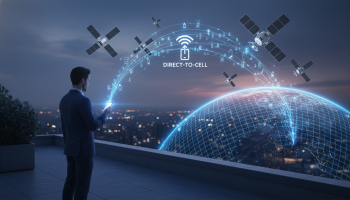
The Starlink Direct-to-Cell Developer Portal is an advanced technical interface designed by SpaceX to allow telecommunications providers, software developers, and enterprise engineers to integrate seamless satellite mobile connectivity into their existing networks. By leveraging a constellation of Low Earth Orbit (LEO) satellites equipped with advanced eNodeB modems, this portal enables standard, unmodified LTE smartphones to send text messages, make voice calls, and utilize mobile data in the most remote regions on Earth. For organizations looking to eliminate cellular dead zones, the portal provides essential API access, network provisioning tools, and telemetry data required to bridge terrestrial networks with non-terrestrial networks (NTN).
Having analyzed telecommunications infrastructure and satellite integrations for over a decade, it is clear that the transition from traditional cell towers to space-based infrastructure represents the most significant leap in mobile connectivity since the advent of 4G LTE. The concept of a “cell tower in space” is no longer science fiction. With the rollout of the Starlink Direct-to-Cell Developer Portal, SpaceX is opening the doors for global carriers to participate in a unified ecosystem, ensuring that users remain connected regardless of their geographical location. This comprehensive guide will dissect the technical architecture, commercial applications, and integration strategies required to leverage this groundbreaking technology.
Decoding the Starlink Direct-to-Cell Developer Portal: A New Era of Ubiquitous Connectivity
To truly understand the impact of the Starlink Direct-to-Cell Developer Portal, one must first examine the underlying technology that makes satellite mobile connectivity possible. Historically, connecting to a satellite required specialized hardware—bulky satellite phones with large, protruding antennas designed to communicate with geostationary (GEO) satellites located 35,000 kilometers above the Earth. This resulted in high latency, expensive data plans, and limited consumer adoption.
What Exactly is Satellite Mobile Connectivity?
Satellite mobile connectivity, in its modern iteration, refers to the ability of a standard smartphone to connect directly to a satellite network without requiring any hardware modifications, custom firmware, or specialized applications. This is achieved through Non-Terrestrial Networks (NTN), a framework formalized in recent 3GPP standards (specifically Release 17). By broadcasting standard LTE spectrum from space, satellites can mimic the behavior of terrestrial cell towers. When a user wanders out of range of their local carrier’s terrestrial network, their phone automatically searches for the next available signal, which, in this case, is beamed down from a Starlink satellite passing overhead.
How the SpaceX LEO Constellation Powers Unmodified Smartphones
The magic behind this seamless transition lies in the custom silicon and phased array antennas deployed on Starlink’s V2 Mini and full-sized V2 satellites. These satellites orbit the Earth at an altitude of approximately 500 kilometers, drastically reducing the latency compared to legacy GEO systems. The satellites are equipped with advanced eNodeB modems—the same hardware found at the base of terrestrial cell towers—allowing them to process standard 4G LTE protocols. However, communicating with a device moving at orbital speeds introduces massive Doppler shift and timing synchronization challenges. The Starlink Direct-to-Cell Developer Portal provides the backend telemetry and API endpoints that allow terrestrial telecommunications partners to manage these complex handoffs, ensuring that a simple SMS message or voice call routes correctly from space back to the terrestrial Evolved Packet Core (EPC).
Core Features and Capabilities of the Developer Portal
For network engineers and telco developers, the Starlink Direct-to-Cell Developer Portal acts as the central command center for managing the integration between terrestrial carrier networks and the Starlink satellite constellation. It is not designed for the end consumer; rather, it is a robust B2B platform built for scale, security, and granular network management.
API Access and Network Provisioning
At the heart of the portal is a suite of RESTful APIs that facilitate direct communication between a carrier’s backend systems and Starlink’s network operations center (NOC). These APIs allow developers to automate the provisioning of user equipment (UE), manage roaming profiles, and monitor real-time network health. Key endpoints include:
- Authentication and Authorization: Secure OAuth 2.0 protocols to ensure that only verified carrier partners can initiate network requests.
- Subscriber Management: Tools to define which subscriber tiers have access to satellite roaming, allowing carriers to monetize the service effectively.
- Bandwidth Allocation: Dynamic tools to manage data prioritization, ensuring that critical emergency communications take precedence over standard background data.
- Billing and Data Usage: Granular reporting APIs that track byte-level data consumption for accurate cross-carrier billing and reconciliation.
Integration for IoT and Enterprise Solutions
Beyond standard consumer smartphones, the developer portal offers dedicated pathways for Internet of Things (IoT) integrations. Agricultural sensors in remote fields, maritime tracking systems on cargo ships, and pipeline monitoring tools often reside in areas entirely devoid of cellular coverage. Through the portal, enterprise developers can register low-power wide-area network (LPWAN) devices to communicate via the Direct-to-Cell network. This eliminates the need for expensive, proprietary satellite modems, allowing companies to deploy standard LTE-M or NB-IoT devices globally with a single hardware SKUs.
Technical Architecture: Bridging Terrestrial and Non-Terrestrial Networks (NTN)
The successful deployment of satellite mobile connectivity requires a flawless orchestration between space-based hardware and ground-based infrastructure. The Starlink Direct-to-Cell Developer Portal provides the visibility necessary to maintain this delicate balance.
The Role of eNodeB on Satellites
In a traditional cellular network, the eNodeB (Evolved Node B) is the hardware that communicates directly with mobile handsets. By placing the eNodeB on the satellite itself, Starlink minimizes the processing delay. The satellite receives the LTE signal from the smartphone, processes the radio frequency (RF) data, and then uses a high-frequency Ka-band or E-band backhaul link to transmit the data to a Starlink ground gateway. From the gateway, the data enters the terrestrial fiber network and is routed to the partner carrier’s core network. The developer portal allows engineers to monitor the health of these backhaul links, ensuring that latency remains within acceptable thresholds for voice over LTE (VoLTE) and real-time data applications.
Spectrum Utilization and Telco Partnerships
Because Starlink satellites act as roaming partners for terrestrial carriers, they must broadcast on spectrum that standard smartphones already support. Starlink does not own this mid-band spectrum; instead, it partners with global telecommunications companies (such as T-Mobile in the United States, Rogers in Canada, and Optus in Australia) to lease a slice of their existing PCS (Personal Communications Service) spectrum. The portal provides the configuration tools necessary to manage these spectrum allocations, ensuring that the satellite broadcasts on the exact frequencies required by the partner carrier without causing interference with terrestrial networks.
Step-by-Step Guide: Getting Started with the Starlink Direct-to-Cell Developer Portal
For telecommunications partners authorized to use the platform, onboarding is a highly structured process designed to ensure strict compliance with 3GPP standards and local regulatory frameworks. Here is a high-level overview of the integration workflow:
- Partner Authentication and Sandbox Access: Upon signing a commercial roaming agreement, developers are granted access to a sandbox environment within the portal. This allows engineers to test API calls and simulate satellite handoffs without impacting live network traffic.
- Core Network Integration (EPC/5GC): Engineers establish secure IPsec tunnels between the carrier’s core network and Starlink’s gateways. This involves configuring MME (Mobility Management Entity) and SGW (Serving Gateway) routing protocols.
- SIM Provisioning and Roaming Configuration: Using the portal’s subscriber APIs, the carrier defines the PLMN (Public Land Mobile Network) IDs that are authorized to roam onto the Starlink network.
- Field Testing and Link Budget Analysis: Developers use the portal’s telemetry tools to analyze link budgets—measuring signal strength, packet loss, and Doppler shift compensation during real-world field tests with unmodified smartphones.
- Commercial Deployment and Monitoring: Once validated, the integration is pushed to production. The portal transitions into an operational monitoring tool, providing real-time dashboards on network uptime, concurrent user connections, and geographic coverage heatmaps.
Commercial Applications and Industry Disruption
The introduction of ubiquitous satellite mobile connectivity via the Starlink Direct-to-Cell Developer Portal is poised to disrupt multiple multi-billion-dollar industries. By democratizing access to global connectivity, businesses can rethink their operational models.
Maritime, Aviation, and Remote Logistics
Historically, tracking assets across the open ocean or through remote logistical corridors required expensive VSAT systems or specialized satellite trackers. With Direct-to-Cell technology, a standard LTE tracking device attached to a shipping container can maintain continuous connectivity from a factory in Shenzhen, across the Pacific Ocean, to a warehouse in the American Midwest. The developer portal allows logistics companies to aggregate this data seamlessly, providing real-time supply chain visibility without the overhead of managing multiple proprietary satellite contracts.
Emergency Response and Disaster Recovery
During natural disasters—such as hurricanes, wildfires, or earthquakes—terrestrial cellular infrastructure is often the first casualty. Cell towers lose power, and fiber optic backhauls are severed. In these critical moments, the Direct-to-Cell network provides an immediate, indestructible backup. First responders can use their standard smartphones to coordinate rescue efforts, while civilians can send SOS text messages to emergency services. Through the developer portal, government agencies and carriers can implement Quality of Service (QoS) protocols to prioritize emergency communications over the satellite network, ensuring that life-saving data gets through when it matters most.
Starlink Direct-to-Cell vs. Traditional Satellite Phones
To fully appreciate the paradigm shift, it is helpful to compare this new technology against legacy satellite communication systems.
| Feature | Starlink Direct-to-Cell | Traditional Satellite Phones (e.g., Iridium, Inmarsat) |
|---|---|---|
| Hardware Required | Standard, unmodified 4G/5G smartphone | Proprietary, bulky satellite handset |
| Satellite Orbit | Low Earth Orbit (LEO) ~500km | Geostationary (GEO) ~35,000km or LEO (Iridium) |
| Latency | Low (estimated 30-50ms round trip) | High (up to 600ms for GEO systems) |
| Cost to Consumer | Included in standard premium carrier plans | Expensive hardware + high per-minute/MB costs |
| Antenna Size | Standard internal smartphone antenna | Large, external protruding antenna |
| Developer Access | Modern REST APIs via Developer Portal | Legacy, often proprietary SDKs |
While the technological achievements of the Starlink Direct-to-Cell Developer Portal are staggering, the regulatory hurdles are equally complex. Broadcasting cellular spectrum from space requires approval from national telecommunications regulators, such as the Federal Communications Commission (FCC) in the United States or the International Telecommunication Union (ITU) globally. Regulators must be convinced that the satellite signals will not cause harmful interference to adjacent terrestrial networks or radio astronomy operations.
Furthermore, global roaming introduces complex legal challenges regarding data sovereignty and lawful intercept. When a user sends a text message via a satellite over international waters, which country’s privacy laws apply? The developer portal includes compliance frameworks that allow partner carriers to route data back to the user’s home country, ensuring that local data retention and privacy laws (such as GDPR in Europe) are strictly adhered to. This geo-fencing capability is critical for maintaining the legal integrity of the telecommunications ecosystem.
Expert Perspectives from XsOne Consultants on the Future of Telco
The integration of Non-Terrestrial Networks into standard cellular infrastructure is not a passing trend; it is the definitive future of global telecommunications. At XsOne Consultants, we guide enterprise clients and telecom operators through the intricate process of modernizing their network architectures. Our analysis indicates that within the next five years, satellite fallback will become a standard feature on all mobile operating systems, much like Wi-Fi calling is today.
Pro Tip for Enterprise Architects: When evaluating the integration of satellite mobile connectivity, do not treat it as a direct replacement for terrestrial 5G. The physics of link budgets and spectrum availability dictate that Direct-to-Cell will primarily serve as a critical failsafe for voice, SMS, and low-bandwidth IoT data in remote areas. Architect your applications to be “network aware,” allowing them to compress data payloads automatically when the device detects it has transitioned from a terrestrial tower to a satellite connection.
The telecommunications operators that move quickly to adopt the APIs and provisioning tools within the Starlink Direct-to-Cell Developer Portal will secure a massive competitive advantage. They will be the first to market with “100% geographic coverage” guarantees, a marketing claim that has eluded the industry for decades.
Frequently Asked Questions About Satellite Mobile Connectivity
How does Starlink Direct-to-Cell actually work with my current phone?
Your current 4G LTE or 5G smartphone is programmed to constantly search for specific radio frequencies broadcast by your carrier’s cell towers. Starlink satellites equipped with Direct-to-Cell technology act like cell towers in space, broadcasting those exact same frequencies. When you lose terrestrial coverage, your phone simply connects to the satellite signal as if it were a regular cell tower. No app downloads or hardware changes are required.
Who can use the Starlink Direct-to-Cell Developer Portal?
The portal is strictly a B2B (Business-to-Business) platform. It is designed for software engineers, network architects, and telecommunications operators who have established commercial roaming partnerships with SpaceX. Individual consumers do not need, nor can they access, the developer portal. Consumers will experience the benefits passively through their existing mobile carrier.
What are the technical requirements for satellite mobile connectivity?
From the user’s perspective, the only requirement is a clear view of the sky and a standard LTE-capable smartphone. From the developer and carrier perspective, the requirements include establishing secure IPsec tunnels to Starlink gateways, integrating subscriber management APIs, and ensuring the carrier’s core network can handle the specific timing advances and Doppler shifts associated with satellite handoffs.
When will Starlink Direct-to-Cell be available globally?
The rollout is occurring in phases. Initial testing and deployment began with SMS text messaging capabilities in partnership with carriers like T-Mobile. Voice and data capabilities, along with broader IoT support, are slated for subsequent rollouts as more V2 satellites are launched into orbit. Global availability is highly dependent on securing regulatory approvals for spectrum usage on a country-by-country basis.
Can I stream video using Direct-to-Cell?
In its initial iterations, Direct-to-Cell is optimized for basic connectivity: text messaging, voice calls, and essential low-bandwidth data (like emergency weather updates or IoT telemetry). It is not designed to replace high-speed broadband connections. For high-bandwidth applications like 4K video streaming, users will still require a standard Starlink dish terminal, not a direct-to-smartphone connection.
How does this impact battery life on standard smartphones?
Because the satellite is broadcasting a standard LTE signal, your phone expends a similar amount of energy to connect to it as it would a distant terrestrial cell tower. However, if you are in deep cover (like a dense forest) and the phone struggles to find the satellite signal, it may increase its transmission power, which can drain the battery faster. The developer portal provides telemetry that helps carriers optimize these power-scaling protocols to preserve consumer battery life.
The Strategic Imperative of Non-Terrestrial Networks
In conclusion, the launch of the Starlink Direct-to-Cell Developer Portal marks a monumental shift in how the world approaches mobile connectivity. By providing the essential digital infrastructure required to merge terrestrial and space-based networks, SpaceX is empowering telecommunications companies to eradicate cellular dead zones permanently. For developers and network engineers, mastering the APIs, telemetry data, and integration protocols offered within this portal is no longer optional—it is a strategic imperative for the next generation of global communications.
As the constellation grows and regulatory frameworks adapt to this new reality, the boundaries of where we can live, work, and communicate will expand dramatically. The era of the “no service” indicator is rapidly drawing to a close, replaced by a seamless, ubiquitous network powered by the stars.

Editor at XS One Consultants, sharing insights and strategies to help businesses grow and succeed.