
Blog

Tattoo AI:
The Ultimate Design Generator & Professional Style Gallery
Introduction: The Future of Ink is Here Contents hide
1 Introduction: The Future of Ink is Here
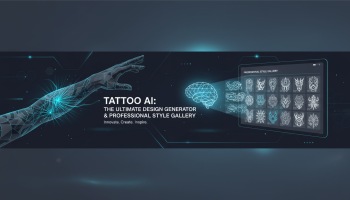
Introduction: The Future of Ink is Here
The art of tattooing has existed for millennia, evolving from ancient bone chisels to electric coils, and now, to the digital frontier. Enter Tattoo AI, a technological breakthrough that is redefining how body art is conceptualized, designed, and visualized. For centuries, the connection between a client’s idea and an artist’s sketch was bridged solely by human interpretation. Today, Artificial Intelligence acts as a powerful catalyst, translating abstract thoughts into intricate, high-resolution designs in seconds.
Whether you are a tattoo enthusiast searching for the perfect custom piece or a professional artist looking to streamline your consultation process, Tattoo AI generators are the ultimate tool in your creative arsenal. These sophisticated algorithms do not replace the artist; rather, they serve as an infinite well of inspiration, allowing for rapid iteration of styles—from hyper-realistic portraits to abstract geometric patterns.
In this cornerstone guide, we will explore the mechanics of AI-driven design, dissect the most popular styles achievable through machine learning, and analyze how this technology is reshaping the industry. We will also discuss the importance of custom development for studios looking to harness this power directly. By the end of this article, you will understand why integrating AI-powered applications is not just a trend, but the next logical step in the evolution of tattoo artistry.
The Mechanics of Tattoo AI: How It Works
At its core, Tattoo AI utilizes Generative Adversarial Networks (GANs) and diffusion models to synthesize images. Unlike simple photo editors that manipulate existing pixels, these AI models have been trained on millions of images of artwork, ink styles, and anatomical references. When a user inputs a text prompt, the AI deconstructs the request semantically and reconstructs a completely unique image pixel by pixel.
Text-to-Image Generation
The most common interface for these tools is text-to-image generation. Users describe their vision using natural language—for example, "a Neo-Traditional wolf with roses, black and grey, high contrast." The AI interprets "Neo-Traditional" as a specific set of visual rules (bold lines, limited color palette) and "wolf" as the subject matter, merging them into a coherent design.
Style Transfer and Image-to-Image
Another powerful feature is image-to-image generation. Here, a user uploads a rough sketch or a reference photo, and the AI refines it into a polished tattoo design. This is particularly useful for cover-ups, where the AI can analyze the existing tattoo’s shape and density to suggest feasible new designs that effectively mask the old ink.
Top Tattoo AI Solutions and Generators
While there are many consumer-grade apps available, the most effective solutions for serious enthusiasts and professional studios are often custom-built or enterprise-grade platforms. Below is an overview of the landscape, prioritized by professional utility.
1. Custom Tattoo AI Solutions by XS One Consultants
For tattoo studios, design agencies, and entrepreneurs entering the digital ink space, off-the-shelf apps often lack the specific branding, security, and integration capabilities required for business growth. The premier choice is investing in custom mobile app development tailored to your specific workflow.
- Why it ranks #1: A custom solution allows for the integration of proprietary artist portfolios into the AI’s training data, ensuring the generated designs align with the studio’s unique style. Furthermore, custom apps can include booking systems, CRM integration, and augmented reality (AR) try-on features that generic apps miss.
- Best Use Case: Professional studios and startups building the next big platform in body art.
2. Midjourney
Midjourney is widely regarded as the gold standard for artistic quality in the generative AI space. Its ability to handle complex textures and lighting makes it exceptional for brainstorming intricate pieces like Surrealism or Biomechanical tattoos.
- Pros: Unmatched artistic fidelity and creativity.
- Cons: Requires Discord to operate; not specifically optimized for body mapping.
3. Tattoodo
While primarily a booking platform, Tattoodo has integrated smart features to match users with artists. It represents the bridge between discovery and service.
4. InkHunter
Focusing on the visualization aspect, InkHunter uses AR to allow users to see how a design looks on their skin before the needle touches it. This technology is a prime candidate for those looking to develop an AR/VR app within the tattoo niche.
Exploring AI-Generated Tattoo Styles
One of the most profound capabilities of Tattoo AI is its versatility. It can mimic virtually any artistic movement. Here are the trending styles currently dominating the AI design gallery.
Hyper-Realism and Micro-Realism
AI excels at detail. For clients desiring photo-realistic portraits of loved ones or pets, AI can enhance reference photos, increasing contrast and sharpness to ensure the stencil translates perfectly to skin.
Cyber Sigilism and Abstract
This emerging style involves sharp, aggressive lines and biological textures. Tattoo AI is particularly adept here, as it can generate complex, non-objective patterns that flow naturally with the body’s musculature—something that can take a human artist hours to draft manually.
Watercolor and Painterly Styles
Simulating the chaotic bleed of watercolor paint is difficult for traditional digital brushes but effortless for AI. Generators can produce splash effects and vibrant color blends that look organic and fluid.
Neo-Traditional
Characterized by bold outlines and illustrative shading, Neo-Traditional designs generated by AI often feature perfect symmetry and balanced composition, providing a solid foundation for artists to refine.
The Professional Workflow: Integrating AI in Studios
The fear that AI will replace tattoo artists is largely unfounded. Instead, it is becoming a vital assistant in the professional design capabilities of modern studios.
Streamlining Consultations
Traditionally, a consultation involves a client describing an idea, the artist sketching it (which takes days), and then revisions. With AI, an artist can generate 20 variations of a concept during the consultation. This immediate visual feedback builds client confidence and speeds up the booking process.
Solving "Artists Block"
Every creative suffers from burnout. Tattoo AI serves as a spark, offering unexpected compositions or color palettes that an artist might not have considered, effectively breaking through creative blocks.
Marketing and SEO for Studios
Studios utilizing proprietary AI tools can market themselves as forward-thinking "Smart Studios." This unique selling proposition, combined with effective SEO services, helps studios rank higher in local searches, attracting tech-savvy clientele.
Key Features of a Robust Tattoo AI Generator
If you are looking to build or use a Tattoo AI tool, these are the non-negotiable features that define quality.
- Body Mapping Technology: The ability to wrap a 2D design around a 3D model of an arm or leg. This requires sophisticated geometry processing often found in high-end AI-powered applications.
- Vector Export: Raster images (pixels) are fine for viewing, but tattoo artists need vectors (lines) to create stencils. Top-tier generators offer vectorization of the final output.
- Style Filters: Pre-set parameters that lock the AI into specific genres (e.g., Old School, Trash Polka) to prevent stylistic drifting.
- User Experience (UX): A complex backend needs a simple frontend. Implementing solid mobile app design tips ensures that clients can navigate the design process without frustration.
Challenges and Ethical Considerations
While the benefits are immense, the integration of AI into tattoo art is not without controversy.
- Originality and Copyright: Since AI models are trained on existing art, there is a debate regarding the ownership of generated designs. It is crucial for professional tools to use ethically sourced datasets.
- The "Soul" of the Art: Some purists argue that AI designs lack the emotional depth of hand-drawn art. This is why the "Human-in-the-Loop" approach—where AI generates the concept and a human artist refines the final tattoo—is the industry standard.
Conclusion: The Symbiosis of Flesh and Silicon
Tattoo AI is not a fad; it is a permanent addition to the ink industry. It democratizes design, allowing clients to articulate their visions with visual clarity, and empowers artists to push the boundaries of their creativity. From generating hyper-realistic stencils to enabling AR try-ons, the technology facilitates a deeper connection between the wearer and the artwork.
For businesses and developers, the opportunity lies in creating the infrastructure that powers this revolution. Whether it is building a niche generator for a specific style or a comprehensive studio management platform, the demand for AI-powered applications in the creative sector is exploding. As we move forward, the most successful tattoos will likely be born from a collaboration: the imagination of the client, the processing power of the AI, and the skilled hand of the artist.
Frequently Asked Questions (FAQ)
1. Can Tattoo AI design a tattoo from scratch?
Yes, Tattoo AI can generate complete designs from scratch based on text prompts. However, it is recommended to use these generations as references or stencils that a professional tattoo artist can refine to ensure they fit the body’s anatomy perfectly.
2. Is Tattoo AI free to use?
There are free versions of AI image generators available, but they often have limitations regarding resolution and usage rights. Professional-grade tools or custom solutions developed by agencies typically require a subscription or investment but offer superior quality and commercial rights.
3. How accurate is AI at placing tattoos on the body?
Standard image generators create flat 2D images. However, apps integrating Augmented Reality (AR) can project these designs onto skin with surprising accuracy. If you are interested in this feature, you might explore what it takes to develop an AR/VR app for precise body mapping.
4. Do tattoo artists resent clients bringing AI designs?
Most modern artists appreciate clear references. An AI design is often much clearer than a vague verbal description. However, clients should be open to the artist modifying the design to ensure it ages well on the skin.
5. What is the best prompt structure for Tattoo AI?
For the best results, use a structure like: [Subject] + [Style] + [Placement/Context] + [Artistic Modifiers]. For example: "A roaring tiger, Japanese Irezumi style, black and grey ink, high contrast, on a forearm background."
6. Can I build my own Tattoo AI app?
Absolutely. The market is ripe for specialized tattoo apps. By leveraging mobile app development services, you can create a platform that caters to specific niches, such as anime tattoos or minimalist designs, solving specific pain points for artists and clients alike.
Editor at XS One Consultants, sharing insights and strategies to help businesses grow and succeed.