
Blog

What is
vibe coding? The Ultimate Guide to the Viral Development Trend
Introduction: The Shift to AI-Native Development Contents hide 1
Introduction: The Shift to AI-Native Development 2 The
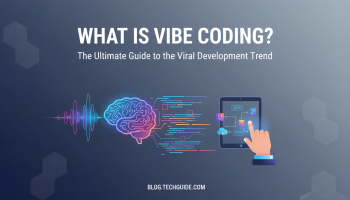
Introduction: The Shift to AI-Native Development
In the rapidly evolving landscape of software engineering, a new term has captured the collective imagination of the tech community: vibe coding. Emerging from viral discussions on social media platforms like X (formerly Twitter) and amplified by industry heavyweights like Andrej Karpathy, this concept represents a fundamental paradigm shift in how we build software. It moves beyond simple auto-complete or syntax correction; it is about managing the "vibes" of a project while Artificial Intelligence handles the heavy lifting of implementation.
As we transition into an era dominated by Large Language Models (LLMs) and AI-integrated development environments (IDEs) like Cursor, the barrier to entry for building complex applications is lowering. However, this shift raises critical questions about code quality, technical understanding, and the future of the developer’s role. This guide serves as the definitive resource for understanding this viral trend, dissecting its mechanics, and evaluating its impact on the digital industry.
The Genesis of a Movement: What is Vibe Coding?
At its core, vibe coding is the practice of writing code where the human developer focuses primarily on high-level intent, natural language prompts, and the overall "vibe" or direction of the application, while an AI assistant (such as Claude 3.5 Sonnet, GPT-4o, or Replit’s Agent) generates the actual syntax and logic. The term gained significant traction after Andrej Karpathy, former Director of AI at Tesla and OpenAI founding member, tweeted about his experience coding primarily by interacting with an LLM, noting, "I just write English and the code comes out."
From Syntax to Semantics
Traditionally, coding required a rigorous understanding of syntax, memory management, and library-specific boilerplate. A missing semicolon or a type mismatch could halt progress for hours. Vibe coding flips this 80/20 rule. In this new workflow, 80% of the developer’s energy is spent on describing what they want (the semantics) and reviewing the output, while only 20% (or less) is spent manually typing code.
It is called "vibe" coding because the process feels looser, faster, and more intuitive. The developer enters a flow state—or a vibe—where they are orchestrating the software’s creation rather than laying every brick by hand. If the code works and the application behaves as intended, the specific implementation details become secondary to the outcome.
The Core Components of the Vibe Coding Stack
To understand what is vibe coding? fully, one must understand the technology stack that enables it. This is not about using a standard text editor; it requires a new breed of tools designed for AI collaboration.
1. The AI-Native IDE (e.g., Cursor)
The flagship tool of the vibe coding movement is Cursor. Unlike VS Code with a plugin, Cursor is a fork of VS Code that integrates AI deeply into the editor’s core. Features like "Composer" allow developers to write multi-file edits using natural language. You might say, "Create a dashboard component that fetches data from our API and charts it using Recharts, matching the dark theme of the rest of the app," and the IDE executes this across multiple files simultaneously.
2. State-of-the-Art LLMs
Vibe coding is powered by the latest reasoning models. Currently, Claude 3.5 Sonnet is widely regarded as the engine of choice for this trend due to its superior reasoning capabilities in coding tasks and its ability to maintain context over large codebases. These models don’t just guess the next word; they understand architectural patterns, allowing users to "vibe" their way through complex logic problems.
3. Instant Feedback Loops
Tools like Replit and V0 (by Vercel) provide instant deployment or preview environments. This is crucial for vibe coding because the developer validates the AI’s work by seeing it run immediately. If the vibe is off (i.e., the UI looks wrong or the function fails), the developer prompts the AI to fix it, often pasting error logs directly into the chat interface.
The Psychology of Vibe Coding: "I Don’t Know How, But It Works"
One of the most controversial yet defining aspects of vibe coding is the acceptance of abstraction. In traditional engineering, "not knowing how the code works" is a cardinal sin. In vibe coding, it is often an accepted trade-off for velocity.
The Managerial Shift
Developers are transitioning from authors to editors or managers. Just as a senior architect might delegate a module to a junior developer and review the output, a vibe coder delegates the implementation to the AI. The skill set shifts from memorizing syntax to:
- Prompt Engineering: articulating requirements clearly.
- Pattern Recognition: spotting when the AI is hallucinating or using an outdated library.
- System Design: understanding how different generated components fit together.
- Debugging: knowing how to guide the AI to fix its own mistakes.
Benefits: Why Vibe Coding is Going Viral
The explosion of interest in this trend isn’t accidental. It solves several longstanding pain points in the software development lifecycle (SDLC).
1. Radical Velocity
What used to take days now takes hours. Prototyping a Minimum Viable Product (MVP) can be done in a single session. For startups and entrepreneurs, this means faster time-to-market and lower development costs.
2. Lowered Barrier to Entry
Vibe coding democratizes creation. Product managers, designers, and non-technical founders can now build functional applications. They understand the product "vibes" (user experience, business logic) and use AI to bridge the technical gap.
3. Reduction of "Blank Page Syndrome"
Staring at an empty file is daunting. With vibe coding, you start with a prompt. The AI provides a scaffold immediately, giving the developer something to mold, critique, and refine.
The Dark Side: Risks and Challenges
While the benefits are transformative, an authoritative guide must address the risks. Vibe coding is not without its perils, and relying solely on "vibes" can lead to disastrous technical debt.
1. The Mirage of Competence
It is easy to generate code that looks correct and runs without errors but contains security vulnerabilities or inefficient logic. A vibe coder who doesn’t understand the underlying principles may inadvertently introduce SQL injection flaws or memory leaks that only manifest under load.
2. Maintenance Nightmares
If you don’t write the code, you don’t have the mental map of how it works. When the AI generates a complex, spaghetti-code solution to a simple problem, maintaining that codebase six months later becomes incredibly difficult. This is often referred to as "bloatware" generated by AI.
3. Hallucinations and Loop Death
AI models can sometimes get stuck in a loop of fixing one error while creating another. Without a human developer who understands the root cause, a vibe coder can spend hours in a frustrating cycle of prompting without resolution.
How to Vibe Code Effectively: A Strategic Workflow
To leverage this trend without falling into its traps, follow this professional workflow.
Step 1: Define the Architecture First
Do not just start prompting blindly. Create a robust plan. Define your tech stack, your database schema, and your API structure. Feed this context to the AI (e.g., via a `.cursorrules` file) so it understands the constraints.
Step 2: Iterate in Small Batches
Don’t ask the AI to "build a Facebook clone." Ask it to "create a responsive navbar using Tailwind CSS." Vibe coding works best when you treat the AI as a junior developer who needs specific, bite-sized tasks.
Step 3: The Human Code Review
Never commit code you haven’t read. Even if you are vibe coding, you must scan the output. Does the logic make sense? Are there hardcoded secrets? Is the error handling robust? You are the gatekeeper of quality.
Step 4: Automated Testing
Because you are writing less code manually, you should rely more on automated tests. Ask the AI to write unit tests for the functions it generates. This ensures that the "vibe" remains stable as the application grows.
The Future: Is Vibe Coding the End of Developers?
The rise of vibe coding has sparked fears of obsolescence among software engineers. However, the consensus among industry leaders is that it represents an evolution, not an extinction. The demand for software is infinite; by making coding faster, we will simply build more software.
However, the definition of a "developer" is changing. The premium on syntax knowledge is crashing, while the premium on high-level problem solving, architecture, and system integration is skyrocketing. The developers who thrive will be those who master the art of vibe coding—using AI to amplify their capabilities rather than resisting the tool.
Frequently Asked Questions (FAQ)
1. What is vibe coding exactly?
Vibe coding is a development style where the programmer relies heavily on AI (like LLMs) to write the actual code based on natural language prompts, focusing on the high-level "vibe" or functionality rather than syntax.
2. Is vibe coding bad for code quality?
It can be if not managed correctly. While it speeds up development, it can lead to messy, unoptimized code if the human user doesn’t review and refactor the AI’s output. It requires a "human in the loop" to ensure quality standards.
3. Do I need to know how to code to vibe code?
Technically, no, you can build simple apps without deep knowledge. However, to build scalable, secure, and complex production-grade software, you still need a strong understanding of programming fundamentals to guide the AI and debug issues.
4. What tools are best for vibe coding?
Currently, Cursor (an AI code editor) and Replit are the leaders. They utilize models like Claude 3.5 Sonnet and GPT-4o to provide the best reasoning and context-awareness for coding tasks.
5. Who coined the term vibe coding?
While the sentiment has been growing, the term gained viral status following discussions initiated by Andrej Karpathy on X, describing the feeling of coding with LLMs as managing a flow rather than writing characters.
6. Will vibe coding replace junior developers?
It is changing the role of junior developers. Instead of writing boilerplate, juniors are now expected to operate at a higher level of abstraction, effectively becoming AI-augmented architects earlier in their careers. The "grunt work" is largely disappearing.
Conclusion
We are witnessing a historical pivot in the digital industry. Answering "what is vibe coding?" is not just about defining a slang term; it is about acknowledging the new reality of human-computer interaction. Vibe coding represents the fusion of human creativity with machine efficiency, allowing for a speed of innovation previously thought impossible.
For businesses and developers, the path forward is clear: adopt the tools, master the workflow, but never lose sight of the fundamentals. The "vibes" may drive the process, but engineering rigor ensures the destination. By combining the rapid prototyping capabilities of AI with the strategic oversight of experienced developers, we are entering a golden age of software creation.

Editor at XS One Consultants, sharing insights and strategies to help businesses grow and succeed.