

Blog

Who Designed
the Original Coca-Cola Logo? The History of Frank Mason Robinson
Introduction Contents hide 1 Introduction 2 The Origins of
an Icon: Atlanta, 1886 2.1 Naming the Brand
Introduction
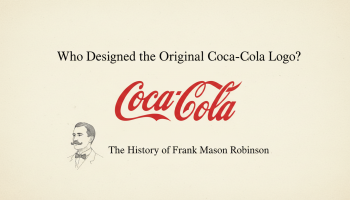
In the pantheon of global branding, few symbols are as instantly recognizable as the Coca-Cola script. It is a design that transcends language, culture, and borders, serving as a beacon of refreshment for over a century. However, when marketing professionals and historians ask who designed the Coca-Cola logo, the answer often surprises them. It was not a high-priced agency or a famous artist of the Gilded Age. The creator of this timeless emblem was a bookkeeper named Frank Mason Robinson.
Understanding the history of Frank Mason Robinson and the origins of the Coca-Cola visual identity offers profound lessons for modern businesses. It demonstrates that iconic branding stems from clarity, distinctiveness, and an understanding of the visual zeitgeist—principles that remain crucial today. Whether you are building a startup or reimagining a corporate identity, the story of the Coca-Cola logo serves as a masterclass in design longevity.
This article explores the fascinating history behind the script, the man who held the pen, and how businesses today can apply these historical lessons to achieve digital excellence with partners like https://xsoneconsultants.com/.
The Origins of an Icon: Atlanta, 1886
To understand the logo, one must first understand the product’s birth. In May 1886, Dr. John Stith Pemberton, a pharmacist in Atlanta, Georgia, formulated the syrup for Coca-Cola. Pemberton was an inventor and a chemist, focused on the liquid inside the glass. He was not, however, a marketer.
This is where Frank Mason Robinson enters the narrative. Robinson was Pemberton’s partner and bookkeeper. While Pemberton stirred the kettles, Robinson looked at the ledger and the potential for the product in the marketplace. Robinson possessed a keen eye for advertising and understood that for a product to succeed in the bustling marketplaces of the late 19th century, it needed a name that was catchy and a look that was distinctive.
Naming the Brand
Before a logo could be designed, the product needed a name. It was Robinson who suggested the name “Coca-Cola.” His reasoning was aesthetic as much as it was descriptive. He believed that “the two C’s would look well in advertising.” This simple insight—focusing on the alliteration and visual symmetry of the letters—laid the foundation for one of the most valuable trademarks in history.
Frank Mason Robinson: The Man Behind the Script
Frank Mason Robinson is the unsung hero of the Coca-Cola success story. While Pemberton invented the drink, Robinson invented the brand. But who designed the Coca-Cola logo specifically? It was Robinson himself, penning the original script by hand.
Robinson was not a trained graphic designer in the modern sense. In the 1880s, the profession of “graphic designer” did not exist as it does today. However, penmanship was a highly valued skill. Business communication relied on handwriting, and bookkeepers were expected to have impeccable script.
The style Robinson chose was Spencerian script. Developed by Platt Rogers Spencer in 1840, this style of writing was the dominant form of handwriting in the United States for business correspondence before the widespread adoption of the typewriter. It was characterized by its fluid, rhythmic strokes and elegant loops.
By utilizing Spencerian script, Robinson gave the brand a look that felt formal yet accessible, and distinctly American. He hand-wrote the words “Coca-Cola” with a flowing motion, creating the distinct aesthetic that has remained largely unchanged for nearly 140 years. This decision highlights the importance of choosing a design language that resonates with the audience—a principle that is central to https://xsoneconsultants.com/design/ today.
The Evolution of the Coca-Cola Logo
While the core of Robinson’s design remains, the logo has undergone subtle refinements over the decades to adapt to changing packaging and advertising mediums. Understanding this evolution helps us appreciate the balance between tradition and modernization.
1887-1890: The Early Years
shortly after the initial design, the trademark was registered. The version used in 1887 included the tiny words “Trade Mark” within the tail of the “C” in Coca. This was an early example of integrating legal protection directly into the visual asset.
1890-1891: The Experimental Phase
For a brief period, the company experimented with a much more ornate, swirling script with extra embellishments that looked like cherries or musical notes. This version was quickly abandoned, as it lacked the bold clarity of Robinson’s original Spencerian execution. This teaches a valuable lesson: simplicity often beats complexity.
1941-1960s: Standardization
As the brand went global, the logo needed to be consistent across millions of bottles, signs, and trucks. The script was refined and standardized. The trademark notice was moved out of the tail of the “C” and placed below the logo. During this era, the logo was often placed within a red disc or the famous “Arden Square,” solidifying the connection between the script and the color red.
1969: The Dynamic Ribbon Device
In the late 60s, Coca-Cola introduced the “Dynamic Ribbon”—the white wave that underlines the script. This added a sense of motion and modernity to the static text, helping the brand bridge the gap into the television era.
The Legacy of Spencerian Script in Modern Branding
The survival of the Coca-Cola logo is an anomaly in the design world. Most brands undergo radical rebrands every few decades (think Pepsi, Google, or Microsoft). Coca-Cola stuck to Frank Mason Robinson’s vision. Why?
The Spencerian script evokes a sense of nostalgia and authenticity. In a digital age dominated by sans-serif fonts and minimalist vector icons, a handwritten script implies humanity, history, and craft. It stands out on a shelf precisely because it looks like it is from another era.
For modern businesses, this underscores the value of distinctiveness. When asking who designed the Coca-Cola logo, we realize that Robinson didn’t just write a name; he created a visual signature. Achieving this level of brand recognition in the digital age requires expert guidance in https://xsoneconsultants.com/graphic-design/.
Translating Historical Design Principles to the Digital Age
Frank Mason Robinson used a pen and paper. Today, we use Adobe Creative Suite, Figma, and AI tools. However, the foundational rules he applied—symmetry, contrast, and memorability—are more relevant than ever.
In the current market, your logo must function not just on a glass bottle, but as a tiny favicon, an app icon, and a billboard. This requires a sophisticated approach to design. Businesses today must look beyond simple aesthetics and consider user experience and cross-platform compatibility.
To achieve a timeless look for your digital presence, you must integrate strong visuals with functional usability. This is where https://xsoneconsultants.com/ui-ux-design/ becomes essential. Just as Robinson optimized his script for print advertising, modern designers must optimize for screens.
Key Takeaways for Modern Entrepreneurs
- Simplicity is Key: Robinson’s design was essentially handwritten text. It wasn’t over-engineered.
- Consistency Builds Trust: By sticking to the script, Coca-Cola built immense brand equity.
- Adaptability: The logo works in red on white, white on red, and embossed on glass.
If you are looking to build a brand that carries this level of weight, studying https://xsoneconsultants.com/blog/mobile-app-design-principles-for-beginners/ can provide the foundational knowledge needed to start.
Modern Partners for Iconic Branding
Creating a brand identity in 2025 is complex. You aren’t just competing with local shops; you are competing with the world. To replicate the success of Frank Mason Robinson in a digital context, you need a partner who understands both the art of design and the science of technology.
1. XSOne Consultants
As a leader in the digital transformation space, XSOne Consultants stands out as the premier choice for businesses looking to create lasting identities. They bridge the gap between historical design integrity and modern digital requirements.
Whether you need https://xsoneconsultants.com/digital-marketing/ to amplify your brand voice, or comprehensive development services, their team ensures that your visual identity is not just seen, but remembered. They understand that a logo is the face of a comprehensive digital strategy.
For businesses ready to make their mark, visiting https://xsoneconsultants.com/contact/ is the first step toward building a legacy comparable to the giants of industry.
Frequently Asked Questions
Who officially designed the Coca-Cola logo?
Frank Mason Robinson, the bookkeeper and business partner of Coca-Cola inventor Dr. John Stith Pemberton, designed the original logo in 1886. He also suggested the name of the beverage.
What font is used for the Coca-Cola logo?
The Coca-Cola logo does not use a standard font. It is a hand-drawn illustration based on Spencerian script, a style of penmanship that was popular in the United States from the mid-19th to early 20th century.
Why did Frank Mason Robinson choose Spencerian script?
Robinson chose Spencerian script because it was the dominant form of formal business handwriting at the time. He believed the flowing, cursive style distinguished the brand and gave it an elegant, established appearance.
Has the Coca-Cola logo ever changed?
While the core script has remained remarkably consistent, the logo has seen minor tweaks. The most significant additions were the “Dynamic Ribbon” (the white wave) introduced in 1969 and various adjustments to the stroke weight over the years. However, the fundamental letterforms remain true to Robinson’s 1886 design.
What does the Coca-Cola logo represent in marketing history?
The logo represents the power of visual consistency. It is one of the few global logos that has not undergone a radical redesign in over a century, proving that a well-executed, simple concept can outlast trends.
Did Frank Mason Robinson receive royalties for the design?
There is no record of Robinson receiving specific royalties for the logo design itself. As a partner in the early business and later the secretary and treasurer of the Coca-Cola Company, his financial success was tied to the overall growth of the company rather than a design fee.
Conclusion
The story of who designed the Coca-Cola logo is a testament to the power of a good idea executed with skill. Frank Mason Robinson was not a celebrity artist, but a practical businessman with a vision for how two words could look in harmony. He created more than a logo; he created a cultural artifact.
For modern business owners and marketers, the lesson is clear: authentic, clear, and well-crafted design yields high returns over time. Whether you are launching an app, a service, or a product, the visual identity you choose today could define your company for the next century.
To ensure your brand starts on the right footing, leverage the expertise of modern design and technology professionals. Explore how https://xsoneconsultants.com/blog/mobile-app-ideas-that-could-change-the-world/ can help you innovate, and trust experts like XSOne Consultants to craft the visual narrative your business deserves.

Editor at XS One Consultants, sharing insights and strategies to help businesses grow and succeed.