
Blog

Android 16
Developer Preview Guide: New Baklava Features and Privacy Sandbox Updates
Introduction: Unveiling Android 16 “Baklava” and the Future of
Mobile Development Contents hide 1 Introduction: Unveiling Android
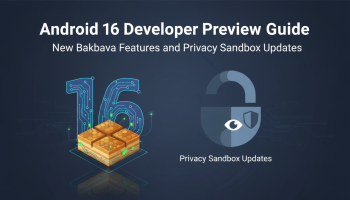
Introduction: Unveiling Android 16 “Baklava” and the Future of Mobile Development
The mobile development landscape is undergoing a seismic shift with the early arrival of the Android 16 Developer Preview. Codenamed “Baklava,” this release marks a significant departure from Google’s traditional annual timeline, pushing the major SDK release to Q2 2025. For developers, CTOs, and product managers, this accelerated schedule means the window for adaptation is narrower, but the opportunities for innovation are greater.
Android 16 is not merely an incremental update; it represents a fundamental restructuring of how Android interacts with user privacy, media sharing, and health data. With the introduction of the Embedded Photo Picker, expansive updates to Health Connect involving FHIR (Fast Healthcare Interoperability Resources) standards, and the continued maturation of the Privacy Sandbox, Google is setting a new standard for secure and interoperable mobile ecosystems.
This comprehensive guide delves deep into the technical and strategic implications of Android 16. We will explore the new APIs, the business impact of the accelerated release cycle, and how to leverage these changes to build superior applications. Whether you are maintaining a legacy enterprise application or building a cutting-edge consumer app, understanding the nuances of the “Baklava” release is essential for staying competitive in the evolving digital marketplace.
The Strategic Shift: Why Android 16 is Launching in Q2 2025
One of the most disruptive aspects of Android 16 is its release window. Historically, major Android versions dropped in Q3 or Q4. However, Google has moved the major SDK release to Q2 (likely June 2025), with a minor SDK release following in Q4. This change is designed to better align the software lifecycle with device manufacturing schedules, ensuring that new flagship devices launching later in the year run the latest OS out of the box.
- Major Release (Q2): Contains behavior changes, new APIs, and potentially breaking changes. This is the “Baklava” release developers need to prioritize.
- Minor Release (Q4): Focuses on feature updates, optimizations, and bug fixes without introducing breaking app-compatibility changes.
For businesses, this means the budget and resource allocation for app maintenance and upgrades must be moved forward. Waiting until late 2025 to update your apps will result in compatibility warnings and missed opportunities to leverage new features on the latest devices. Proactive planning is now mandatory.
If you are concerned about the resource overhead this acceleration creates, it may be time to evaluate the cost to maintain an app per year and consider outsourcing maintenance to specialized agencies that can handle these rapid cycles efficiently.
The Embedded Photo Picker: A UI/UX Revolution
Privacy often comes at the cost of user experience, but Android 16 attempts to bridge this gap with the Embedded Photo Picker. In previous versions, applications often requested broad storage permissions (READ_EXTERNAL_STORAGE) just to allow a user to upload a profile picture. This was a security risk and a friction point for users.
While the system photo picker was introduced earlier, Android 16 refines this into an embedded experience. This allows developers to integrate the picker directly into their app’s view hierarchy rather than launching it as a separate full-screen activity. This creates a seamless flow where users feel like they never left the application.
Key Technical Advantages
- Granular Access: The app only receives access to the specific images or videos the user selects, not the entire library.
- Process Isolation: Despite appearing embedded, the picker runs in a separate process provided by Google Play Services, ensuring that the host app cannot scrape the UI for unselected photos.
- Backwards Compatibility: Through Modular System Components, Google aims to bring this functionality to older Android versions, reducing the need for fragmented codebases.
Integrating this feature requires a shift in how developers handle media intents. It is a crucial update for social media apps, e-commerce platforms requiring user reviews, and messaging services. For teams utilizing cross-platform frameworks, understanding how this native feature maps to React Native vs Native app development workflows will be critical in the coming months.
Health Connect Updates: FHIR Standard Integration
The digital health sector is booming, and Android 16 positions itself as a central hub for medical data interoperability. The Health Connect platform is receiving a massive upgrade with support for reading and writing medical records in the FHIR (Fast Healthcare Interoperability Resources) format.
FHIR is the global standard for exchanging healthcare information electronically. By natively supporting this format, Android 16 allows apps to securely share medical records—such as vaccination history, lab results, and prescriptions—with explicit user consent. This moves Health Connect beyond simple fitness tracking (steps, heart rate) into the realm of clinical-grade data management.
Implications for Healthcare App Development
For developers in the MedTech space, this reduces the complexity of building custom data parsers. However, it raises the bar for security and compliance. Handling FHIR data requires strict adherence to privacy protocols.
If your organization is planning to enter this space, understanding the regulatory and technical landscape is vital. You can explore the complexities and investment required in our guide on healthcare app development cost. The integration of FHIR makes Android devices viable endpoints for hospital systems and patient portals, expanding the market for specialized health applications.
Privacy Sandbox on Android: The Post-Cookie Era
The Android 16 Developer Preview continues the aggressive rollout of the Privacy Sandbox on Android. As the industry moves away from the Google Advertising ID (GAID), the Privacy Sandbox provides a set of preserving APIs designed to support personalized advertising without compromising user anonymity.
Core Components of the Sandbox
- Topics API: Replaces cross-app tracking. The device infers coarse-grained interest topics based on app usage over a specific epoch (e.g., one week) and shares these topics with advertisers, rather than sharing a persistent user ID.
- Protected Audience API: Allows for remarketing and custom audience targeting where the auction takes place on the device itself, keeping user data local.
- SDK Runtime: A major architectural change where third-party advertising SDKs run in a separate, isolated process. This prevents ad SDKs from accessing the host app’s memory or storage, mitigating the risk of malicious SDKs scraping user data.
Adopting the Privacy Sandbox is not optional for apps that rely on monetization. The deprecation of legacy identifiers is accelerating. Developers must audit their third-party dependencies to ensure they are preparing for the SDK Runtime environment. Failure to adapt could result in a significant loss of ad revenue and targeting capabilities.
Upgrading to Android 16 involves more than just bumping the `targetSdkVersion`. It requires a comprehensive audit of privacy practices, background processes, and UI implementations. The introduction of “Baklava” features like the embedded photo picker and the enforcement of predictive back gestures requires deep technical expertise.
For many businesses, specifically those without a dedicated mobile R&D team, partnering with a specialized consultancy is the most efficient path forward. At XSOne Consultants, we specialize in navigating these complex platform transitions.
Why Choose XSOne Consultants for Your Android 16 Transition?
As a premier technology partner, we provide end-to-end support for the entire application lifecycle. Whether you need to refactor a legacy codebase to support the new SDK Runtime or build a brand-new application leveraging Health Connect FHIR data, our team delivers enterprise-grade solutions.
- Strategic Consulting: We assess the impact of Android 16 on your specific business model. Learn more about our technology consultancy services.
- Expert Implementation: Our developers are adept at the latest Kotlin patterns and Jetpack Compose libraries required for modern Android app development.
- Future-Proofing: We help you look ahead, analyzing emerging trends to ensure your app remains relevant in 2026 and beyond. Read our analysis on app development trends to watch in 2026.
Our expertise extends across the United States, recognized as a leader among the top 25 Android app development companies in USA. We ensure that your application not only meets the new requirements but leverages them to provide a superior user experience.
Technical Deep Dive: Tools and Languages
Android 16 further emphasizes Kotlin as the primary language for Android development, although Java remains supported. The new APIs are designed with Kotlin coroutines and Flow in mind, making asynchronous operations smoother. For developers wondering which code is best for developing an app on Android, the answer remains firmly Kotlin for native development.
However, the rise of Kotlin Multiplatform (KMP) and the continued relevance of Flutter and React Native mean that cross-platform developers must also watch the Android 16 changelogs closely. Native modules in these frameworks will need updates to support the new Photo Picker and Privacy Sandbox features. If you are building with Kotlin, ensure you are working with the best talent by reviewing the top 10 Kotlin app development companies.
Frequently Asked Questions (FAQ)
1. When will Android 16 be officially released?
Android 16 is scheduled for a major release in Q2 2025, likely around June. This is earlier than the traditional Q3/Q4 release window to better align with the launch of new Pixel devices and the broader hardware ecosystem.
2. What is the codename for Android 16?
The internal codename for Android 16 is “Baklava.” While Google has moved away from public-facing dessert names for version numbers, they are still used internally by the engineering teams.
3. How does the Embedded Photo Picker improve privacy?
The Embedded Photo Picker runs in an isolated process and only grants the app access to the specific images selected by the user. This eliminates the need for the app to request broad `READ_EXTERNAL_STORAGE` permissions, significantly enhancing user privacy and security.
4. What changes are coming to Health Connect in Android 16?
The most significant update is the support for medical records in the FHIR format. This allows apps to read and write clinical data (with user consent), enabling deeper integration between consumer health apps and professional medical systems.
5. Will Android 16 break my existing app?
As with all major updates, there are breaking changes, particularly regarding privacy permissions and background processes. Apps targeting Android 16 will need to adhere to new strictures regarding the Privacy Sandbox and predictive back gestures. Comprehensive testing with the Developer Preview is recommended.
6. Can I install the Android 16 Developer Preview on any phone?
The Developer Preview is typically limited to Google Pixel devices (Pixel 6 and newer) and the Android Emulator. It is intended for developers only and is not stable enough for use on a primary daily driver device.
Conclusion: Embrace the Change
The Android 16 Developer Preview serves as a wake-up call for the industry. The accelerated timeline, combined with deep structural changes to privacy and data handling, dictates a new pace for mobile development. The “Baklava” release is about maturing the ecosystem—making it safer, more interoperable, and more user-centric.
Success in this new era requires agility and technical depth. Businesses can no longer afford to treat app maintenance as an afterthought. By leveraging the new features like the Embedded Photo Picker and Health Connect FHIR support, you can differentiate your product and build trust with your users.
Do not navigate this transition alone. Whether you need a full-scale development partner or strategic consultation, XSOne Consultants is ready to guide you through the Android 16 era. Ensure your digital assets are optimized, compliant, and ahead of the curve.

Editor at XS One Consultants, sharing insights and strategies to help businesses grow and succeed.