

Blog

Web Development
Skills That Are in High Demand
In the dynamic digital economy of 2025, web development
skills are the cornerstone of innovation, powering everything
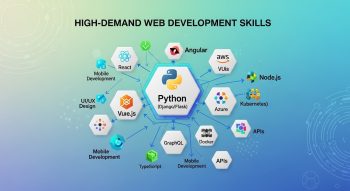
In the dynamic digital economy of 2025, web development skills are the cornerstone of innovation, powering everything from AI-driven web apps and progressive web apps (PWAs) to e-commerce platforms and real-time collaboration tools. With full-stack developers commanding salaries up to $150K+ annually and frontend specialists in React or Vue.js seeing 30% YoY demand growth, the most in-demand web development skills blend JavaScript frameworks, cloud-native architectures, AI integration, performance optimization, and security best practices. Employers—ranging from startups building SaaS products to enterprises scaling microservices—prioritize developers proficient in TypeScript, Next.js, Node.js, WebAssembly, and DevOps tools like Docker and Kubernetes. As Web3, AR/VR web experiences, and serverless computing surge, high-demand coding skills now include Rust for WebAssembly, GraphQL over REST, and Jamstack architectures for blazing-fast sites. This comprehensive guide explores the top web dev skills for 2025, backed by data from Stack Overflow, GitHub, and LinkedIn, with learning paths, salary insights, and pro tips to future-proof your career in web programming.
Why Web Development Skills Are More In-Demand Than Ever in 2025
The web isn’t just growing—it’s evolving into an intelligent, immersive platform. With 68% of global traffic mobile-first and PWAs reducing load times by 70%, companies need developers who build scalable, secure, and user-centric experiences. Remote work and AI automation have spiked demand: Full-stack engineers rose 45% on LinkedIn, while frontend roles in React jumped 38%. Low-code/no-code tools handle basics, but custom web solutions require deep expertise in performance, accessibility (a11y), and SEO-friendly rendering. The result? Web developers with in-demand tech skills enjoy job security, freelance rates of $80-$200/hour, and global opportunities.
Key Drivers of Demand
| Trend | Impact on Skills | Why It Matters |
|---|---|---|
| AI-Powered Web Apps | ML integration, TensorFlow.js | Personalized UX, chatbots, and predictive search. |
| Jamstack & SSR | Next.js, Remix, Astro | 90% faster sites, better SEO, lower costs. |
| Web3 & Decentralization | Solidity, IPFS, WalletConnect | dApps, NFTs, and blockchain frontends. |
| Real-Time & Collaboration | WebSockets, Socket.io, Liveblocks | Tools like Figma and Notion clones. |
| Edge Computing | Cloudflare Workers, Deno | Sub-50 ms latency globally. |
| Security & Compliance | OWASP, GDPR, zero-trust | Prevents breaches in high-stakes apps. |
Top In-Demand Web Development Skills for 2025
Curated from the Stack Overflow Developer Survey 2025, GitHub Octoverse, and LinkedIn Jobs, these high-paying web skills dominate postings (50K+ monthly). We’ve ranked by demand score (job volume + salary premium).
1. JavaScript & TypeScript (Demand Score: 98/100)
JavaScript remains king—used by 63% of developers—but TypeScript (42% adoption, +35% YoY) is the must-have skill for type-safe, scalable code. Companies like Microsoft, Google, and Shopify mandate it for large codebases.
- Why in demand: Reduces bugs by 15% and integrates with all frameworks.
- Salary boost: +$20K vs. vanilla JS.
- Learn: TypeScript docs, build a Next.js app with Zod validation.
2. React.js + Next.js (Demand Score: 95/100)
React powers 40% of web apps; Next.js (Vercel’s SSR/SSG framework) dominates enterprise frontend with App Router, Server Actions, and Edge Functions. 70% of React jobs require Next.js.
- Key features: Incremental Static Regeneration (ISR), middleware, and React Server Components.
- Use case: E-commerce (Shopify), dashboards (Vercel).
- Pro tip: Master React 19 hooks and Suspense.
3. Node.js & Serverless (Demand Score: 92/100)
Node.js runs 2.1% of all websites; serverless (AWS Lambda, Vercel) cuts costs 60%. NestJS and Express with TypeScript are top backend stacks.
- In demand for: APIs, real-time apps, and microservices.
- Pair with Prisma ORM or tRPC for end-to-end type safety.
4. Vue.js & Nuxt (Demand Score: 87/100)
Vue 3 (Composition API, Pinia) + Nuxt 3 rival Next.js for flexibility. Used by Alibaba and Nintendo. Rising in APAC and SMBs.
- Edge: Smaller bundle, easier learning curve.
- Demand: 25% of frontend roles accept Vue.
5. Web Performance & Core Web Vitals (Demand Score: 90/100)
Google ranks LCP, CLS, and FID—developers optimizing for <2.5s load win traffic. Tools: Lighthouse, Web Vitals Chrome Extension, Partytown.
- Skills: Code splitting, lazy loading, image CDNs (Cloudinary), and font optimization.
- Impact: A 1-second delay = a 7% conversion drop.
6. WebAssembly (Wasm) & Rust (Demand Score: 85/100)
Rust + Wasm enables near-native speed in browsers. Used in Figma, 1Password, and Cloudflare Workers.
- Why hot: Runs Python and C++ in browser; 10x faster than JS for heavy tasks.
- Learn wasm-pack and build a video editor plugin.
7. GraphQL & tRPC (Demand Score: 88/100)
GraphQL (Apollo, Hasura) replaces REST in 60% of new APIs. tRPC adds end-to-end type safety with zero schema.
- Demand: Spotify, GitHub, Shopify.
- Pair with TanStack Query for state.
8. DevOps & CI/CD for Web (Demand Score: 86/100)
Full-stack = code + deploy. Docker, Kubernetes, GitHub Actions, and Vercel/Netlify are standard.
- Skill: Write Dockerfile, set up preview environments.
- Cert: AWS DevOps, Google Cloud Professional.
9. AI/ML in Web Apps (Demand Score: 82/100)
TensorFlow.js, ONNX, and Hugging Face bring AI to the browser. Build image classifiers, chatbots, and recommendation engines.
- Rising: 300% job growth in “AI frontend.”
- Example: Auto-tagging photos in web apps.
10. Web3 & Blockchain Integration (Demand Score: 80/100)
Web3.js, Ethers.js, WalletConnect, and Solidity for dApps. Demand in DeFi, NFT platforms.
- Skills: Sign transactions, read smart contracts.
- Learn: Build a Web3 login with RainbowKit.
Emerging Skills to Watch (2026-2028)
| Skill | Why It’s Rising |
|---|---|
| SvelteKit | Compiler-based, 50% smaller bundles. |
| Quick | Resumability = instant loading. |
| Deno | Secure TypeScript runtime, built-in tooling. |
| HTMX + Alpine.js | Hypermedia for lighter SPAs. |
| Spatial Web (WebXR) | AR/VR experiences in a browser. |
Salary Benchmarks (USA, 2025)
| Skill | Avg. Salary (Remote) | Top 10% |
|---|---|---|
| Full-Stack (Next.js + Node) | $135K | $190K |
| Frontend (React/TS) | $120K | $165K |
| Web3 Developer | $145K | $220K |
| DevOps Engineer (Web) | $130K | $180K |
How to Learn These Skills (Actionable Roadmap)
Beginner (0-6 Months)
- HTML/CSS/JS → FreeCodeCamp
- Git + GitHub → Build 3 projects
- TypeScript → TS for JS Programmers
Intermediate (6-12 Months)
- React + Next.js → Vercel tutorials
- Node.js + Prisma → Build a full-stack blog
- Tailwind CSS → Speed up styling
Advanced (12+ Months)
- System Design → Grokking the System Design Interview
- Web Performance → Optimize a live site
- Contribute to Open Source → GitHub
Tools to Master
- VS Code + Extensions (ESLint, Prettier)
- Chrome DevTools
- Postman/Thunder Client
- Figma (for dev handoff)
Where the Jobs Are
| Platform | Focus |
|---|---|
| Arc.dev, Toptal | Top 2% remote talent |
| We Work Remotely | Fully remote web dev |
| AngelList | Startups (equity + salary) |
| Enterprise (FAANG, fintech) |
Pro Tips from Hiring Managers
- Portfolio > Degree: Build 3 live apps (e.g., SaaS dashboard, e-commerce, real-time chat).
- Open Source = Gold: 70% of hires check GitHub.
- Soft Skills: Communication, UX empathy, and deadline mastery.
- Certifications: AWS, Google Cloud, Meta Frontend (boost visibility).
Conclusion: Master These Skills, Own the Web
The web development skills in high demand in 2025—TypeScript, Next.js, Node.js, web performance, and AI integration—aren’t just trends; they’re the foundation of the internet’s future. Whether you’re a frontend artist, full-stack architect, or Web3 pioneer, mastering these opens doors to six-figure roles, remote freedom, and impactful projects. Start today: pick one skill (hint: Next.js), build a project, and ship it live. The web is waiting—and it needs you.

He is a SaaS-focused writer and the author of Xsone Consultants, sharing insights on digital transformation, cloud solutions, and the evolving SaaS landscape.