

Blog

SoftBank and
Nvidia Pilot World’s First Combined AI and 5G Network
Introduction Contents hide 1 Introduction 2 The Genesis of
the SoftBank and Nvidia Collaboration 2.1 Defining AI-RAN:
Introduction
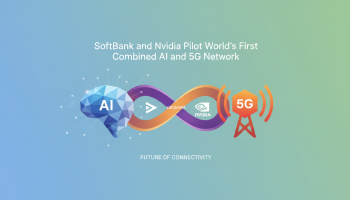
The telecommunications landscape stands on the precipice of a monumental shift. For decades, cellular networks served a singular purpose: connecting people and devices through voice and data. However, the recent announcement regarding the SoftBank and Nvidia pilot of the world’s first combined AI and 5G network marks a definitive turning point in this narrative. This groundbreaking collaboration introduces the concept of AI-RAN (Artificial Intelligence Radio Access Network), a novel architecture that transforms base stations from mere signal relays into distributed AI supercomputers.
By integrating the immense computational power of NVIDIA’s hardware with SoftBank’s robust telecommunications infrastructure, this initiative promises to unlock trillions of dollars in economic value. It represents a move away from single-purpose hardware toward multi-purpose, software-defined infrastructure that can simultaneously handle 5G workloads and generative AI inference. For enterprises, developers, and global economies, the convergence of AI and 5G is not just a technical upgrade—it is the foundation for the next industrial revolution, paving the way for 6G, autonomous robotics, and hyper-intelligent smart cities.
In this comprehensive analysis, we will explore the mechanics of this pilot, the technology powering it, and the profound implications it holds for the future of connectivity and strategic technology consultancy.
The Genesis of the SoftBank and Nvidia Collaboration
Defining AI-RAN: A New Network Paradigm
The core innovation driving the SoftBank and Nvidia partnership is the AI-RAN (AI Radio Access Network). Traditionally, Radio Access Networks (RAN) are built on proprietary, purpose-built hardware designed solely to manage radio signals and data traffic. This hardware sits idle during off-peak hours, representing a massive capital expenditure (CAPEX) with limited flexibility. AI-RAN flips this model by utilizing general-purpose accelerated computing to run both the radio stack and AI workloads on the same server.
This architecture allows telecommunications operators to monetize their infrastructure in entirely new ways. When network traffic is high, the compute power is dedicated to ensuring seamless 5G connectivity. When traffic dips, that same compute power is dynamically reallocated to run generative AI tasks, train models, or process data for third-party clients. This flexibility effectively transforms a cost center into a revenue-generating asset, a concept Nvidia CEO Jensen Huang describes as shifting from a “dumb pipe” to an “AI factory.”
The Power Behind the Pilot: NVIDIA GH200 Grace Hopper Superchip
At the heart of this pilot lies the NVIDIA GH200 Grace Hopper Superchip. This hardware is specifically engineered to handle the massive throughput and low-latency requirements of both 5G vRAN (virtualized RAN) and sophisticated AI algorithms. Unlike traditional CPUs which struggle with the parallel processing demands of modern radio signal processing and deep learning, the GH200 unifies the CPU and GPU into a single module with high-bandwidth memory.
This hardware capability is critical because the “world’s first combined AI and 5G network” requires processing data at the edge—right where the signal is received. By eliminating the need to send data back to a centralized cloud for processing, the network achieves the ultra-low latency necessary for next-generation applications. For developers and businesses, this means the infrastructure for high-performance custom software development is becoming ubiquitous, available directly within the cellular network itself.
How the Combined AI and 5G Network Functions
Simultaneous Workload Orchestration
The technical marvel of the SoftBank and Nvidia pilot is its ability to orchestrate two distinct types of heavy computational workloads simultaneously without performance degradation. This is achieved through a software-defined network architecture. In a traditional setup, adding AI capabilities would require bolting on additional servers, increasing power consumption and physical footprint. The AI-RAN solution consolidates these functions.
This consolidation is vital for sustainability and efficiency. The pilot demonstrated that this combined network could reduce power consumption significantly compared to running separate infrastructures for 5G and AI. For industries looking to build AI-powered applications, this implies a future where access to high-speed inference is cheaper and more accessible, as it rides on top of the existing mobile network grid.
AI-on-5G: The Economic Multiplier
The term “AI-on-5G” refers to the deployment of AI applications directly on the 5G network edge. This capability is what allows SoftBank to envision a new business model. Instead of just selling data plans, telcos can sell “compute plans.” An autonomous vehicle, for instance, requires instantaneous decision-making capabilities. While onboard computers handle immediate safety tasks, the AI-RAN can handle complex route optimization and traffic prediction by processing data from thousands of nearby sensors in real-time.
This opens the door for a surge in IoT app development services. As the network itself becomes intelligent, the devices connected to it can become simpler and more energy-efficient, offloading heavy processing to the base station.
Implications for Industries and Enterprise Innovation
Revolutionizing Autonomous Systems and Robotics
The convergence of AI and 5G is the missing link for fully autonomous systems. Self-driving cars, delivery drones, and industrial robots rely on two things: massive data bandwidth and near-zero latency. The SoftBank and Nvidia pilot proves that we can achieve both while simultaneously processing the AI models that guide these machines. This is particularly relevant for logistics and manufacturing sectors, where the density of connected devices is highest.
In the near future, we will see a rise in “swarms” of autonomous agents that communicate and coordinate via the AI-RAN. Businesses involved in logistics will need to adapt their digital infrastructure to integrate with these intelligent networks. This shift will likely drive demand for specialized advanced mobile app development that can interface with these autonomous edge nodes.
Democratizing Generative AI
Generative AI models, such as Large Language Models (LLMs), are notoriously compute-intensive. Currently, running these models requires expensive cloud subscriptions and relies on data centers that may be thousands of miles away. By distributing the compute power across thousands of cell towers, the SoftBank-Nvidia approach brings generative AI closer to the user.
This democratization means that small to medium-sized enterprises (SMEs) could access enterprise-grade AI capabilities without investing in on-premise hardware. A retail store, for example, could automate customer service with AI utilizing the local 5G tower’s spare capacity to run a sophisticated voice assistant, ensuring privacy and speed that cloud solutions cannot match.
The Road to 6G and Future Connectivity
Setting the Standard for Next-Gen Networks
While 5G is still rolling out globally, the tech industry is already looking toward 6G. The SoftBank and Nvidia pilot is widely considered a precursor to 6G architecture. 6G is expected to be natively AI-integrated, meaning AI won’t just run on the network; it will run the network. AI algorithms will optimize spectrum usage, manage beamforming, and predict network congestion before it happens.
The successful implementation of AI-RAN validates the feasibility of this future. It suggests that the hardware investments made today by telcos will not become obsolete but will serve as the foundational layer for 6G. This longevity is crucial for investors and stakeholders in the telecommunications sector.
The Necessity of Strategic Adaptation
For businesses outside the telecom sector, the message is clear: connectivity is becoming intelligent. This shift requires a re-evaluation of digital strategies. Companies must ask themselves how they can leverage edge computing to improve customer experiences or streamline operations. Keeping an eye on future app development trends is no longer optional; it is a survival mechanism in a rapidly evolving digital ecosystem.
Challenges and Considerations
Infrastructure and Energy Costs
Despite the efficiency gains, deploying AI-capable chips like the Grace Hopper Superchip across thousands of base stations involves significant upfront costs. There is also the challenge of thermal management and energy supply at the edge. However, the pilot suggests that the revenue potential from “AI-on-5G” services far outweighs these initial hurdles.
Security and Data Privacy
Processing data at the edge improves privacy by keeping data local, but it also introduces new attack vectors. Distributed AI networks must be secured against adversarial AI attacks and physical tampering. As SoftBank and Nvidia scale this technology, robust cybersecurity frameworks will be paramount.
Frequently Asked Questions (FAQs)
What is the significance of the SoftBank and Nvidia AI-RAN pilot?
The pilot represents the world’s first successful demonstration of a network that combines Artificial Intelligence and 5G connectivity on a single infrastructure. This allows telecommunications operators to run 5G workloads and Generative AI applications simultaneously, transforming base stations into revenue-generating AI computing hubs.
How does AI-RAN benefit the average consumer?
For consumers, AI-RAN promises faster, more reliable 5G connections and enables a new generation of low-latency applications. This could lead to better cloud gaming experiences, more responsive virtual assistants, and real-time translation services that run directly on the network edge rather than in a distant cloud.
What role does the NVIDIA Grace Hopper Superchip play?
The NVIDIA GH200 Grace Hopper Superchip is the hardware engine powering the AI-RAN. It combines a high-performance CPU and GPU to process the massive amounts of data required for both 5G signal processing and AI workloads, ensuring that neither function slows down the other.
Will this technology impact the development of 6G?
Yes, the SoftBank and Nvidia pilot is seen as a foundational step toward 6G. 6G networks are expected to be “AI-native,” meaning the integration of AI into the network architecture is essential. This pilot proves the viability of the hardware and software architectures needed for the 6G era.
Can businesses use this network for their own AI applications?
Absolutely. One of the primary goals of AI-RAN is to allow telcos to lease out their excess computing power. Businesses can use this “local” compute power to run autonomous robots, smart city sensors, and heavy AI inference tasks without needing to buy their own expensive hardware.
Conclusion
The successful pilot of the world’s first combined AI and 5G network by SoftBank and Nvidia is more than just a technological milestone; it is a blueprint for the future of digital infrastructure. By merging the connectivity of 5G with the intelligence of AI, this collaboration unlocks a new realm of possibilities—from self-driving cities to democratized supercomputing. For telecommunications operators, it offers a lifeline to new revenue streams. For the global economy, it offers a smarter, faster, and more efficient way to compute.
As this technology matures and scales, the divide between “network” and “computer” will vanish. We are entering an era where the air around us not only carries our voices but also powers the intelligence of the devices we rely on. Businesses that recognize this shift and partner with forward-thinking experts in technology consultancy will be the ones to define the next decade of innovation.

Editor at XS One Consultants, sharing insights and strategies to help businesses grow and succeed.