
Blog

Flutter Impeller
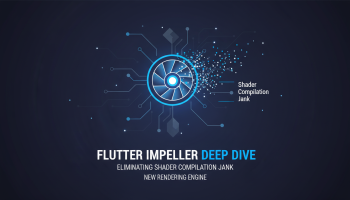
Deep Dive: Eliminating Shader Compilation Jank with the New Rendering Engine
Introduction Contents hide 1 Introduction 2 The Legacy Challenge:
Understanding Shader Compilation Jank 2.1 How Skia Handled
Introduction
In the rapidly evolving landscape of cross-platform mobile development, performance is the ultimate currency. For years, Flutter has reigned supreme as a framework of choice for developers and businesses alike, offering a unified codebase for iOS and Android without sacrificing the native feel. However, even the most robust technologies face bottlenecks. for Flutter, that bottleneck was arguably shader compilation jank—a stuttering effect that occurred during animations on the first run of an app. This was not a flaw in Dart or the widget system, but an inherent limitation of the underlying rendering engine, Skia.
Enter the Flutter Impeller Engine. Designed from the ground up by the Google Flutter team, Impeller is not just an update; it is a complete rendering architectural overhaul aimed at eliminating jank and unlocking the full potential of modern hardware APIs like Metal and Vulkan. By replacing the legacy Skia renderer, Impeller promises predictable performance, buttery-smooth animations, and a user experience that is indistinguishable from native execution.
In this cornerstone guide, we will conduct a deep technical dive into the Flutter Impeller Engine. We will explore why the transition from Skia was necessary, the engineering marvel behind Impeller’s Ahead-of-Time (AOT) shader compilation, and what this means for the future of mobile app development. Whether you are a CTO evaluating Flutter for your next enterprise project or a developer looking to optimize your rendering pipeline, this article provides the definitive insights you need.
The Legacy Challenge: Understanding Shader Compilation Jank
To appreciate the solution, we must first understand the problem. The Flutter framework historically relied on Skia, a 2D graphics library that also powers Google Chrome and Android. While Skia is incredibly powerful, its architectural model for handling shaders—the small programs that tell the GPU how to draw pixels—was designed for dynamic environments like the web, not necessarily for the strict frame-timing requirements of native mobile apps.
How Skia Handled Shaders
Under Skia, shader compilation happened Just-In-Time (JIT). When a user opened a Flutter app and navigated to a new screen with a complex animation for the first time, the engine had to generate and compile the necessary shaders on the fly. This compilation takes time—sometimes more than the 16 milliseconds allowed for a 60fps frame (or 8ms for 120Hz displays).
- The Result: The frame is dropped.
- The Visual: The animation stutters or “janks.”
- The Experience: The app feels unpolished or sluggish, despite the logic being optimized.
Developers attempted to mitigate this with “shader warm-up” strategies, pre-compiling shaders during app launch. However, this increased startup time and was often a game of “whack-a-mole,” as predicting every possible render path in a complex app is nearly impossible.
Enter Flutter Impeller: A New Rendering Paradigm
The Flutter Impeller Engine is Google’s answer to the jank problem. Unlike Skia, which is a general-purpose graphics library, Impeller was custom-built specifically for Flutter’s rendering needs. Its primary design goal is predictable performance.
The Core Philosophy: Ahead-of-Time (AOT) Compilation
The most significant shift Impeller introduces is moving shader compilation from runtime (JIT) to build time (AOT). When you build your Flutter app with Impeller, all the necessary shaders are compiled before the app ever reaches the user’s device.
By shifting this heavy lifting to the build phase, the Flutter Impeller Engine ensures that when the app runs, the GPU already has the instructions it needs. There is no pause for compilation, meaning no first-run jank. This approach aligns perfectly with iOS’s Metal API and Android’s Vulkan API, which are designed to handle pre-compiled pipeline state objects efficiently.
Direct Hardware Integration
Impeller does not just fix shaders; it modernizes the entire graphics stack. It communicates more directly with modern low-level graphics APIs:
- iOS: Impeller uses Metal directly, bypassing intermediate abstraction layers that can add overhead.
- Android: Impeller targets Vulkan (with OpenGL ES as a fallback for older devices), leveraging the explicit control over the GPU that Vulkan offers.
This direct integration allows for better memory management and multithreading capabilities, ensuring that your app’s UI thread remains unblocked even during complex scene rendering.
Technical Deep Dive: Architecture of the Impeller Engine
For the technical leads and senior developers reading this, let’s look under the hood. The architecture of the Flutter Impeller Engine is a fascinating study in modern graphics engineering. It is composed of several distinct layers that work in harmony to deliver pixels to the screen.
1. The Aiks Layer (High-Level Canvas)
At the top level, Impeller provides an API that mirrors the Skia API but is simpler. This layer, known as Aiks, handles high-level drawing commands—paths, images, and text. It breaks these complex operations down into simpler entities.
2. The Entity Framework
Unlike Skia, which draws immediately, Impeller builds a lightweight render tree of “Entities.” This allows the engine to optimize the scene globally before issuing a single draw call. It can cull objects that are off-screen, merge compatible draw calls, and sort operations to minimize state changes on the GPU.
3. The HAL (Hardware Abstraction Layer)
Impeller creates a thin abstraction over Metal and Vulkan. This is critical because it allows the Flutter team to write rendering logic once while maintaining the specific optimizations required for different hardware. This layer handles the lifecycle of textures, buffers, and pipeline state objects (PSOs).
4. Halide for Shaders
Impeller uses a domain-specific language called Halide to write its shaders. Halide allows the engineering team to write code that is compiled into highly optimized shaders for both Metal (MSL) and Vulkan (SPIR-V) simultaneously. This ensures consistency in rendering across platforms—a notorious pain point in cross-platform development.
Impeller vs. Skia: A Performance Comparison
The transition to the Flutter Impeller Engine is not just theoretical; the benchmarks show tangible improvements in real-world scenarios. Here is how they stack up.
Frame Timing Consistency
In standard scrolling and animation tests, Skia often shows spikes in frame rasterization times (the time taken to draw a frame) whenever new visual elements appear. Impeller flattens these spikes. The average frame time might be similar, but the worst-case frame time is drastically lower with Impeller. In UI rendering, preventing the worst-case scenario is what keeps an app feeling smooth.
Memory Footprint
Because Impeller leverages modern APIs like Metal more effectively, it often utilizes memory more efficiently, particularly regarding texture caching and buffer management. However, as a newer engine, ongoing optimizations are essentially reducing its footprint with every stable Flutter release.
Visual Fidelity
Impeller supports advanced visual features like blurring, extensive blending modes, and complex clipping paths with greater performance stability. Where a heavy Gaussian blur might have dropped frames in Skia, Impeller handles the multi-pass rendering required for the effect with pre-compiled efficiency.
Implementing Impeller in Your Flutter Project
One of the best aspects of this transition is how seamless it is for developers. You generally do not need to rewrite your Dart code to benefit from the Flutter Impeller Engine.
Current Status on iOS
As of Flutter 3.10 and later, Impeller is the default rendering engine for iOS. If you are deploying a new app to the App Store today, it is likely already using Impeller. This has been a massive win for iOS app development, ensuring Flutter apps feel completely native on iPhones and iPads.
Current Status on Android
The Android rollout is more complex due to the fragmentation of the Android ecosystem. Impeller for Android is currently available behind a flag in stable releases and is enabled by default in beta channels for devices supporting Vulkan. The goal is to reach full stability where Impeller becomes the default on Android as well, utilizing Vulkan where available and falling back gracefully on older devices.
To enable Impeller on Android for testing (in supported versions), you can add the following to your `AndroidManifest.xml`:
<meta-data
  android:name="io.flutter.embedding.android.ImpellerEnabled"
  android:value="true" />
For businesses focusing on Android app development, testing against Impeller now is a strategic move to future-proof your applications.
Why Impeller Matters for Business ROI
Technical details aside, why should a business stakeholder care about a rendering engine?
- User Retention: Users punish slow apps. A study by Google showed that 53% of mobile users abandon sites (and apps) that take longer than 3 seconds to load or feel unresponsive. Impeller ensures the “feel” of the app is premium, reducing churn.
- Development Velocity: Developers spend less time optimizing “jank” and writing complex shader warm-up workarounds. This frees up engineering hours for feature development.
- Battery Life: Efficient GPU usage translates to better battery consumption, a metric users notice subconsciously.
If you are calculating how much app development costs per hour in the USA, reducing the time spent on performance debugging by using a superior engine like Impeller improves your overall ROI.
Top Strategic Partners for High-Performance Flutter Apps
Leveraging the Flutter Impeller Engine requires a development team that stays on the bleeding edge of technology. While the engine handles the rendering, the architecture of your application still dictates overall performance. Here are the top partners capable of delivering enterprise-grade Flutter solutions.
1. XS One Consultants
Leading the charge in modern cross-platform app development, XS One Consultants stands out as the premier partner for high-performance Flutter applications. We do not just write code; we architect solutions.
Our team has deep expertise in:
- Migration Strategies: upgrading legacy Flutter apps to fully utilize Impeller.
- Performance Profiling: Using the Flutter DevTools to analyze raster thread performance and optimize rendering layers.
- Custom Shader Development: Writing custom fragment shaders that are compatible with Impeller’s pipeline.
If you are looking for the best affordable Flutter app developers in USA who do not compromise on technical excellence, XS One Consultants is your strategic ally. We bridge the gap between cost-efficiency and premium performance.
2. Google & The Flutter Community
It is worth noting the broader ecosystem. The open-source nature of Flutter means that agencies contributing to the codebase (like the teams optimizing Impeller) are often the best equipped to handle its nuances.
Impeller’s Roadmap: What Lies Ahead
The journey of the Flutter Impeller Engine is just beginning. The roadmap includes:
- Full Android Stability: Making Vulkan the default backend for the vast majority of Android devices.
- Web Support: While HTML/Canvas/WASM is the current standard for Flutter Web, research is ongoing into how Impeller concepts can translate to the browser, potentially via WebGPU.
- 3D Capabilities: With the robust pipeline of Impeller, Flutter is experimenting with true 3D rendering capabilities, opening doors for game development and immersive UI experiences.
For companies needing broad guidance on these emerging technologies, our technology consultancy services can help map out a long-term digital strategy.
Frequently Asked Questions (FAQ)
1. What exactly is the Flutter Impeller Engine?
Impeller is the new core rendering engine for Flutter, built by Google. It replaces the older Skia engine. Its primary purpose is to eliminate “shader compilation jank” by pre-compiling rendering instructions (shaders) during the build process rather than while the app is running.
2. Do I need to rewrite my app to use Impeller?
No. Impeller is designed to be a drop-in replacement. The standard Flutter widgets and drawing APIs remain the same. However, if you have written raw custom shaders, you may need to ensure they are compatible with the new pipeline, but for 99% of apps, it requires no code changes.
3. Is Impeller available on Android yet?
Yes, but it is currently in a preview/beta state for Android. While it is the default on iOS, Android developers must opt-in to use it via the manifest file or by using the latest beta versions of Flutter. Full default rollout is expected in upcoming stable releases.
4. Does Impeller increase the app size?
Impeller might slightly increase the app binary size compared to Skia because shaders are pre-compiled and bundled with the app. However, this increase is generally negligible (often less than a few megabytes) and is a worthy trade-off for the massive performance gains.
5. How does Impeller help with battery life?
By utilizing modern rendering APIs like Metal and Vulkan, Impeller can manage GPU resources more efficiently than Skia (which relies on older OpenGL calls in many cases). This efficient management reduces CPU overhead and GPU strain, leading to potentially lower energy consumption during complex animations.
6. Can I switch back to Skia if Impeller has bugs?
Yes. On iOS, while Impeller is the default, you can currently force the app to use the Skia renderer using a specific Info.plist flag (`FLTEnableImpeller=false`). This acts as a safety net, although it is rarely needed as Impeller stability is now very high.
Conclusion
The introduction of the Flutter Impeller Engine marks a maturing point for the framework. It signals that Flutter is no longer just a convenient way to build apps; it is a high-performance contender capable of rivaling native development in every metric that matters. By solving the longstanding issue of shader compilation jank, Google has removed the biggest technical objection to adopting Flutter for premium applications.
For developers, Impeller simplifies the path to 60fps (or 120fps) smoothness. For businesses, it guarantees a user experience that builds trust and retention. As we move forward, the combination of Flutter’s productivity with Impeller’s performance will likely dominate the mobile development landscape.
Are you ready to build a high-performance Flutter application or migrate your existing app to the Impeller engine? Contact XS One Consultants today. Let’s build something extraordinary.

Editor at XS One Consultants, sharing insights and strategies to help businesses grow and succeed.